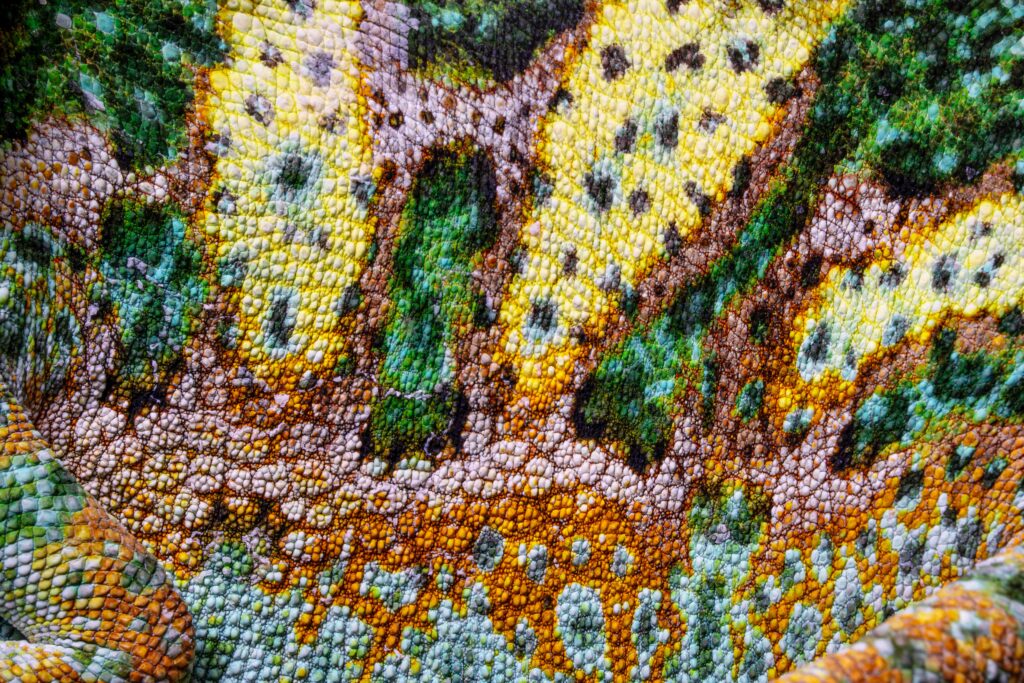
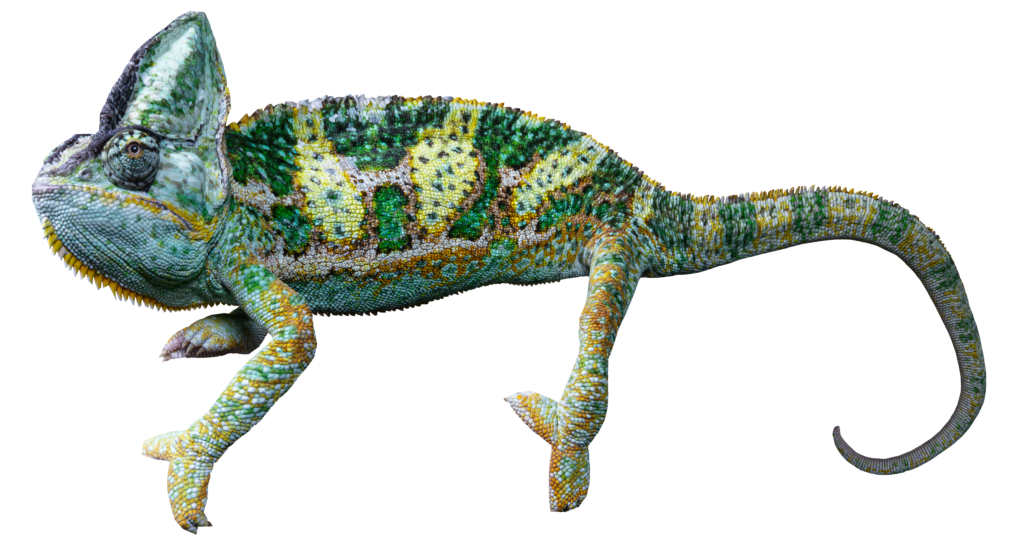
Veiled Chameleon
- Class: Reptilia
- Order: Squamata
- Family: Chamaeleonidae
- Scientific Name: Chamaeleo calyptratus
- Class: Reptilia
- Order: Squamata
- Family: Colubridae
- Scientific Name: Lampropeltis getula nigrita
Taxonomic Note: The genus Chamaeleo dates back over 25 million years to the Oligocene epoch. While this genus was once more diverse, taxonomic revisions have split it into multiple genera, and Chamaeleo now contains 14 extant species, with the veiled chameleon being the most well-known.
GEOGRAPHY
The Veiled Chameleon is native to the southwestern Arabian Peninsula, specifically Yemen and southwestern Saudi Arabia. Introduced populations exist in Florida and Hawaii. Veiled Chameleons are arboreal, living in trees and large plants. In their native range, they occupy high, dry plateaus up to 3,000 feet in elevation, as well as mountainsides, forests, and river valleys. They are often found near acacia trees, scrubs, and bushes, and have adapted to agricultural lands where they feed on millet.

CHARACTERISTICS
Veiled Chameleons are primarily insectivorous, feeding on crickets, locusts, grasshoppers, roaches, flies, caterpillars, butterflies, worms, and spiders. However, they are one of the few chameleon species known to consume plant matter, including leaves, young shoots, blossoms, and fruits. This behavior is believed to provide hydration during dry seasons, as they do not drink from moving water. Males have a bony protrusion atop their heads called a casque that can grow up to 2 inches in large males. This casque helps direct rainwater into their mouths, a critical adaptation for hydration in arid environments. As ambush predators, they remain motionless for long periods, scanning with their independently moving eyes. When prey is spotted, they project their sticky, club-shaped tongue with remarkable speed—up to 5 meters per second—to capture it.
When threatened, they may darken in color, flatten their crest to appear larger, hiss, or drop from their perch and “play possum.” Male Veiled Chameleons use bright stripe colors to signal their bite strength; brighter and longer-lasting stripes correlate with stronger bites and a higher tendency to win fights, helping deter weaker rivals and preventing unnecessary physical conflict. When a male “turns off” his colors, it signals surrender.
Females typically live 5 years, while males live up to 8 years in captivity. In the wild, lifespan is shorter, ranging from 4–6 years. Males reach 17–24 inches in total length and weigh 3.5–7 ounces; females reach 12 to 16 inches and weigh 2.8 to 4.2 ounces. Hatchlings are born at about 2–3 inches. Unlike many reptiles, Veiled Chameleons do not have temperature-dependent sex determination; incubation temperature does not affect sex ratios.
THE LANGUAGE OF COLOR
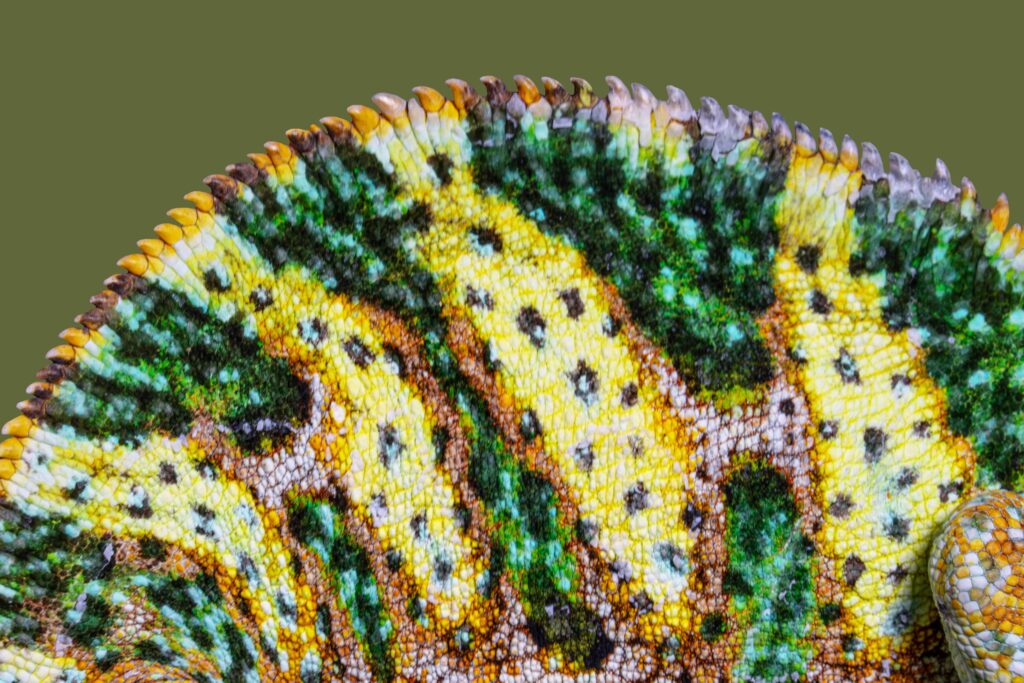
Few animals communicate as vividly as the Veiled Chameleon. Their ability to change color isn’t simply for camouflage; it is a dynamic visual language used to express mood, assert dominance, and warn rivals. When a Veiled Chameleon feels threatened or encounters an intruder, they display what is known as intimidation coloration: their body erupts in dark, high-contrast bands of yellow, orange, green, and black. This bold pattern makes them appear larger, more aggressive, and more dangerous, often convincing a rival to retreat without a single bite.
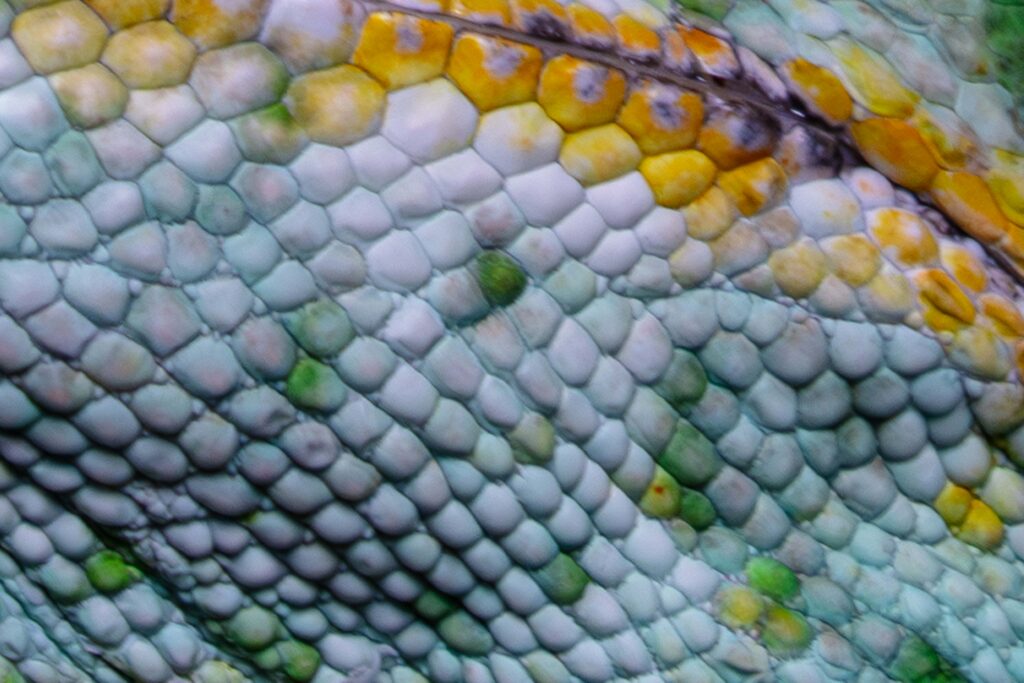
So how do they do it? Chameleons possess specialized skin cells called chromatophores layered beneath their transparent outer skin. The deepest layer contains melanophores, which produce brown and black melanin. Above them are iridophores, which reflect light using guanine crystals—these are responsible for the brilliant blues, turquoises, and whites. The top layer contains xanthophores and erythrophores, which create yellows, oranges, and reds. By sending nerve signals to these cells, a chameleon can expand or contract specific pigment sacs, mixing colors like a living palette. Recent research has revealed that iridophores also contain an astonishing ability: they can actively tune the nanocrystals within their skin to reflect different wavelengths of light, producing rapid color shifts in seconds.