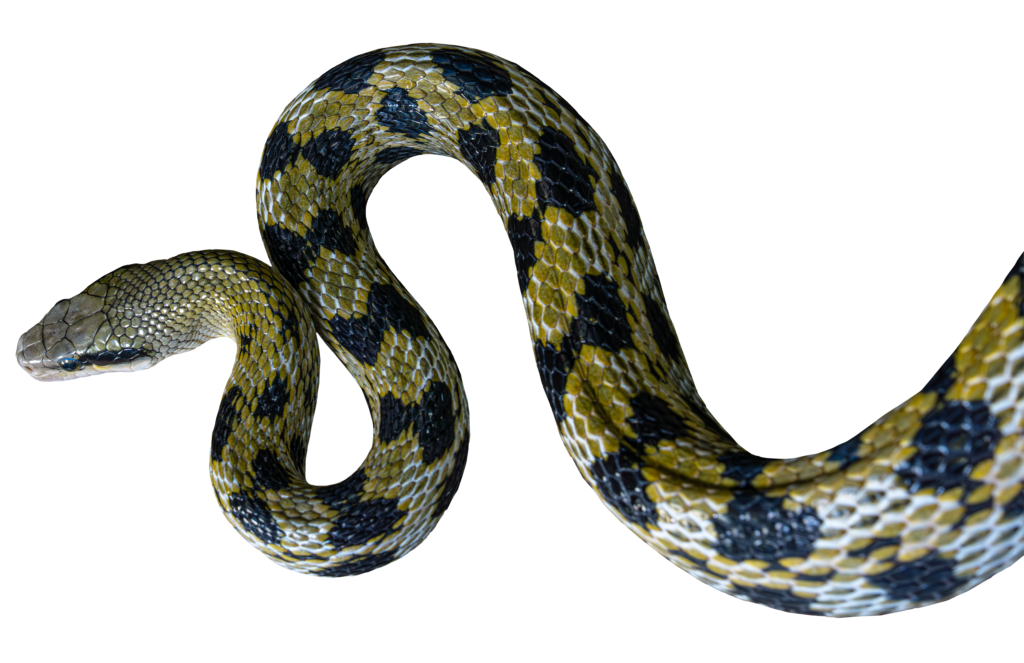
Taiwan Beauty Rat Snake
- Class: Reptilia
- Order: Squamata
- Family: Colubridae
- Scientific Name: Elaphe taeniura (Taiwan subspecies)
- Class: Reptilia
- Order: Squamata
- Family: Colubridae
- Scientific Name: Lampropeltis getula nigrita
Taxonomic Note: The beauty rat snake complex has undergone recent taxonomic revision. Some sources place them in the genus Elaphe, while others use Orthriophis. The Taiwan beauty snake is one of approximately 10 recognized subspecies of the beauty rat snake, each with distinct appearances and geographic ranges.
GEOGRAPHY
The Taiwan Beauty Rat Snake is native to the island of Taiwan, as well as southern China and northern Vietnam. They are most famously associated with Taiwan, where they are a common and well-known native species. They inhabit tropical and subtropical rainforests, cultivated fields, caves, and areas near human dwellings. These snakes are semi-arboreal and can be found in trees, along cave walls, and on the ground. They are cathemeral, meaning they may be active at any time of day or night, though they are most often encountered during twilight hours.

CHARACTERISTICS
Taiwan Beauty Rat Snakes are long and thin, reaching lengths of 4–6 feet on average, with some individuals growing up to 8 feet. They typically weigh around 5 pounds. They are carnivorous constrictors, killing their prey by coiling around it and squeezing until it suffocates. They are excellent climbers and can move along branches and rock faces with ease. Their diet consists primarily of rodents, birds, eggs, lizards, and frogs. Like all beauty snakes, they use their keen eyesight and heat-sensing abilities to detect prey, striking with speed and accuracy.
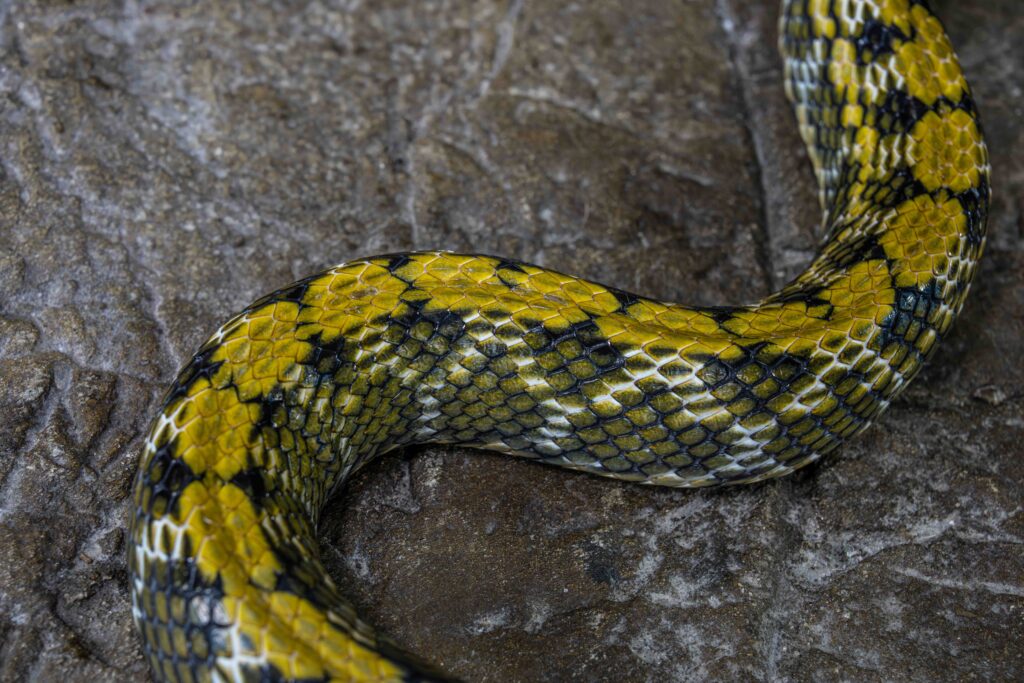
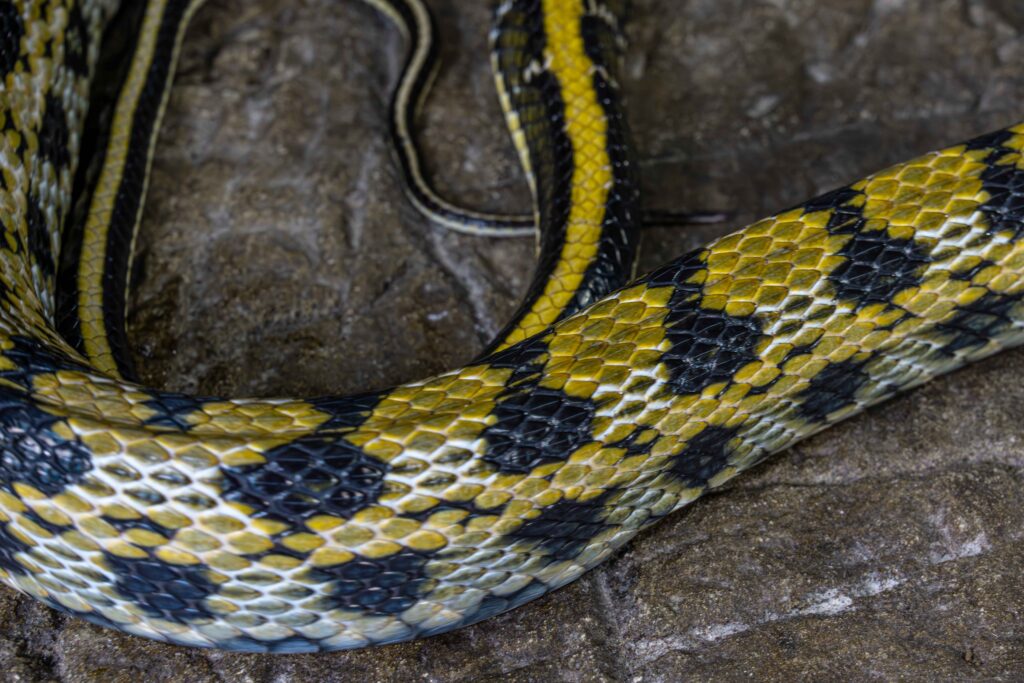
One of the most striking features of the Taiwan beauty snake is their vivid coloration. They typically display a bright yellow or olive-green base color with dark, saddle-like blotches running down their back. A distinctive black-and-yellow striped pattern adorns their neck and anterior body, giving them a bold, almost regal appearance. Their head is usually yellow or tan with a dark stripe passing through each eye, adding to their dramatic look. This coloration provides excellent camouflage among the dappled light of forest canopies and rocky outcrops.
Wild-caught Taiwan beauty snakes are known to be quite temperamental and may be defensive when handled, often striking or vibrating their tail rapidly to produce warning noises. However, captive-bred individuals tend to be much calmer and can become quite docile with regular handling. When threatened, they may flatten their bodies to appear more intimidating and “waggle” their tail to mimic a rattlesnake’s warning signal. Throughout much of their range in Taiwan, they are welcomed by farmers and villagers because they provide effective natural rodent control, often taking up residence in barns and grain storage areas.
Taiwan Beauty Rat Snakes typically live 15–25 years in captivity with proper care. Mating occurs about one month after the winter cooling period, when temperatures are around 64–68°F. Females lay 4–12 eggs per clutch, and hatchlings grow rapidly, reaching juvenile size within their first year. Hatchlings are born with the same striking patterns as adults, though their colors may be slightly more muted until their first few sheds.
THE TAIWAN BEAUTY SNAKE IN ITS NATIVE RANGE
In Taiwan, this snake is a beloved and respected part of the local ecosystem. They are often called “beauty snakes” due to their elegant appearance and graceful movements. Unlike some of their cave-dwelling relatives, Taiwan beauty snakes prefer forest edges, agricultural areas, and rocky hillsides where they can hunt rodents and birds. They are skilled climbers and are frequently found in trees or on rock walls basking in the sun. Their adaptability has allowed them to thrive alongside human communities, where they are valued as natural pest controllers.
INVASIVE SPECIES
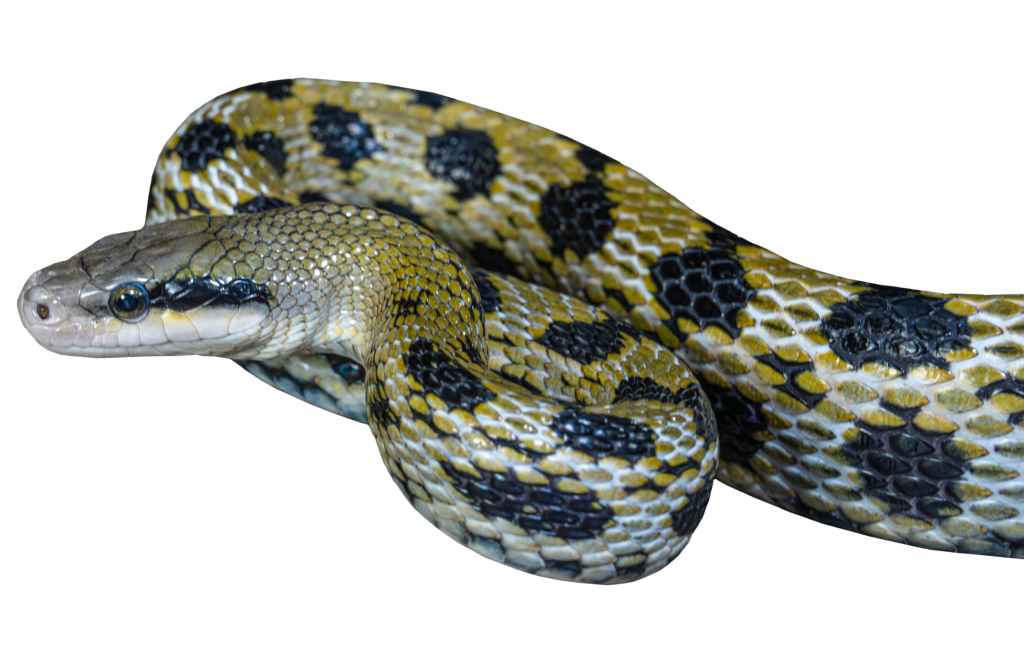
The Taiwan beauty snake has demonstrated remarkable adaptability, establishing a self-sustaining population on Okinawa Island since the late 1970s. They were originally brought to the islands for zoo display and medicinal purposes, and like many adaptable species, they thrived in their new environment. However, their success on Okinawa has required careful management, as they can compete with native wildlife. In response, Japan has implemented protective measures under the Invasive Alien Species (IAS) Act, which now restricts the ownership, transport, or introduction of this subspecies into the country. These regulations serve as an important example of how communities can thoughtfully manage animal populations while balancing ecological awareness with respect for the resilience of nature.