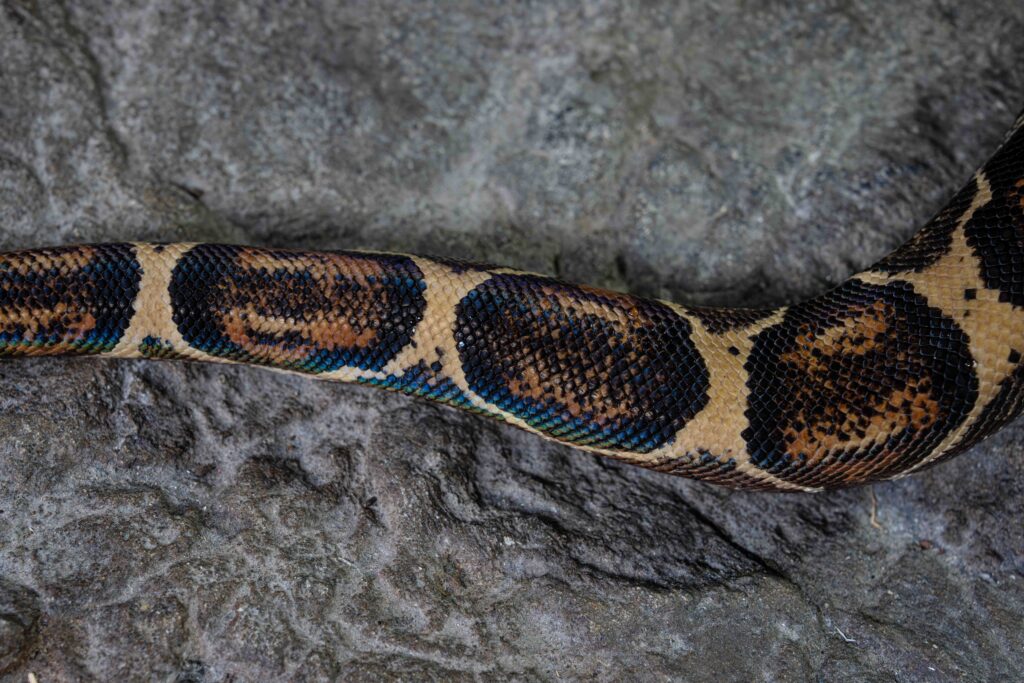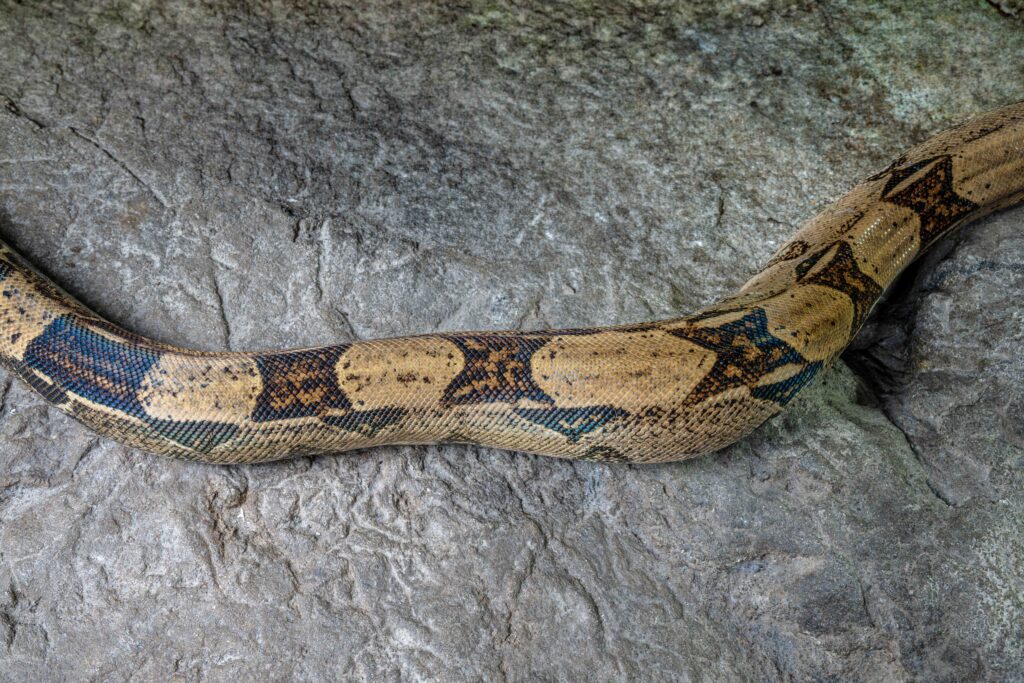
Red Tailed Boa Constrictor
- Class: Reptilia
- Order: Squamata
- Family: Boidae
- Scientific Name: Boa constrictor constrictor
- Class: Reptilia
- Order: Squamata
- Family: Boidae
- Scientific Name: Epicrates maurus
- Morph: Ghost
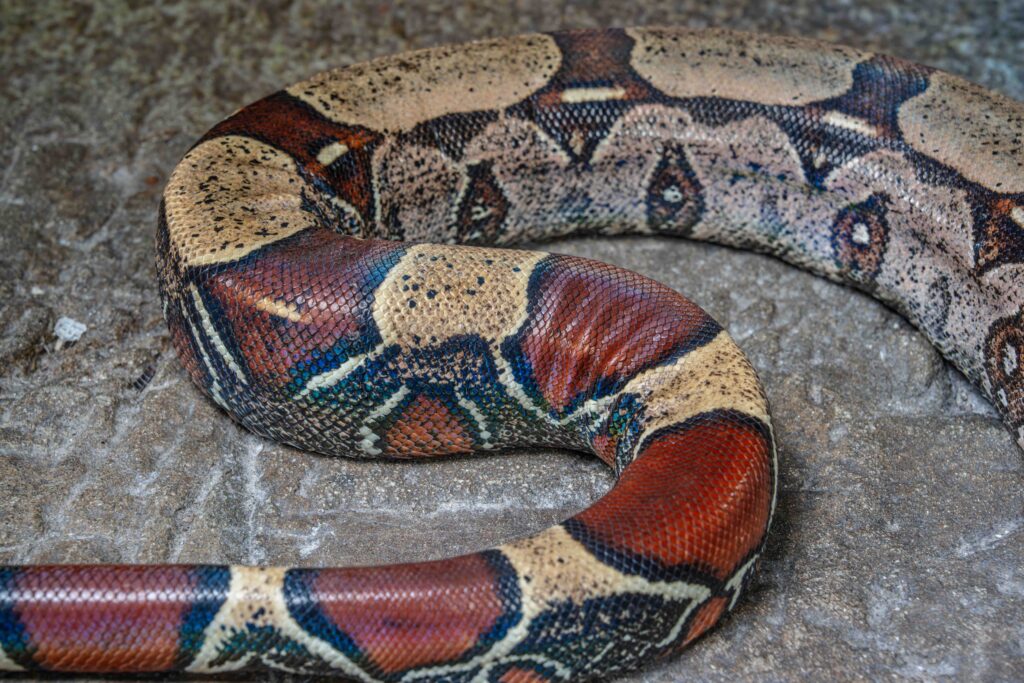
Taxonomic Note: The red tailed boa constrictor is the nominate subspecies of Boa constrictor, meaning they are the originally described form of the species. They are often considered the “true” red tailed boa due to their distinctively vibrant red tail coloration, which is more intense than in other subspecies.
GEOGRAPHY
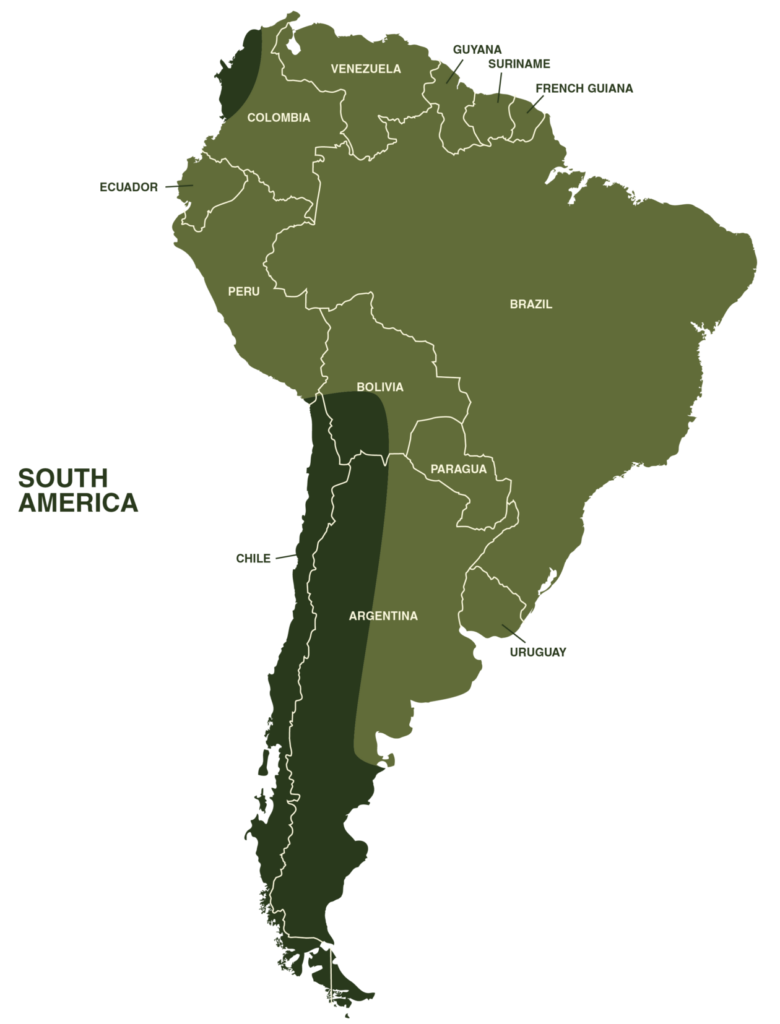
The red tailed boa constrictor is native to South America east of the Andes, specifically ranging from Colombia and Venezuela south through Guyana, Suriname, French Guiana, Ecuador, Peru, Bolivia, and Brazil, to northern Argentina. They are not found in Central America or Mexico, those populations belong to other subspecies, primarily Boa constrictor imperator. Red tailed boas thrive in lowland rainforests, tropical clearings and edges, river valleys, and swampy areas. They are highly adaptable and are also found in woodlands, grasslands, and near human settlements. They are excellent swimmers and are frequently seen near rivers and streams.
CHARACTERISTICS
In the wild, red tailed boas typically live 20–30 years. In captivity with proper care, they can live even longer, often 25–35 years, with the longest-lived recorded boa reaching 40 years. They are carnivorous generalists, feeding on a wide variety of small to medium-sized mammals, including rodents, squirrels, opossums, bats, and monkeys, as well as birds. Larger individuals may also consume lizards, wild pigs, and even small ocelots. This species plays a vital role in controlling populations of rodents and opossums, which can become agricultural pests and carriers of human diseases. Farmers in their native range often tolerate or encourage boas around storage sheds for natural pest control.
Red tailed boas weigh between 30–60 pounds and can grow 8–10 feet long, with some exceptional individuals reaching up to 13 feet, making them an exceptionally powerful constrictor. They are ambush predators, lying in wait for prey to pass before striking. They are primarily nocturnal or crepuscular, though they may bask during the day in cooler weather. They kill prey through constriction, coiling their powerful body around the animal and squeezing until it suffocates. Unlike many other boids, they do not have heat-sensing labial pits. Instead, they rely on infrared-sensitive scales on their lips to detect warm-blooded prey. They possess rows of long, recurved, aglyphous teeth that grip prey firmly.
Red tailed boas are solitary animals that prefer to live alone. They are generally docile but can be defensive when threatened, hissing loudly and striking if they feel cornered. They also use their vibrant red tail in defensive displays, flashing the bright color to startle potential predators.
UNIQUE RESPIRATORY SYSTEM
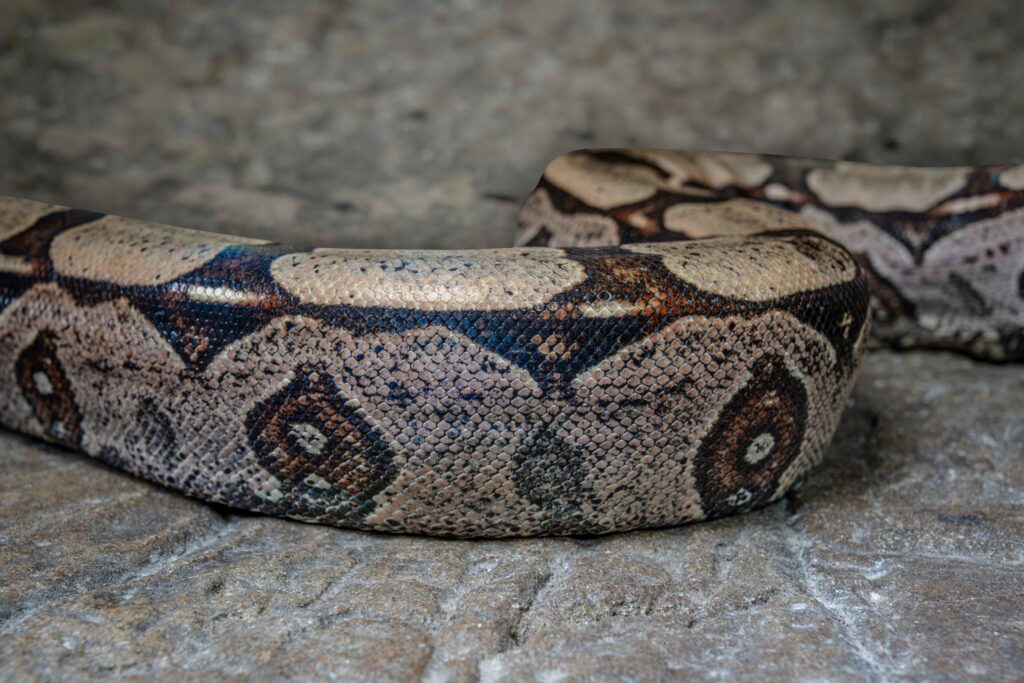
Unlike most advanced snakes, which have evolved to lose their left lung entirely for a more streamlined body, the red tailed boa retains two lungs. While the right lung is large and fully functional for respiration, the left lung is reduced and serves primarily as a non-respiratory air sac. This seemingly inefficient trait is actually a key adaptation for a heavy-bodied constrictor. By having a secondary lung that can remain inflated even when the ribs are compressed during the squeeze of constriction, the boa ensures they can continue breathing while subduing prey.
BOA CONSTRICTOR IMPERATOR
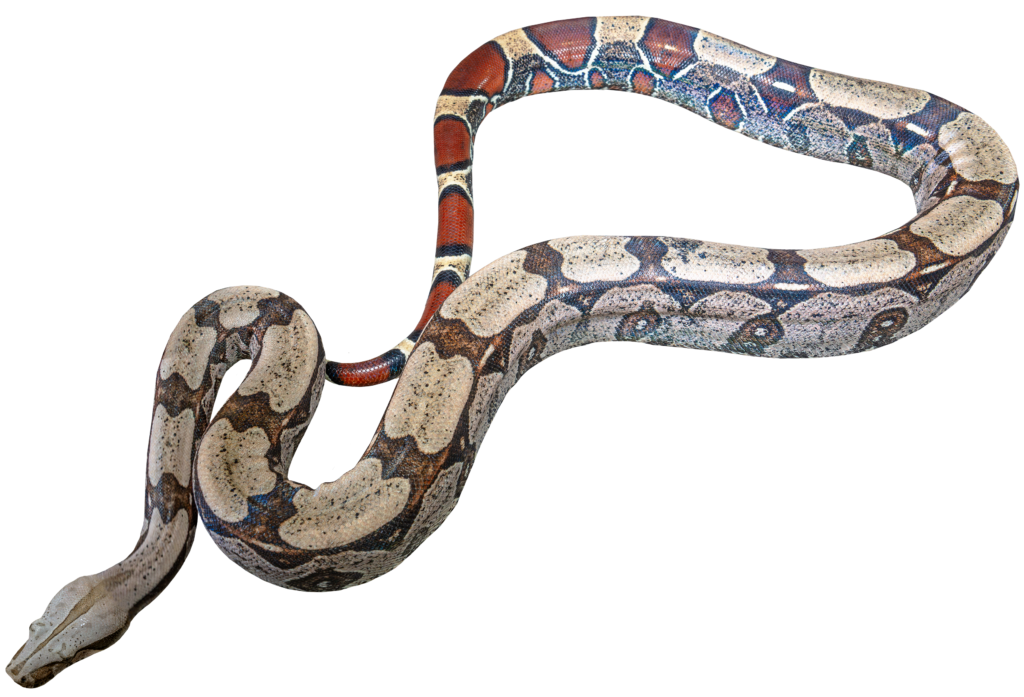
While the true red tailed boa is Boa constrictor constrictor, a closely related subspecies known as Boa constrictor imperator (BCI) is frequently confused with them. Boa constrictor imperator is native to Central America, Mexico, and northern South America, as well as many Caribbean islands. They are commonly called “common boas,” “Colombian boas,” or “Central American boas” in the pet trade.
There are many key differences between Boa constrictor constrictor and Boa constrictor imperator. Imperator individuals are generally smaller, typically reaching 5–7 feet in length, they have a duller, less vibrant tails, often appearing brownish or dark grey, and they typically have fewer dorsal blotches and different scale counts, which herpetologists use to distinguish between the subspecies.