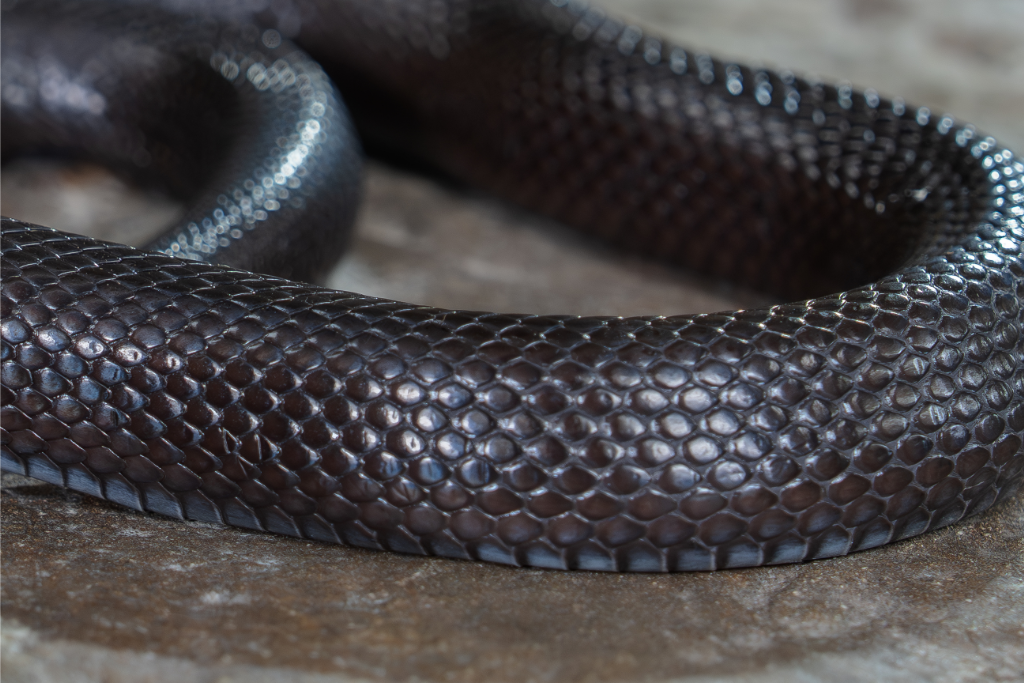
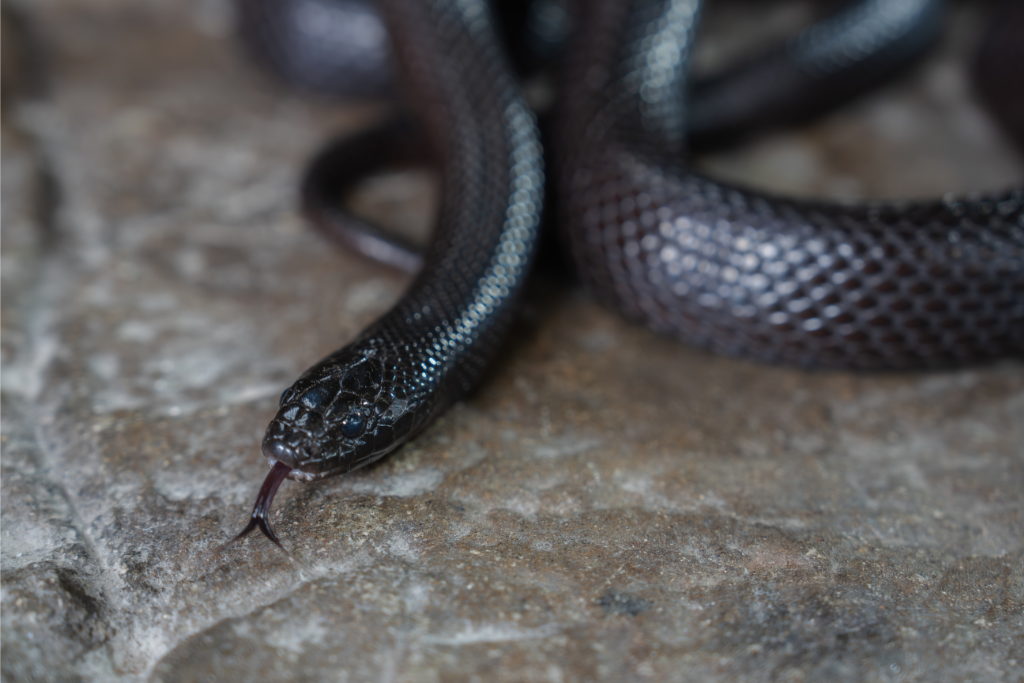
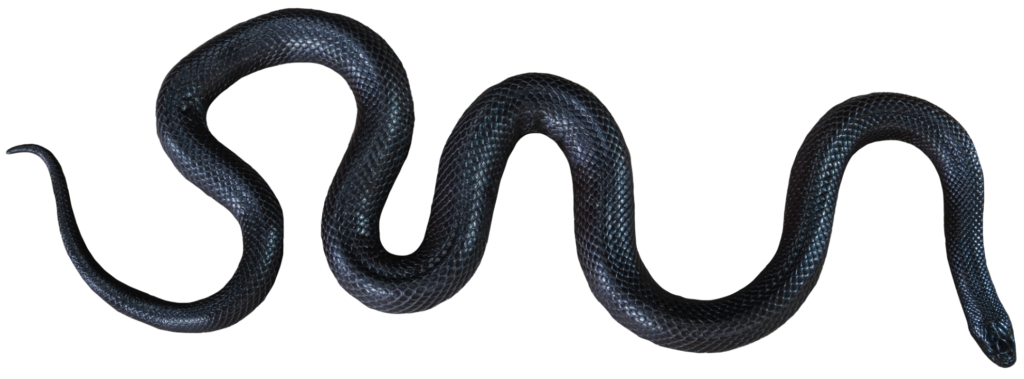
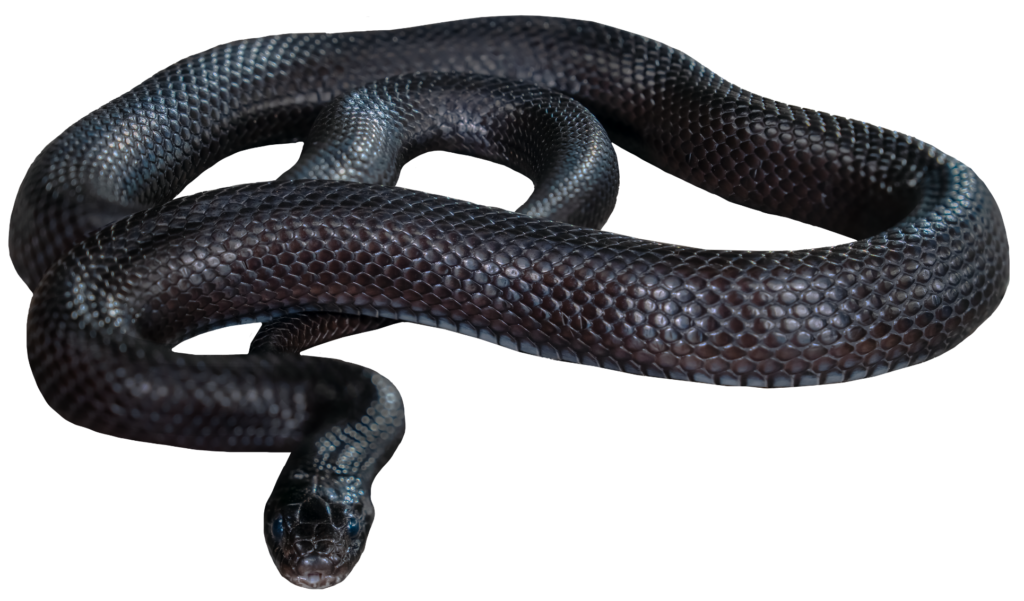
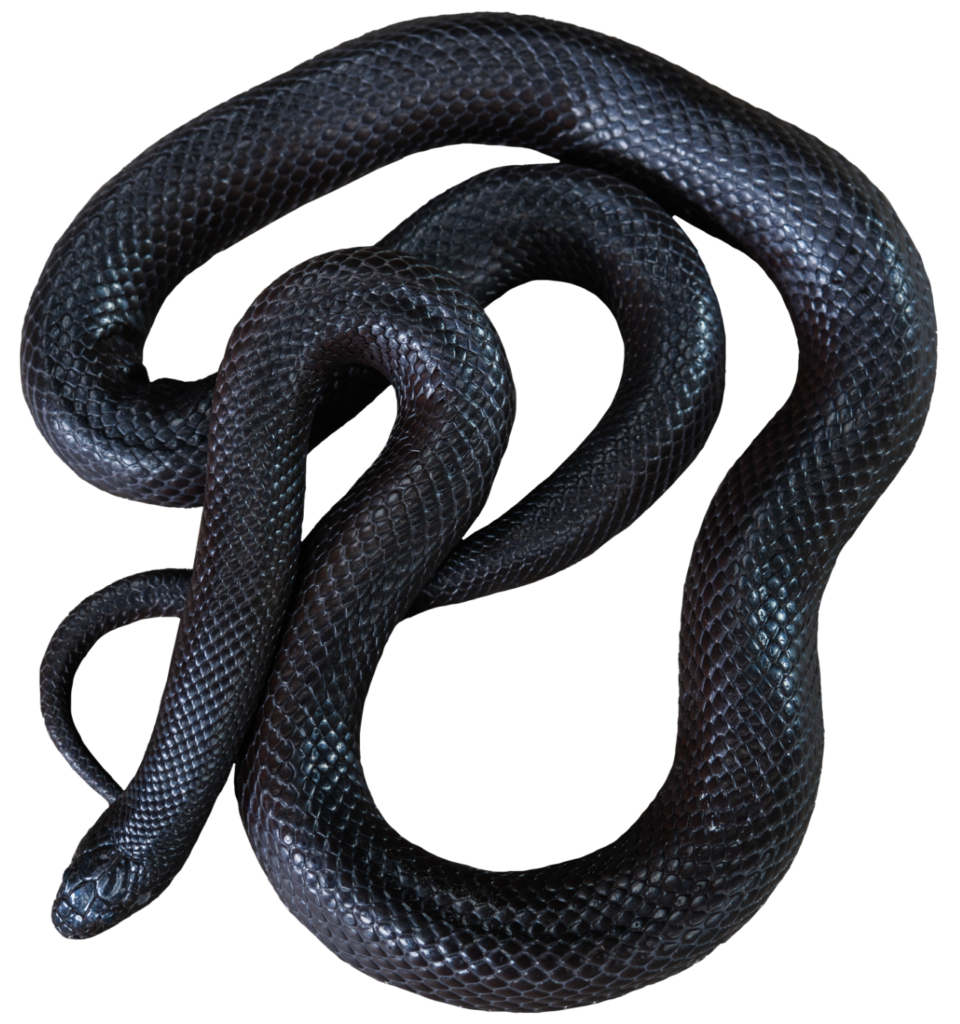
Taxonomic Note: The Mexican Black Kingsnake is a subspecies of the common kingsnake, there are currently 4-7 recognized subspecies of the common kingsnake.
GEOGRAPHY
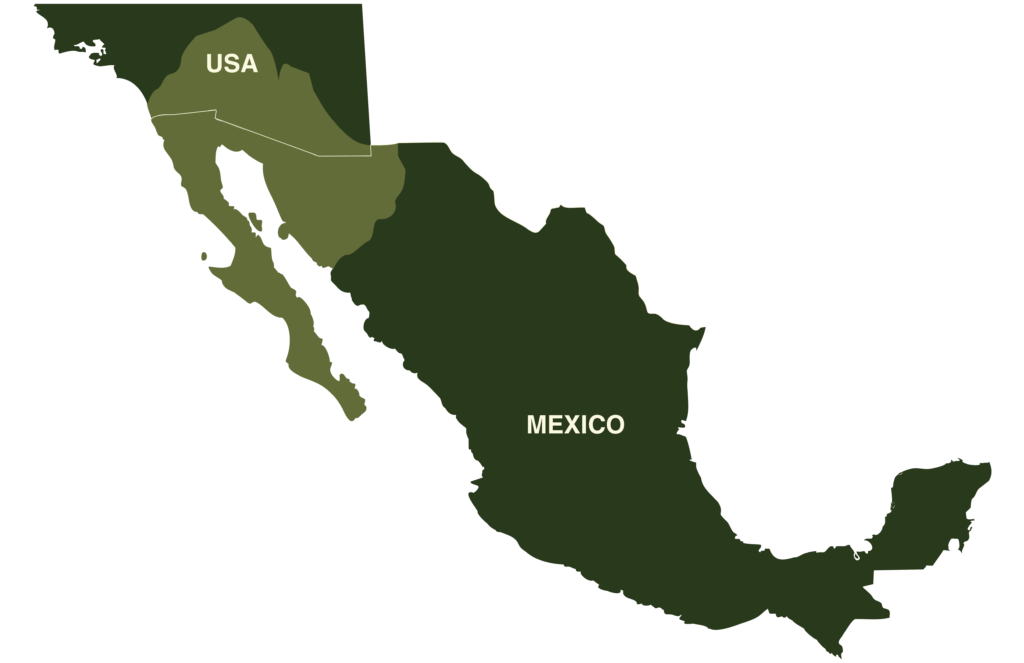
Mexican Black Kingsnakes are found primarily in northwestern Mexico, including the states of Sonora, Sinaloa, and Chihuahua, as well as parts of extreme southern Arizona. They have not been reported as introduced outside their native range. They inhabit semi-arid environments, including desert scrub, rocky hillsides, thorn forests, and dry riverbeds. Like other kingsnakes, they are habitat generalists but show a preference for areas with cover such as rocks, fallen logs, and abandoned rodent burrows. They spend much of their time hidden beneath debris, rocks, or soil. They are found from sea level up to around 4,000 feet in elevation. During cooler months, they brumate in rock crevices, mammal burrows, and hollow logs.
CHARACTERISTICS
Mexican Black Kingsnakes are muscular, opportunistic carnivores, weighing up to 4 pounds and typically reaching lengths of 4–5 feet, though some individuals may approach 6 feet. The common name “kingsnake” comes from their ability to prey on other snakes, including venomous species like rattlesnakes. This behavior has made them respected as natural pest controllers. Like other kingsnakes, they have a natural resistance to the venom of North American pit vipers, allowing them to hunt venomous snakes with reduced risk.
They are active foragers that kill by constriction. Their diet includes other snakes, rodents, lizards, birds, eggs, and amphibians. When hunting venomous snakes, they pin their prey’s jaws shut to avoid being bitten. They are primarily diurnal in cooler weather and become crepuscular or nocturnal during hot summer months.
When threatened, they may hiss, vibrate their tail against dry leaves to mimic a rattlesnake, release a foul musk, and coil tightly. They rarely bite unless restrained. Males are territorial and may engage in combat. Females lay clutches of 4–12 eggs in rotting logs, stumps, or warm, humid locations. In captivity, they typically live 15–20 years, with some reaching over 25 years.
FUNGAL DISEASE SPREADERS
Because Mexican Black Kingsnakes prey on other snake species, they may contribute to the spread of ophidiomycosis (snake fungal disease). Their predatory behavior could facilitate transmission between snake populations in their range.
CULTURAL SIGNIFICANCE
In Mexican and Indigenous northern Mexican traditions, dark-colored snakes are often associated with the underworld, rain, and fertility. Among some Sonoran Desert communities, the Mexican Black Kingsnake is viewed as a beneficial animal that should not be killed, as they help control venomous snake populations around homes and livestock. Their jet-black appearance has also made them a symbol of stealth and resilience in local storytelling.