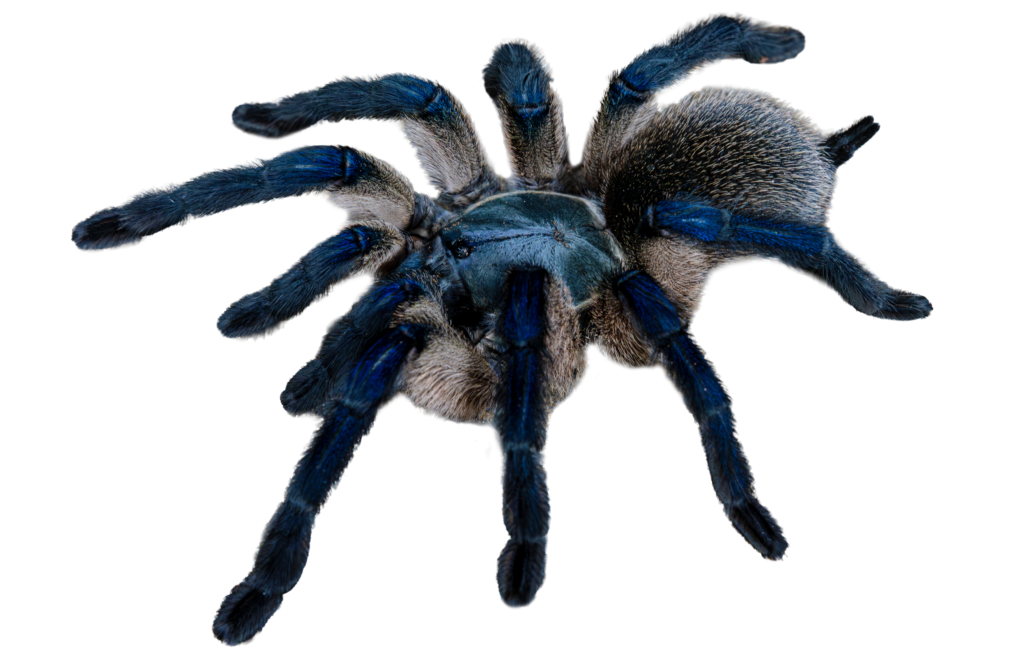
Socotra Island Blue Baboon Tarantula
- Class: Arachnida
- Order: Araneae
- Family: Theraphosidae
- Scientific Name: Monocentropus balfouri
- Class: Reptilia
- Order: Squamata
- Family: Iguanidae
- Scientific Name: Ctenosaura pectinata
Etymology: The specific name balfouri honors the collector Isaac Bayley Balfour, a Scottish botanist who contributed to the study of Socotra’s unique flora and fauna.
Taxonomic Note: The Socotra Island Blue Baboon is the only tarantula species found on Socotra Island, making them a true one-of-a-kind inhabitant of this isolated biodiversity hotspot.
GEOGRAPHY
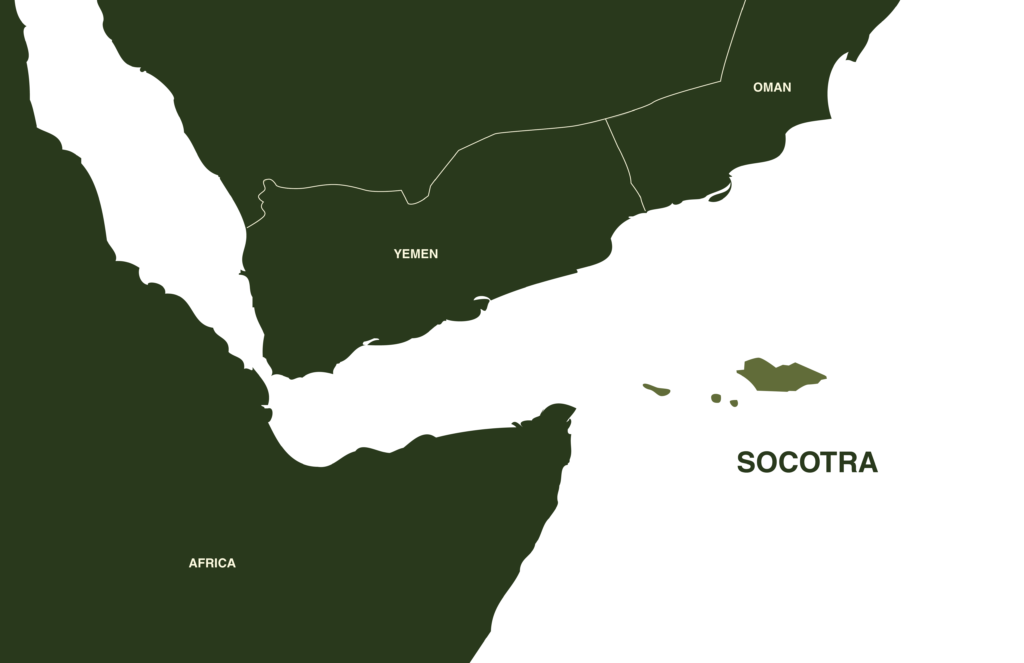
The Socotra Island Blue Baboon Tarantula is endemic to Socotra Island which is of the coast of Yemen and the Horn of Africa. Socotra is known as the “Galápagos of the Indian Ocean” for its unique biodiversity, and this tarantula is one of its many remarkable inhabitants. They are terrestrial burrowers found at elevations up to 850 meters above sea level. They inhabit dryland forests with annual rainfall of around 193mm, average temperatures of 28°C, and humidity around 65%.
CHARACTERISTICS
The Socotra Island Blue Baboon Tarantula is primarily nocturnal and is famously known for their social behavior. Unlike most tarantulas that are solitary cannibals, they can live peacefully in communal groups, sometimes with multiple males and females of different ages sharing the same burrow network. This is a rarity in the tarantula world, where even a brief encounter between two individuals often ends in cannibalism. They spin dense webs and create intricate silk tunnels that house their entire community. Females also exhibit strong maternal instincts, defending and caring for their young for up to six months, a level of parental care that is exceptional among arachnids. They are enthusiastic eaters, and in communal setups, they can be observed “hunting in packs” for a variety of insects, working together to subdue prey in a display of cooperation that defies expectations for their kind.
They are notably more laid-back than many baboon spiders, but still not recommended for intermediate keepers due to their speed. When threatened, they perform a characteristic threat pose; rearing up on their hind legs and baring their fangs. They are shy and prefer retreat but are fast and defensive if provoked. They are medium-sized, reaching up to 18 centimeters in leg span. Females live 10–14 years, while males live 3–4 years.
NO URTICATING HAIRS
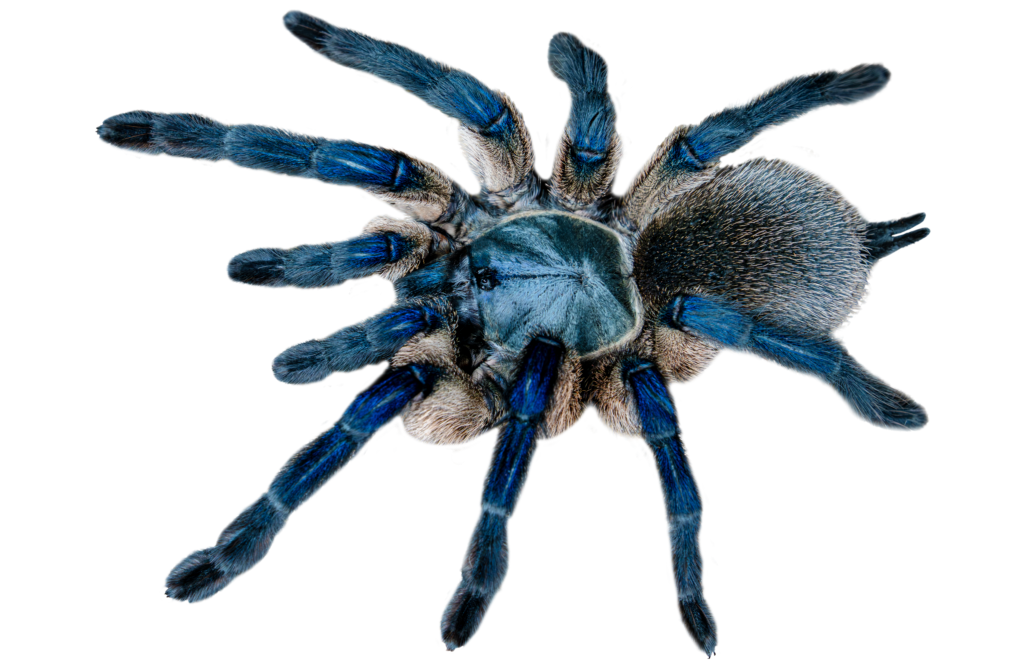
As an Old World species, M. balfouri lacks the irritating hairs found on New World tarantulas, relying instead on their threat pose and fast bite for defense. This makes them unique among many popular tarantula species, but it also means that handling is not recommended, their bite can be painful, and their speed makes them difficult to manage. In the wild, their vibrant blue legs serve as a warning to potential predators, a classic example of aposematic coloration signaling that this beautiful spider is not to be trifled with.