
Mangrove Snake
- Class: Reptilia
- Order: Squamata
- Family: Colubridae
- Scientific Name: Boiga dendrophila
- Class: Reptilia
- Order: Squamata
- Family: Colubridae
- Scientific Name: Lampropeltis getula nigrita
Etymology: The common name “mangrove snake” comes from one of their preferred habitats. They are also widely known as the gold-ringed cat snake, “cat snake” refers to the vertical pupils and slender body of snakes in the genus Boiga, which give them a feline-like appearance.
Taxonomic Note: There are nine recognized subspecies, varying slightly in color pattern and geographic distribution.
GEOGRAPHY
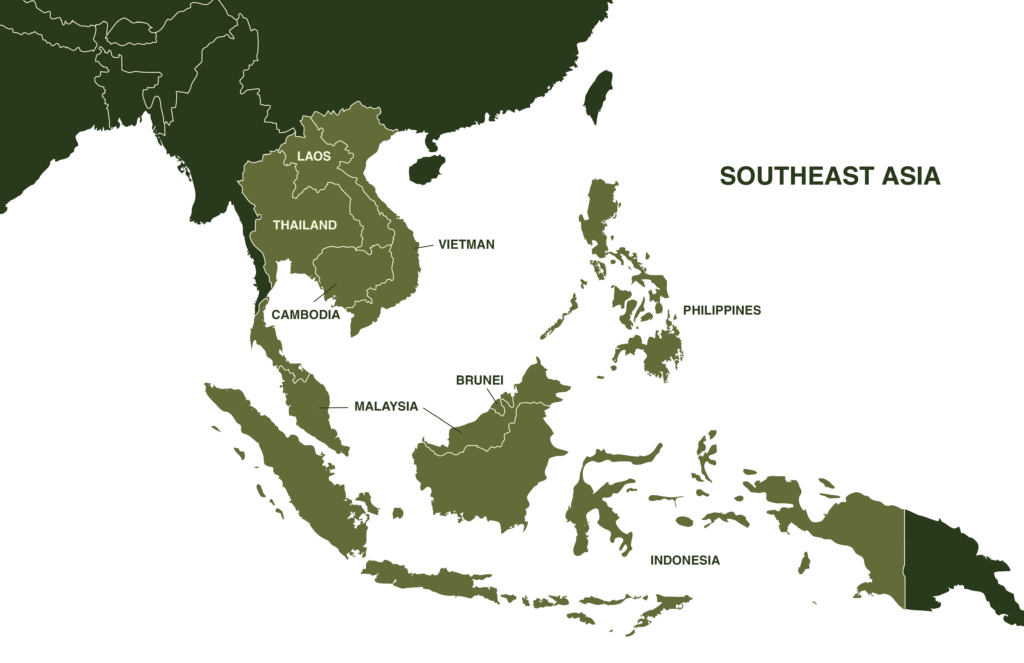
Mangrove snakes are endemic to Southeast Asia, including Thailand, Vietnam, Malaysia, Singapore, Indonesia (Sumatra, Java, Borneo, Sulawesi), and the Philippines (Luzon, Palawan, Mindanao). They inhabit tropical lowland rainforests, riverine forests, and mangrove swamps. Despite their name, they are found more frequently in lowland rainforests than in mangroves. They are an arboreal species that spends much of their time coiled on branches, in tree hollows, or among the tangled roots of mangroves. They are excellent climbers and often rest in vegetation overhanging water, though they are also considered terrestrial and may be found on the ground.
CHARACTERISTICS
Mangrove snakes are long and slender, with adults reaching 6–8 feet in total length, making them the largest species in their genus. In the wild, they typically live 10–15 years. In captivity with proper care, they can live 15–20 years. They are carnivorous and feed on a variety of small vertebrates, including lizards, frogs, birds and their eggs, fish, and small mammals such as rats and mice. Some subspecies have been documented feeding on surprising prey, including the hatchlings of green sea turtles and the nestlings of large wading birds like the milky stork. They are apex predators and natural pest controllers of the canopy. In their mangrove and coastal forest habitats, mangrove snakes play an important role in natural pest control. By preying on rodents, they help keep these populations in check, which benefits the delicate balance of the ecosystem and nearby human settlements.
As nocturnal hunters, mangrove snakes actively search for prey at night among the trees. They are ambush predators, striking quickly and using their mildly venomous rear fangs to subdue prey. Because their fangs are located at the back of their jaws, the snake must chew their victim to effectively deliver the venom. A specialized gland called the Duvernoy’s gland produces venom that is released gradually as the snake chews. The venom contains denmotoxin, a unique three-finger toxin that is highly specialized for birds, making it exceptionally effective against avian prey. The venom is considered mild and not life-threatening to humans, and no confirmed fatalities have been recorded. However, bites can cause moderate to intense local swelling and pain, especially if the snake is allowed to chew for an extended period.
Mangrove snakes are generally solitary animals, preferring to hunt and live alone. They have a reputation for being defensive and alert. Even captive-bred specimens may be wary, striking repeatedly if they feel threatened. Their first instinct is often to stand their ground, coil, and hiss rather than flee. While many individuals may calm down with regular handling, they are easily stressed, which can lead to them refusing food for extended periods.
Females are oviparous and can lay a clutch of 4–15 eggs. The eggs are deposited in hidden, humid locations such as under leaf litter, in decaying vegetation, inside hollow trees, or in rotting stumps. Hatchlings are fully independent from birth and measure around 12 inches in length. They are capable of hunting small prey, such as lizards and frogs, immediately.
COLORATION MIMICRY
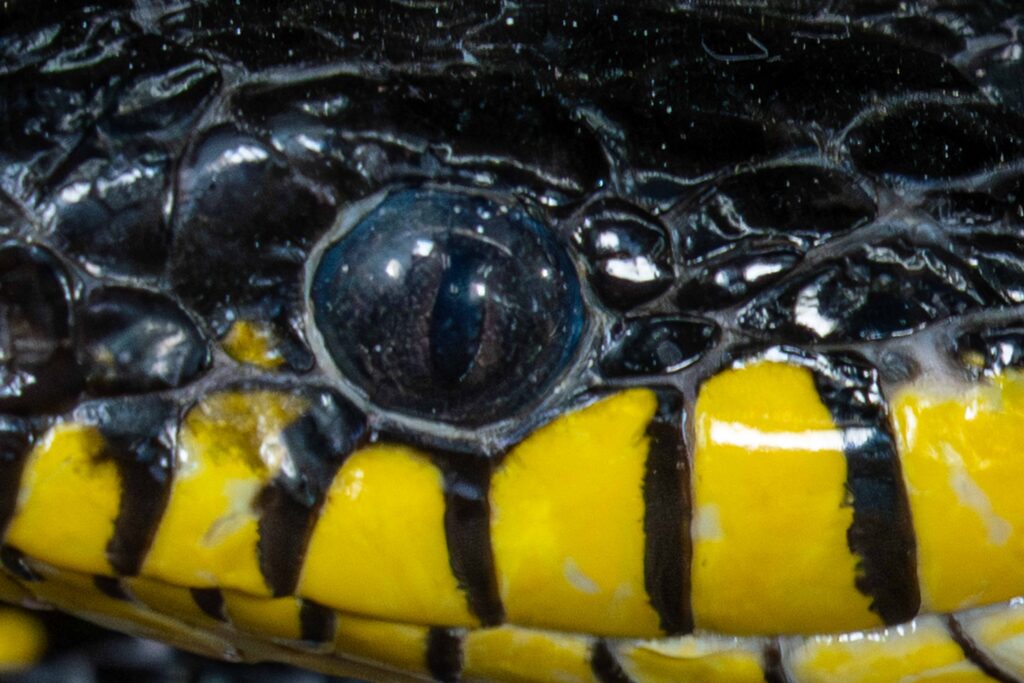
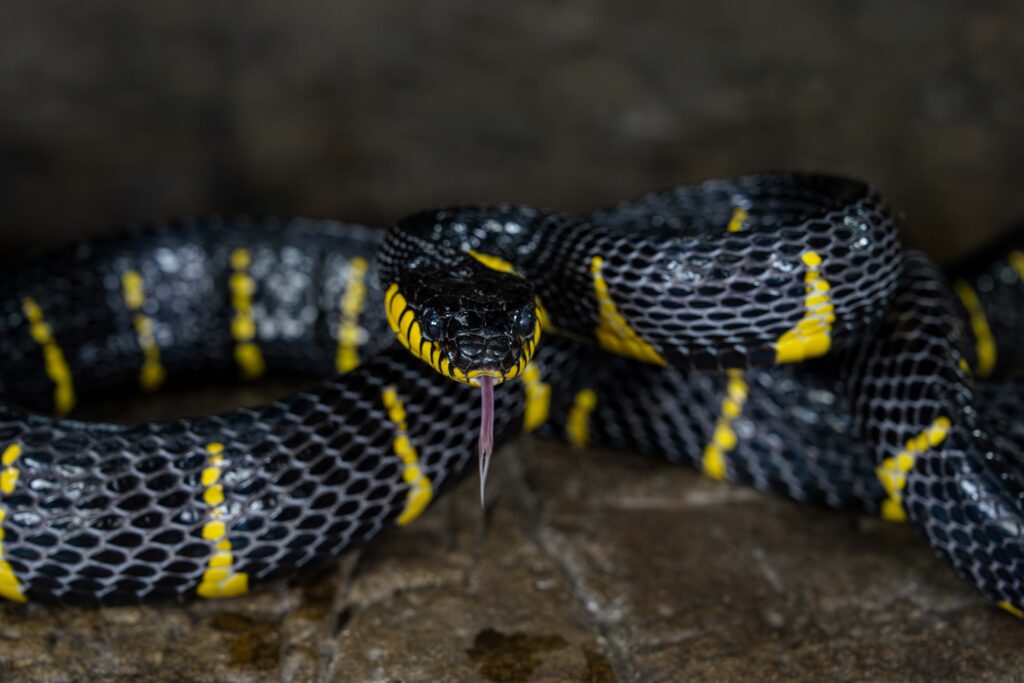
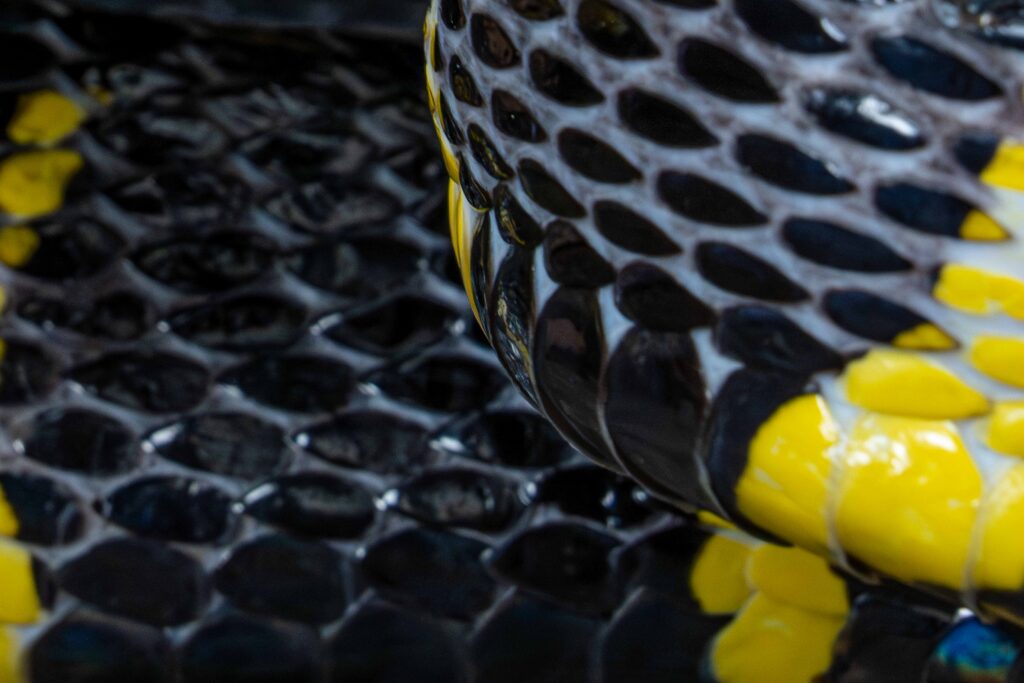
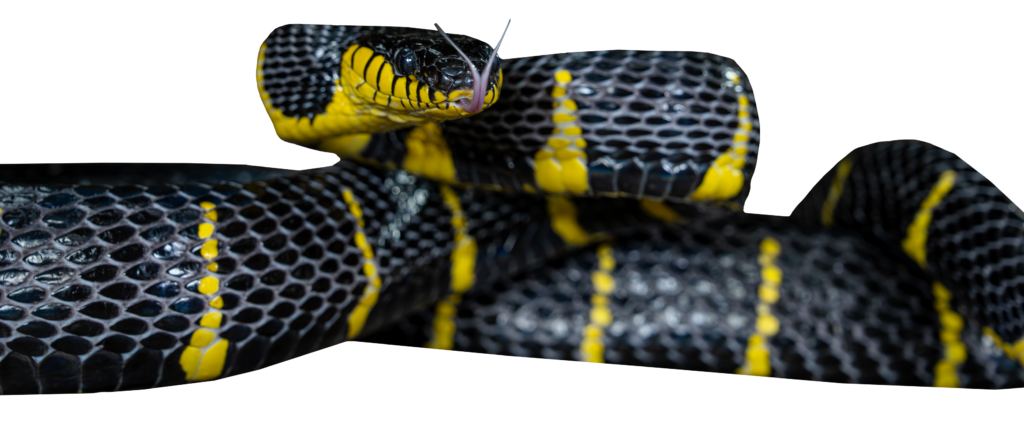
The striking pattern of glossy black scales with bright yellow crossbands serves as a warning to potential predators. However, this coloration also makes the mangrove snake easily confused with the highly venomous banded krait, a fascinating example of protective mimicry where a less dangerous species resembles a more dangerous one. This clever adaptation helps the mangrove snake avoid conflict altogether, as many predators think twice before approaching anything that looks like a krait.