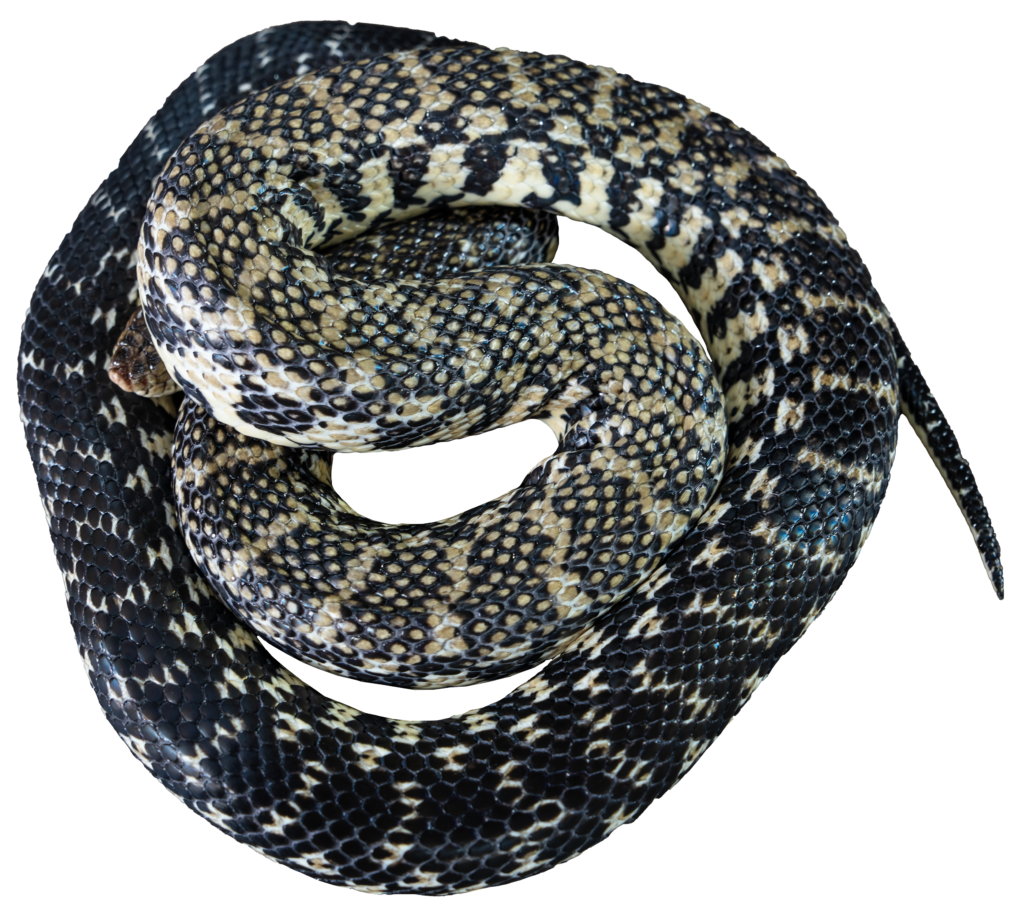
Madagascar Giant Hognose
- Class: Reptilia
- Order: Squamata
- Family: Lamprophiidae
- Scientific Name: Leioheterodon madagascariensis
- Class: Reptilia
- Order: Squamata
- Family: Colubridae
- Scientific Name: Thamnophis marcianus
- Morph: Albino
Taxonomic Note: They are one of three hognose snake species endemic to Madagascar, and they are the largest of the three.
GEOGRAPHY
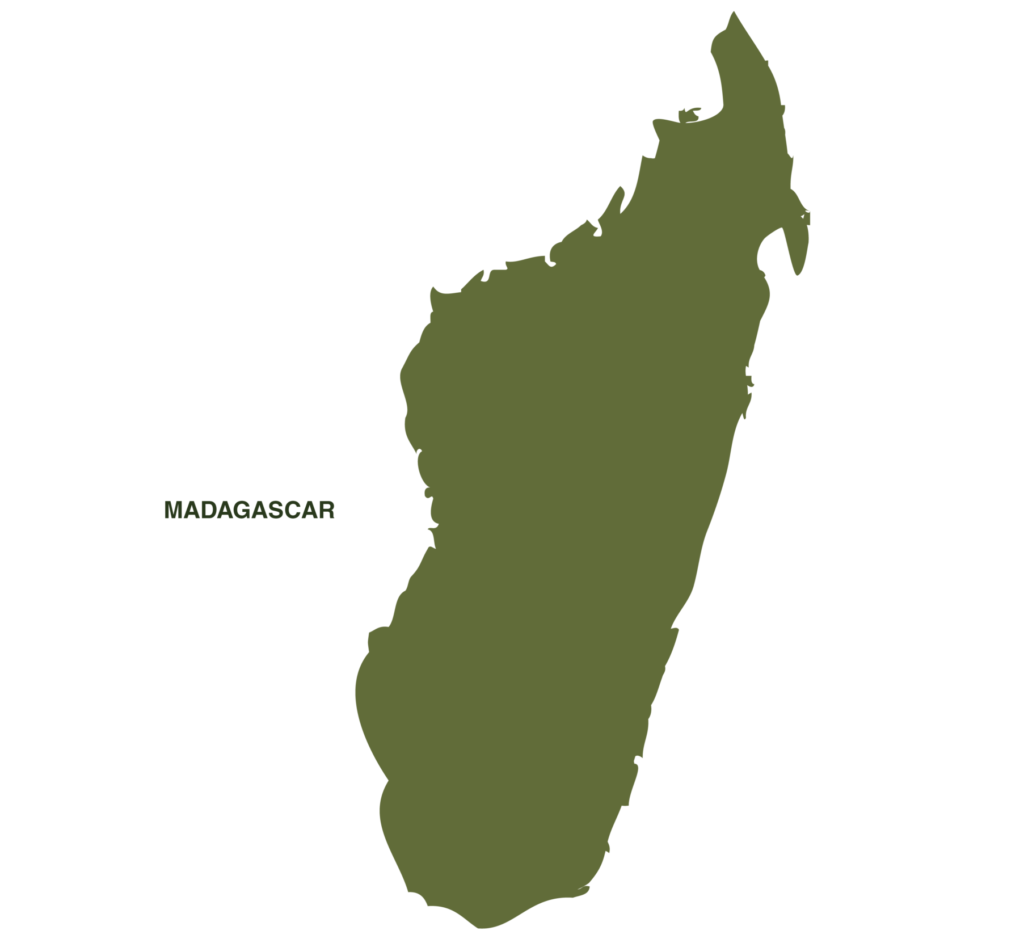
The Madagascar Giant Hognose is endemic to the island nation of Madagascar. They are also found on the smaller islands of Nosy Be, Nosy Mangabe, and Nosy Sakatia, as well as on the Comoros archipelago. They are a highly adaptable species that occupies a wide variety of habitats across the island, including grasslands, dry tropical forests, and rainforests. As terrestrial and diurnal snakes, they spend most of their time on the ground foraging through leaf litter and shrubs. Unlike many other snakes, they are known to live communally, sharing burrows and nest dens with others of their kind.
CHARACTERISTICS
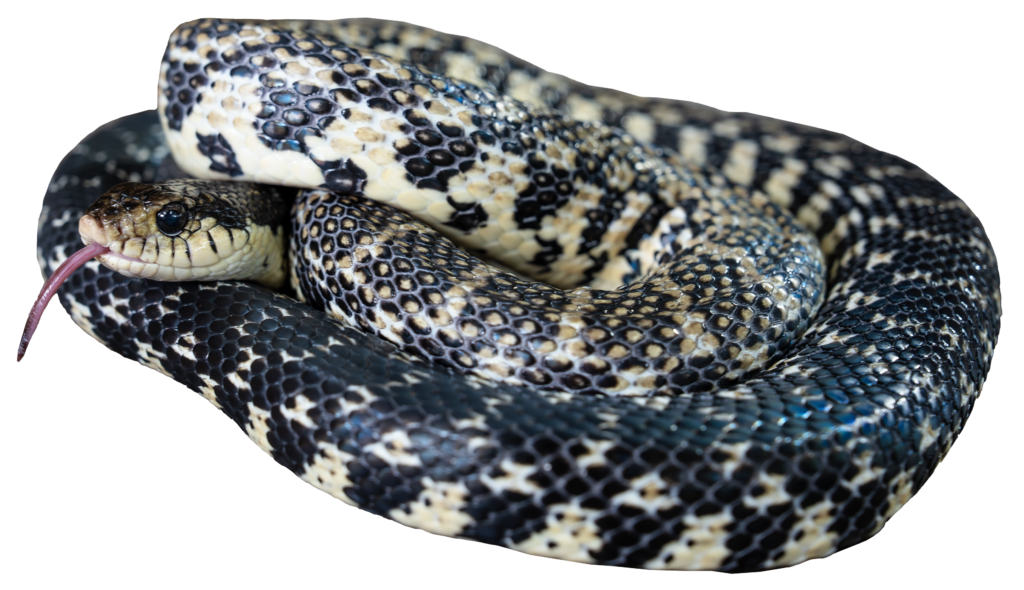
The Madagascar Giant Hognose is a thick, muscular snake, about the thickness of a human forearm, with large eyes and a protruding scale above each eye for protection from blowing dust. These large colubrids generally reach lengths up to 6 feet and live 15–20+ years in captivity, though their lifespan in the wild is unknown.
They are opportunistic, generalist carnivores, with a diet consisting of small reptiles, frogs, birds and their eggs, small mammals, and other snakes (including having cannibalistic tendencies). They capture prey with a single precise bite. They are considered opisthoglyphous (rear-fanged), possessing enlarged teeth at the back of the jaw connected to a Duvernoy’s gland that produces a mild venom. Interestingly, studies show they primarily rely on constriction to subdue their prey, using their mild venom more as a “paralytic” to control struggling animals rather than to kill them outright.
The most distinctive feature of the Madagascar Giant Hognose is their shovel-like, upturned snout. This acts like a shovel, allowing the snake to burrow through sandy soil and leaf litter to find food and hide from predators. When threatened, they will raise their head, open their mouth, and flatten or inflate the skin around their neck and chin. This defensive posture mimics a cobra to make the snake look larger and more intimidating, but it is primarily a bluff to buy time to escape. Research has identified a unique defensive behavior specific to the Madagascar Giant Hognose. Along with the standard defensive behavior, they perform a distinct “lateral neck tilting” posture not observed in other hognose species. This additional display further enhances their intimidating appearance. They are generally not aggressive toward humans and their venom is not fatal, though a bite may cause localized swelling or irritation.
Female Madagascar Giant Hognose snakes are oviparous. A few weeks after mating, they lay a clutch of 8–10 eggs in a burrow. They exhibit a degree of maternal care, often guarding their clutch for a period of time to protect the eggs from potential nest robbers.
PARALLEL EVOLUTION
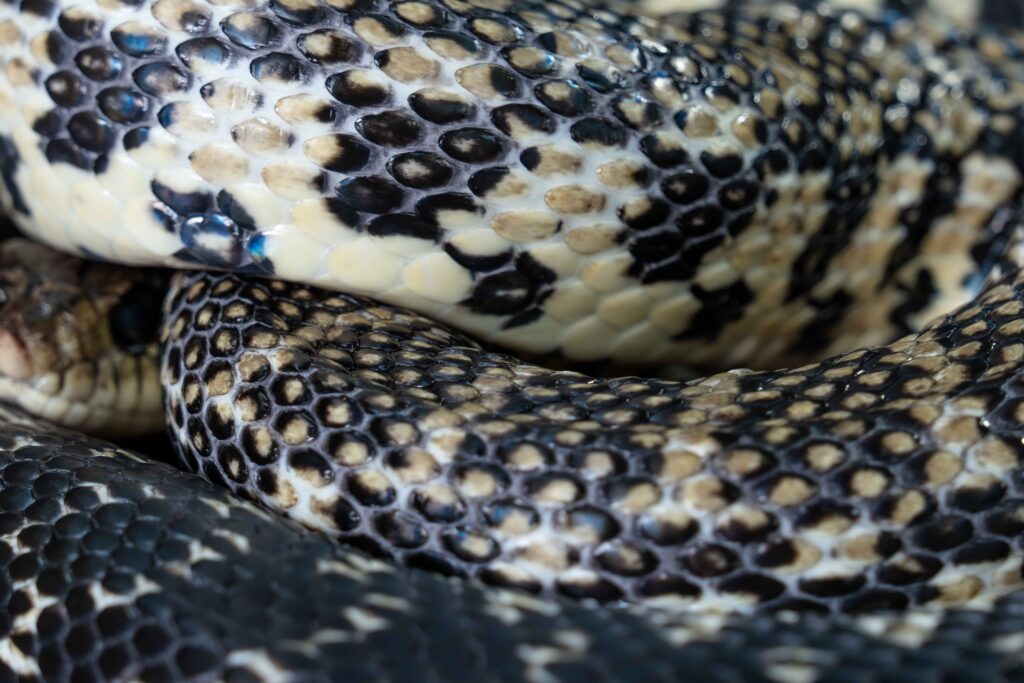
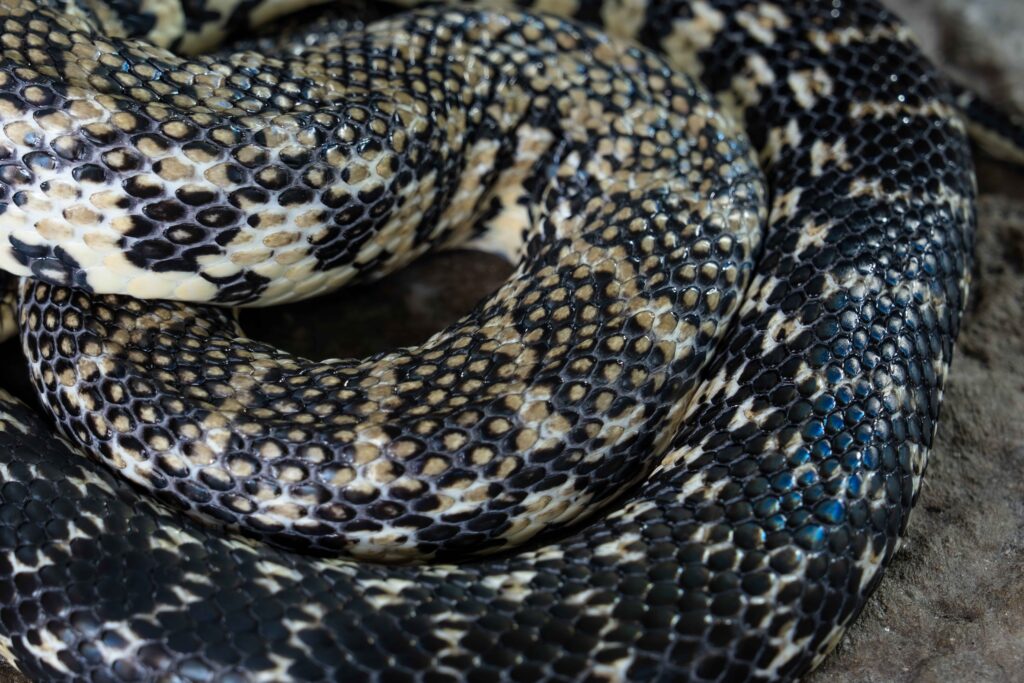
Despite looking and acting very much like North American hognose snakes, the Madagascar Giant Hognose is not related to them. They evolved in complete isolation from each other. This is a fascinating example of parallel evolution, where two unrelated species develop similar traits (such as an upturned snout for digging) because they occupy similar ecological niches.