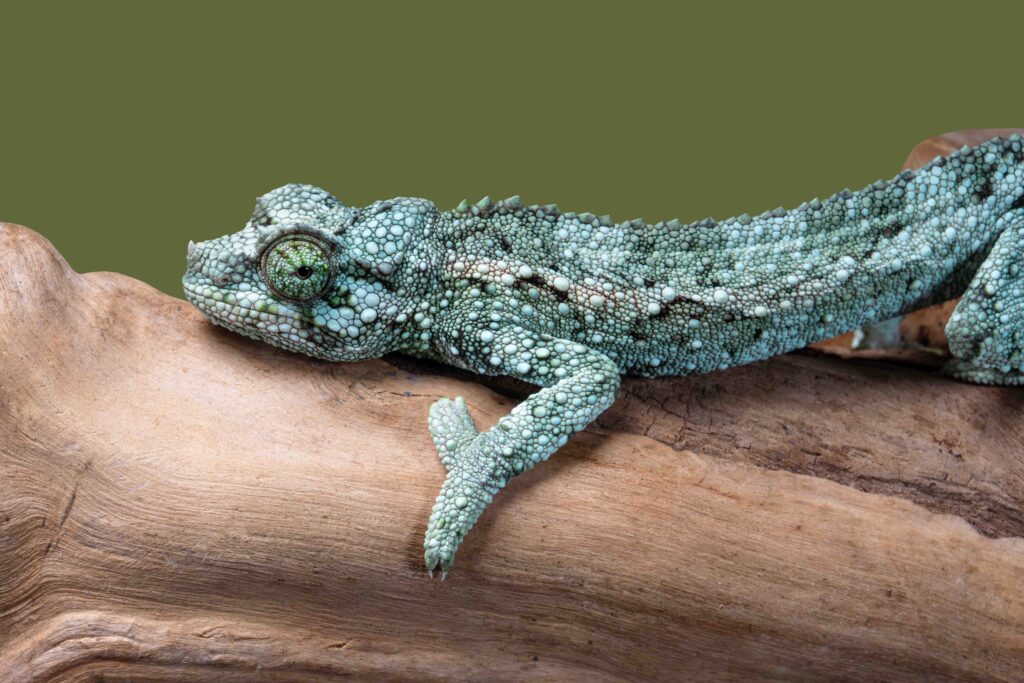
Jackson's Chameleon
- Class: Reptilia
- Order: Squamata
- Family: Chamaeleonidae
- Scientific Name: Trioceros jacksonii
- Class: Reptilia
- Order: Squamata
- Family: Colubridae
- Scientific Name: Lampropeltis getula nigrita
Taxonomic Note: The Parson’s Chameleon is the largest chameleon species native to Madagascar and one of the largest in the world.
GEOGRAPHY
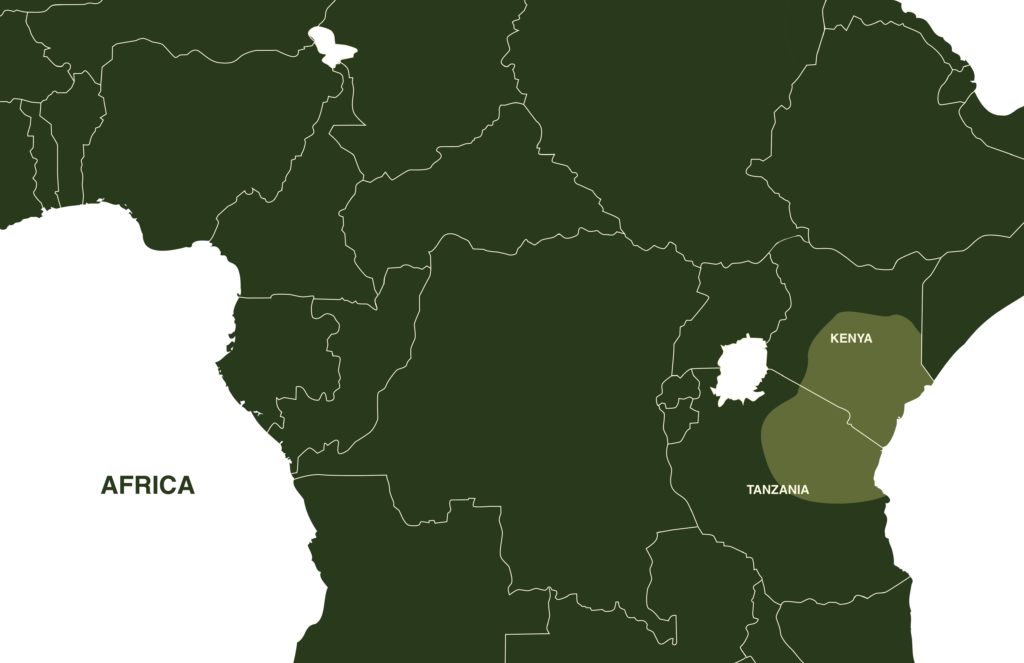
Jackson’s Chameleon is native to East Africa, specifically south-central Kenya and northern Tanzania, including the regions around Mount Kenya and Mount Meru. Introduced populations exist in Hawaii, Florida, and California. In their native range, they are found at elevations of 5,250–8,010 feet in areas with seasonal rainfall exceeding 50 inches per year. They are arboreal (tree-dwelling) and prefer cool, moist forests with dense vegetation. In Hawaii, they thrive at elevations of 100–1,000 meters in wet, shady locations.
CHARACTERISTICS
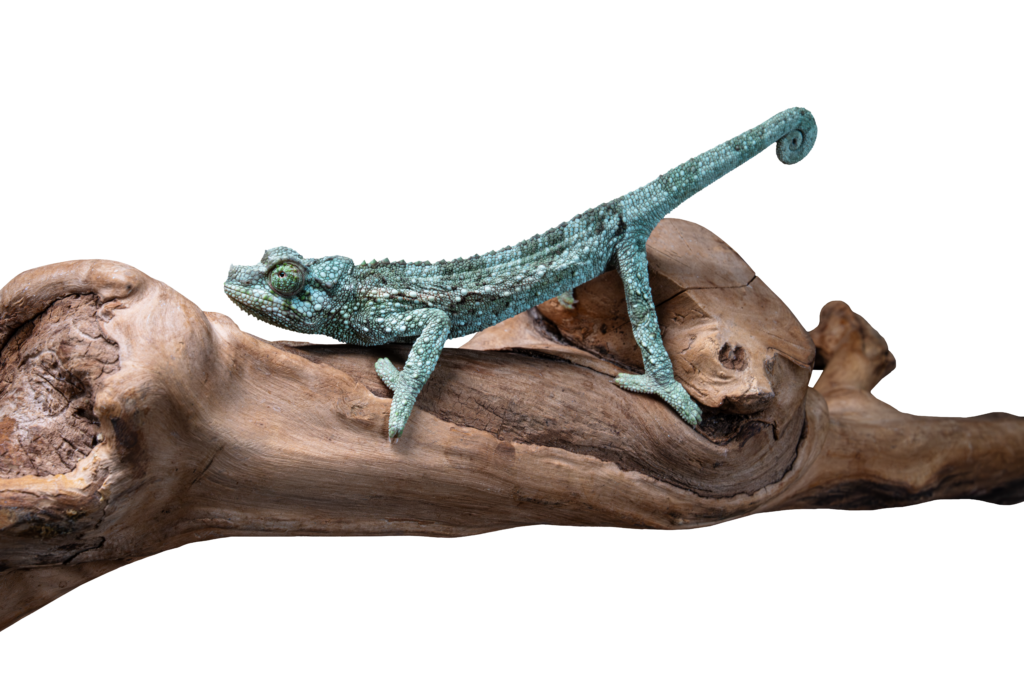
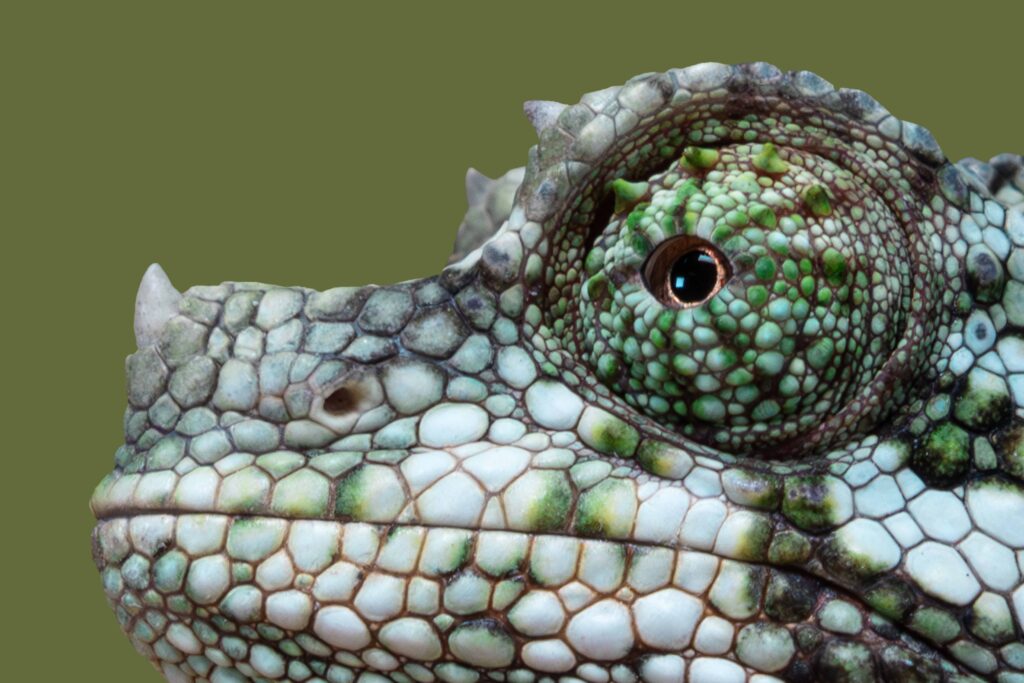
Jackson’s Chameleon exhibits significant sexual dimorphism. Males are significantly larger than females, reaching 10–15 inches in length, while females grow to 8–10 inches. Adults typically weigh between 120–140 grams. Males possess three prominent brown horns, which females generally lack or have only a trace of the rostral horn. These horns begin to develop as juveniles grow, becoming more pronounced with age. They are used primarily for dominance displays, though rarely for actual combat. Males also have a more developed parietal crest and brighter coloration.
They are insectivorous generalists, with a diet consisting primarily of small insects, as well as spiders, centipedes, isopods, millipedes, and snails. In Hawaii, they have been documented preying on native land snails, including critically endangered Achatinella tree snails. They may occasionally consume small lizards, small birds, or nestlings.
They are slow ambush predators, consistently stopping to scan the environment, and their clawed feet and prehensile tail provide a strong grip on branches. Each eye can rotate 180 degrees and move independently, giving them a nearly 360-degree field of vision. When prey is spotted, both eyes converge to focus and judge distance. They capture prey by projecting their long, muscular tongues with great speed, using sticky saliva to secure the prey before retracting it into their mouths. Jackson’s Chameleons have also been observed wiping a whitish-yellow substance from their temporal gland onto branches, which traps insects for them to feed on.
LIVE BIRTH AND EARLY LIFE
Unlike most chameleons, which lay eggs, Jackson’s Chameleons are ovoviviparous, meaning they give birth to live young. Females deliver 8–30 neonates encased in gelatinous egg sacs, which the infants break out of shortly after birth. Baby Jackson’s Chameleons are born fully independent and are miniature versions of the adults, measuring around 2–3 inches in total length.
At birth, neither males nor females have visible horns. The horns begin to emerge in males at around 4–6 months of age and continue to grow as they mature. Juvenile chameleons grow rapidly during their first year, shedding their skin frequently to accommodate their increasing size. They reach sexual maturity between 5–12 months of age, depending on environmental conditions and nutrition.