Giant Forest Scorpion
- Class: Arachnida
- Order: Araneae
- Family: Scorpionidae
- Scientific Name: Gigantometrus swammerdami
- Class: Reptilia
- Order: Squamata
- Family: Iguanidae
- Scientific Name: Ctenosaura pectinata
GEOGRAPHY
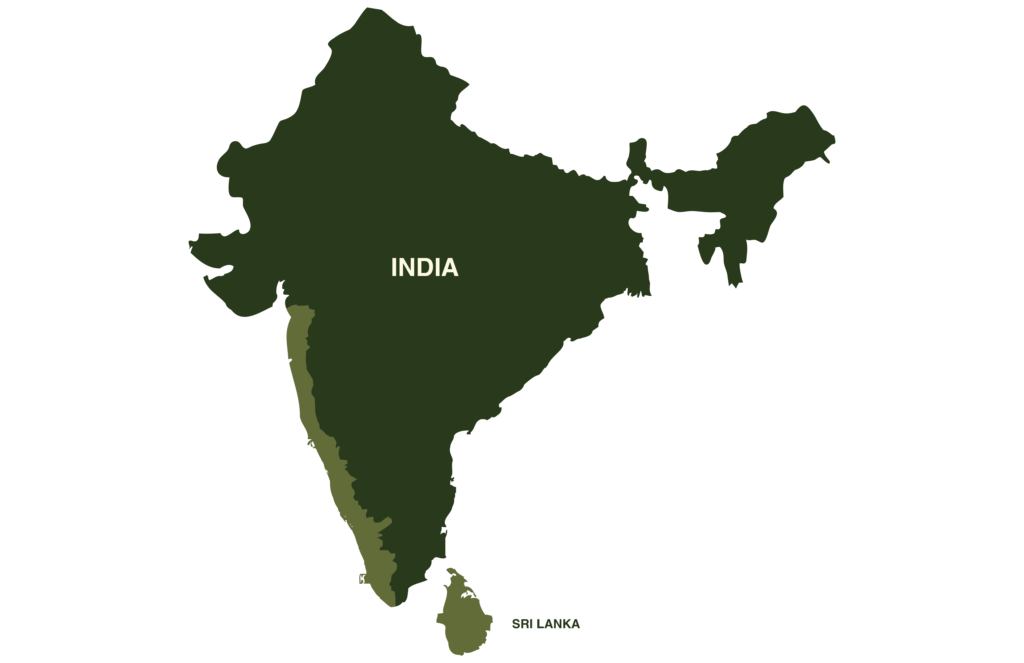
The Giant Forest Scorpion is native to South Asia, primarily found in India (especially the Western Ghats) and Sri Lanka. They are terrestrial and live in humid, tropical rainforests, often found in dark, sheltered spots like under logs and rocks, within leaf litter, and inside burrows they dig themselves. They have also been found in degraded termite mounds and holes in agricultural bunds. As inhabitants of tropical rainforests that are often flooded, these scorpions are incredibly resilient. They can survive being submerged underwater for up to 48 hours.
CHARACTERISTICS
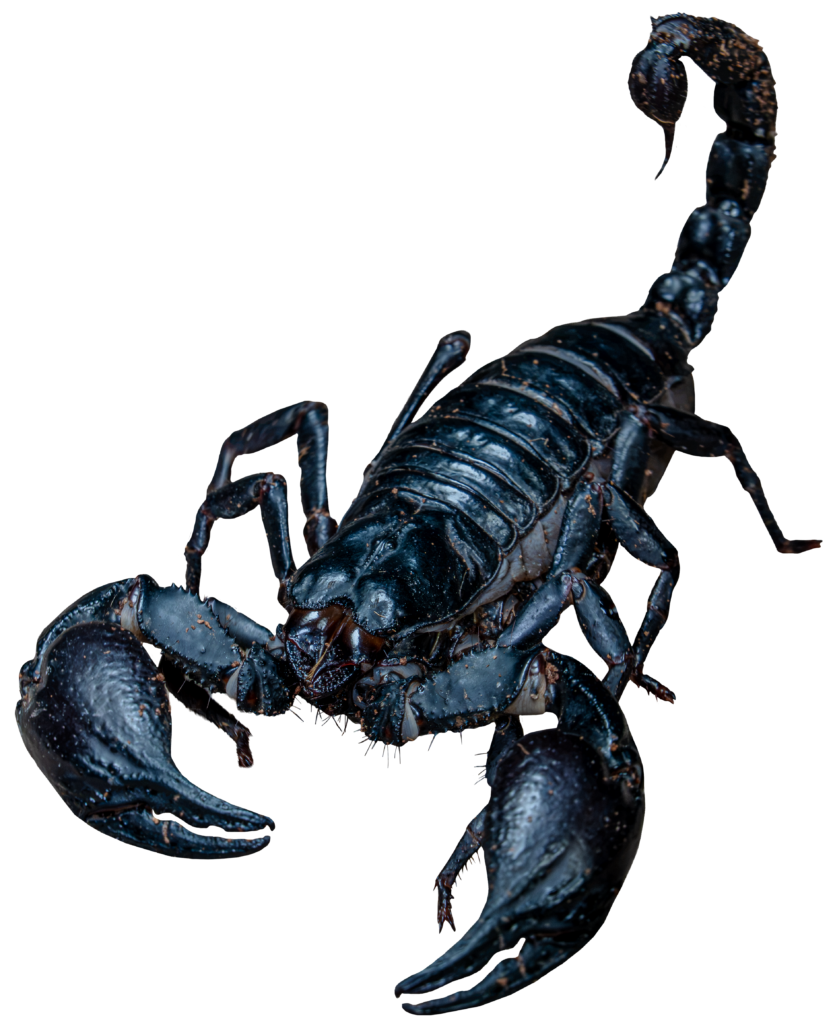
Giant Forest Scorpions are nocturnal and opportunistic carnivores, feeding primarily on large insects and other invertebrates. They are a prime example of a scorpion that has evolved to rely on their powerful, oversized pincers (chelae) to hold, crush, and subdue prey, rather than a potent venom. Their claws are their primary weapons—strong enough to crack the exoskeleton of beetles and crush struggling crickets with ease. They have a famously slow metabolism and can survive for extremely long periods without food; in fact, they have been known to go for over a year without eating.
When threatened, they will rear up with their claws open and arched tail, presenting an intimidating posture. They prefer to pinch first and use their stinger only as a last resort. While sometimes described as more defensive and less docile than the similar-looking Emperor Scorpion, they are generally not aggressive toward humans unless provoked.
In captivity, they can live 6–8 years, with females generally living longer than males. They are widely recognized as the world’s largest scorpion species. Adults average 18–23 centimeters in length and can weigh up to 56 grams, about the weight of a large chicken egg. The largest recorded specimen, found in India during World War II, measured an incredible 29.2 centimeters from pincer tip to stinger.
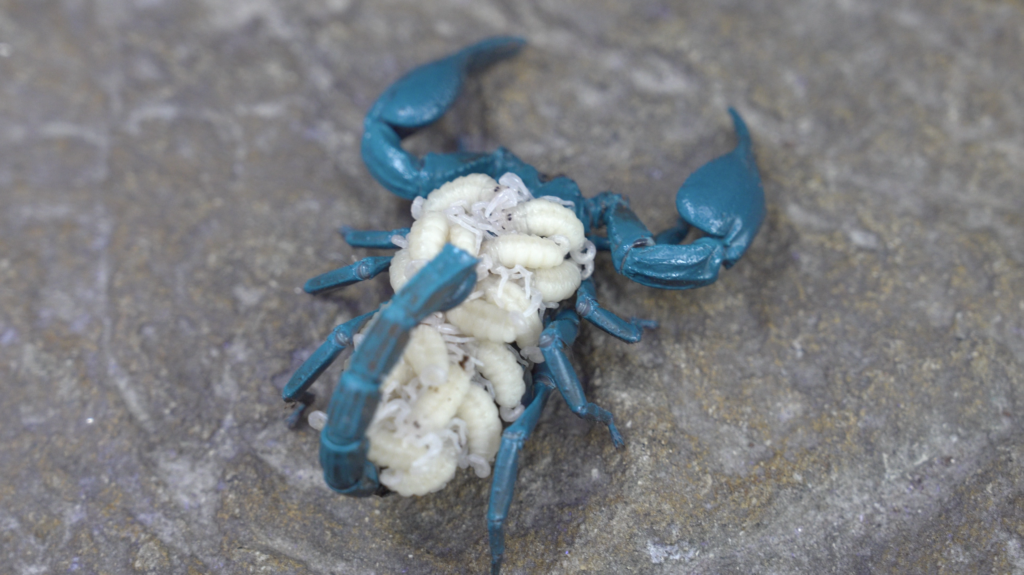
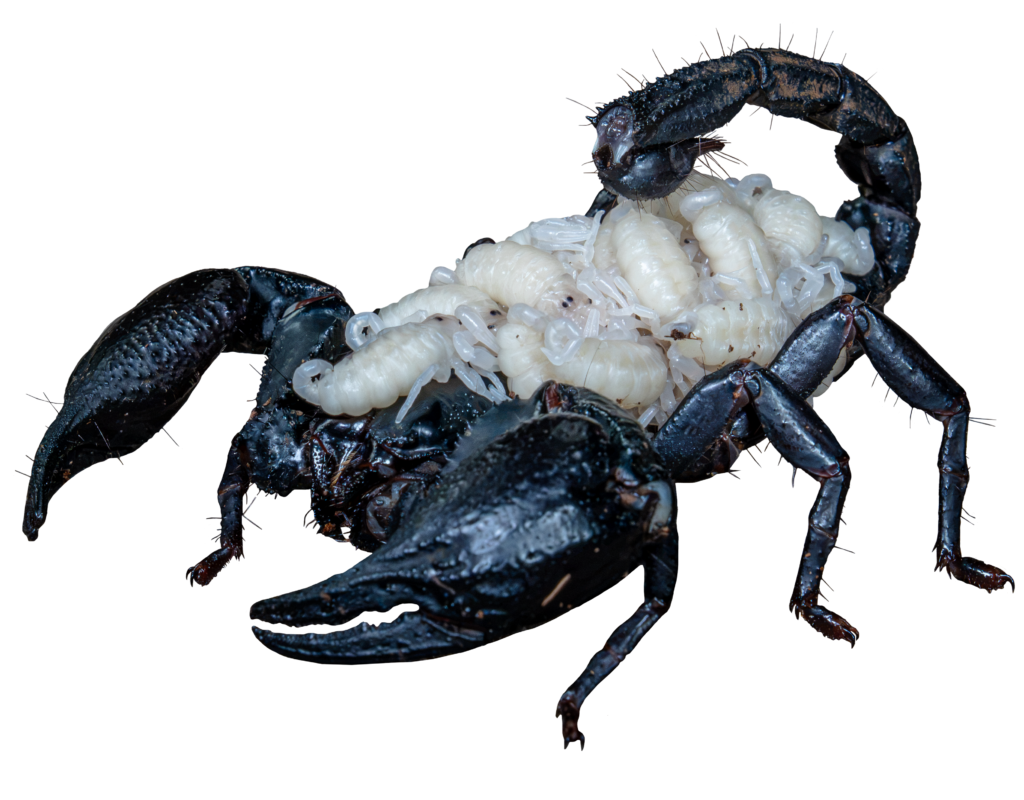
The Giant Forest Scorpion gives birth to live young, rather than laying eggs. After a gestation period of 5–8 months, the female will produce a brood of scorplings. After birth, the young scorpions will climb onto her back for safety and stay there for 2–3 weeks until they have molted and are independent. This maternal care is rare among arachnids and is a touching example of parental investment in the scorpion world. They engage in an interesting courtship dance where the male grasps the female’s pedipalps (pincers) to guide her over his deposited spermatophore, fertilizing her eggs.
RECORD-BREAKING SIZE
The Giant Forest Scorpion is the world’s largest scorpion species. A specimen found in India holds the record for the largest arachnid, measuring 29.2 centimeters from pincer tip to stinger. To put that in perspective, that is longer than a standard sheet of printer paper, and easily large enough to cover an adult human hand.
GLOW IN THE DARK
Like all scorpions, the Giant Forest Scorpion will glow a bright, neon blue-green under a UV light. This is a trait of all scorpions due to a fluorescent compound in their exoskeleton. Scientists are still unsure of the exact purpose of this glow, but theories suggest it may help them detect UV light, communicate with other scorpions, or even serve as a warning to predators. Whatever the reason, there is something undeniably magical about watching one of these giants light up like a living jewel under the right light.