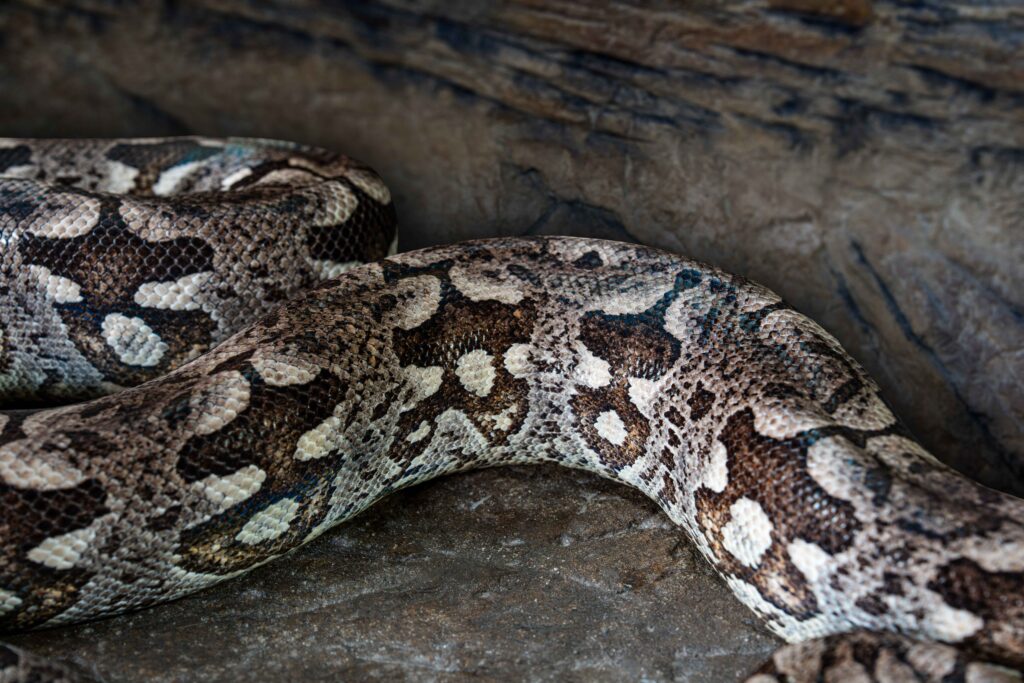
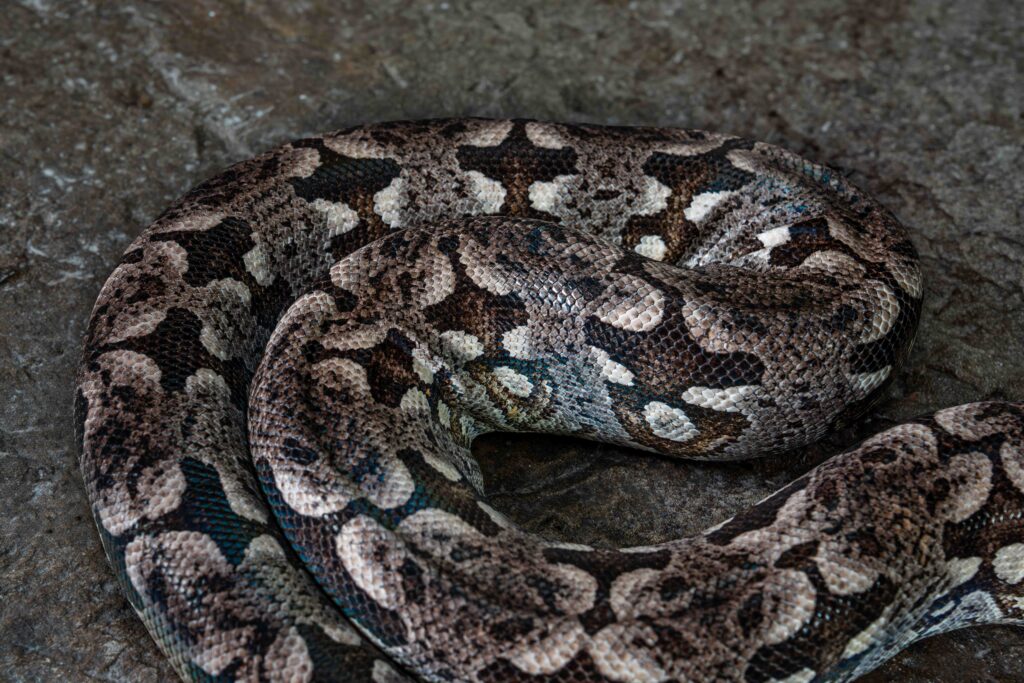
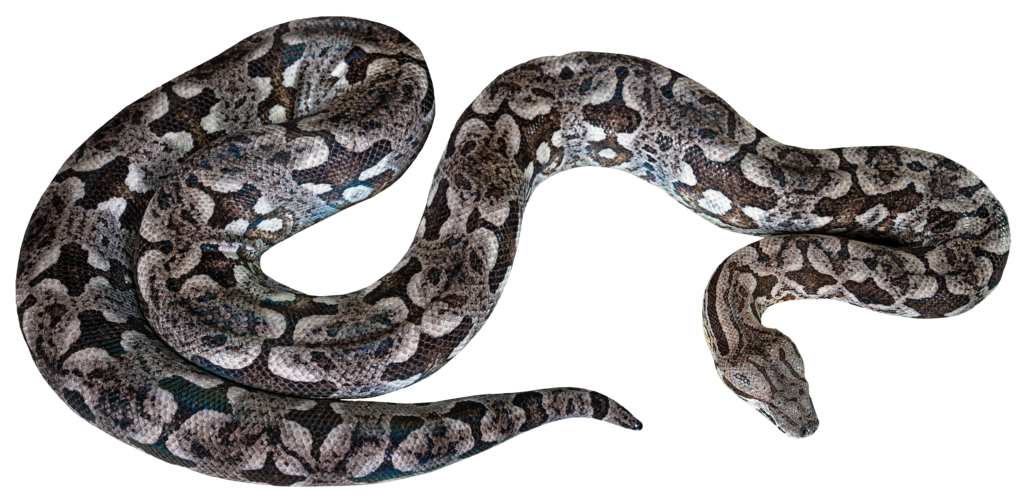
This species is found exclusively on the island of Madagascar, primarily along the western coast and in southwestern regions. Dumeril’s Boas inhabit dry forests, savannas on the central highlands, and rocky terrain with leaf litter for camouflage. They are adaptable and can also live in degraded habitats such as eucalyptus forests and areas near villages, ranging from sea level up to 4,265 feet in altitude. They often use burrows made by other animals for shelter.
CHARACTERISTICS
In the wild, Dumeril’s Boas can live 20–30 years and can reach 30 years with proper care in captivity. They are ovoviviparous, meaning the eggs develop and hatch inside the female’s body, and they give birth to live, fully independent young that measure 12–18 inches in length. Their large size is believed to be an adaptation to the low number of large predators on Madagascar, helping young boas avoid predation by smaller predators. Younger Dumeril’s Boas are primarily nocturnal, but as they mature, they become cathemeral, meaning they sleep intermittently throughout both day and night. They undergo a short period of a hibernation-like state during the winter months.
They are carnivorous generalists, preying on small mammals including rodents and juvenile lemurs, as well as birds, lizards, and other snakes, including their own species. In areas near human habitation, they may also prey on domestic birds. Adults usually grow to 5–7 feet in total length and can weigh up to 20–23 pounds. As ambush predators, they lie motionless for long periods, waiting for unsuspecting prey to come within striking distance. They strike rapidly, seize the prey with their teeth, and kill through constriction, coiling their muscular bodies around the animal until it suffocates.
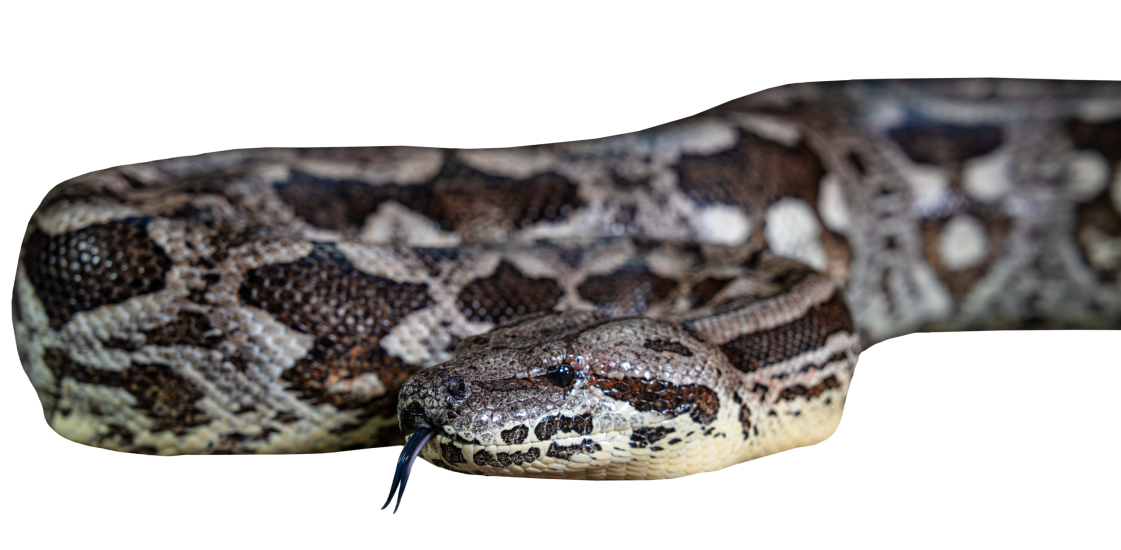
Dumeril’s Boas possess heat-sensing labial pits around their mouths that detect the body heat of warm-blooded prey. This adaptation is particularly useful for night hunting when temperatures drop. They also have a forked tongue that collects odor particles and transfers them to the Jacobson’s organ on the roof of the mouth, helping them locate prey and detect chemical signals from other boas.
VESTIGIAL HIND LIMBS
Like other boas, Dumeril’s Boas possess vestigial hind limbs visible as small, claw-like pelvic spurs on either side of the tail. These spurs are remnants of a pelvis and femur inherited from ancestral lizards, preserved as a classic example of evolution in action. Males use these spurs, which are larger than those in females, to stimulate or clasp mates during breeding.