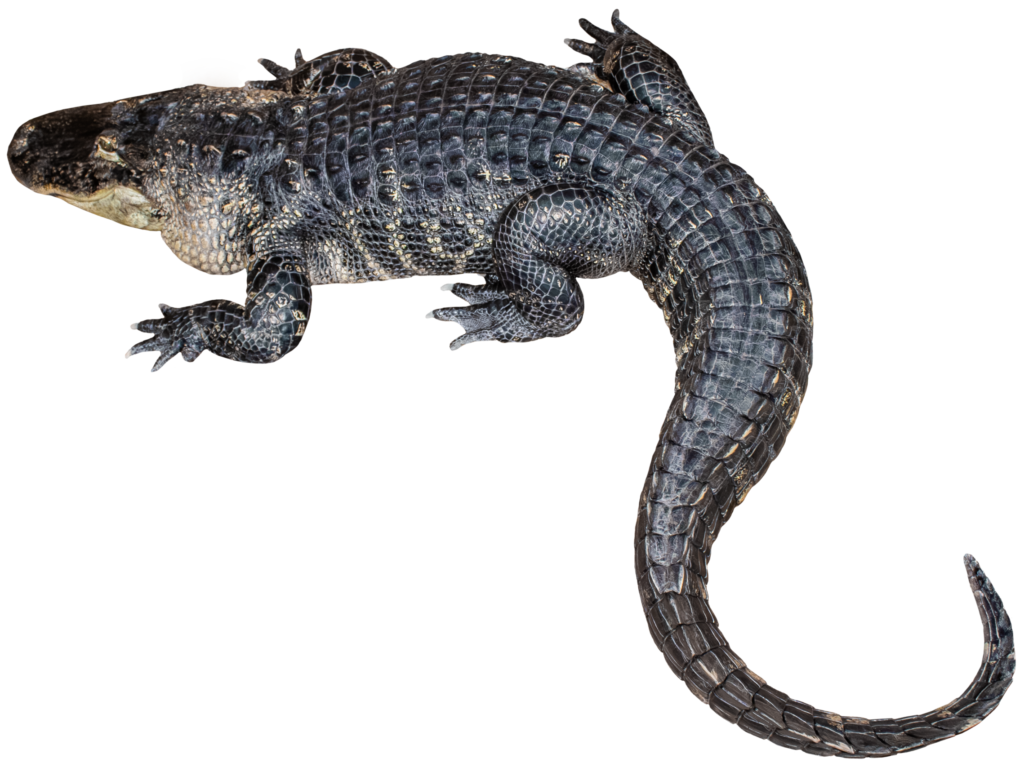
Darth Gator
The American Alligator
- Class: Reptilia
- Order: Squamata
- Family: Alligatoridae
- Scientific Name: Alligator mississippiensis
- Class: Amphibia
- Order: Anura
- Family: Hylidae
- Scientific Name: Litoria Caerulea
GEOGRAPHY
The American Alligator lives in freshwater environments across the southeastern United States, from North Carolina to Texas, preferring swamps, marshes, rivers, and lakes. They are opportunistic carnivores, meaning they eat whatever meat they can catch or find. Their diet changes dramatically as they grow, hatchlings start with insects and small fish, while adults will take down turtles, birds, deer, and even smaller alligators. They live about 50 years in the wild and can grow to be 11–15 feet long, with some exceptional individuals reaching nearly 20 feet.

APEX PREDITORS
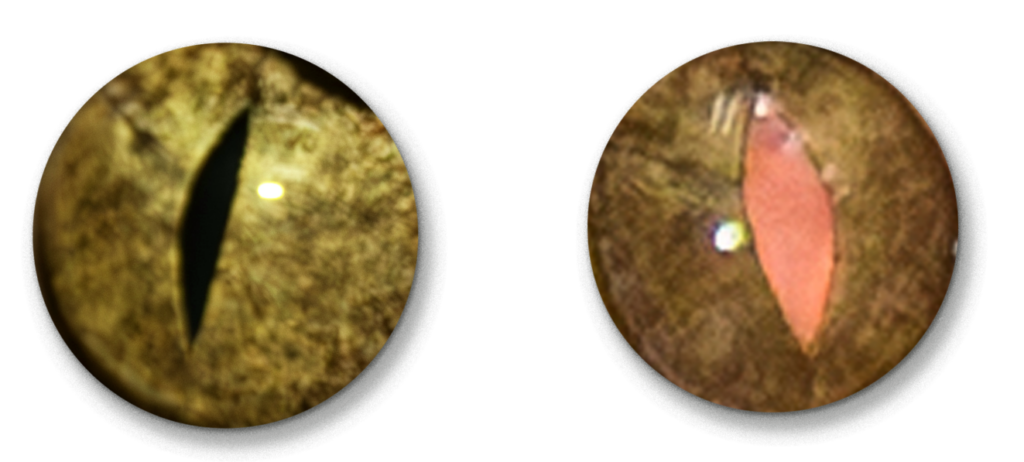
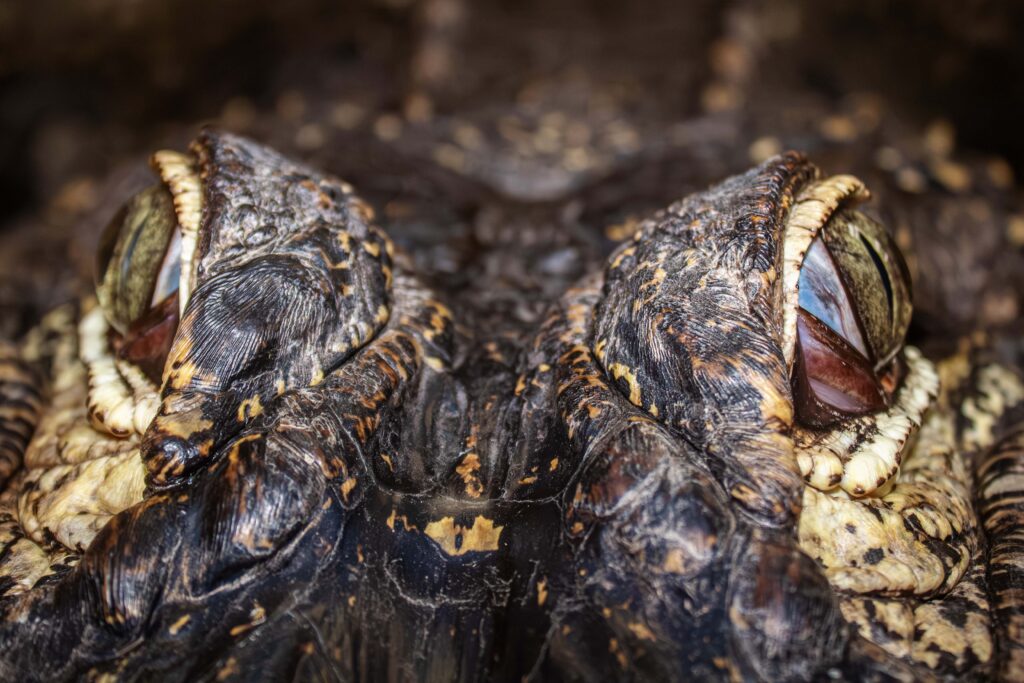
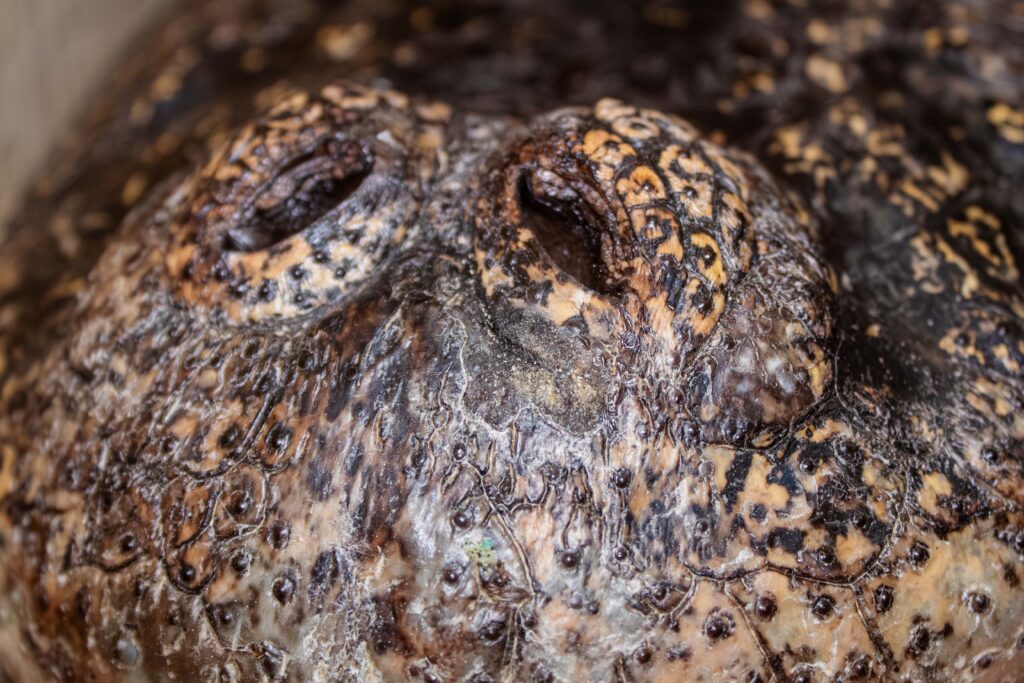
The American alligator is one of nature’s most formidable apex predators and a living example of evolutionary success. Their bodies are perfectly designed for their environment. Eyes and nostrils positioned on top of the head allow them to breathe and see while completely submerged underwater, moving stealthily and undetected. They can detect fresh blood from up to a mile away, a remarkable sense that alerts them to injured prey or nearby feeding opportunities. A special structure in the back of the eye called the tapetum lucidum reflects light to enhance night vision, which is why their eyes glow red when hit with a light.
Their power is unmatched. Alligators have a bite force of up to 4,000 pounds per square inch, thanks to a jaw structure that is hinged at the bottom. To put that in perspective, a human bite is around 150 PSI, and a lion’s is about 650 PSI. An alligator’s bite is strong enough to crush a turtle’s shell. A four-chambered heart separates oxygenated from deoxygenated blood, making respiration highly efficient. This allows them to stay underwater longer and provides the sustained energy needed for explosive maneuvers like the death roll, a spinning technique used to tear apart prey. Since alligators cannot chew, this violent rotation creates bite-sized chunks for swallowing while drowning the victim in the process.
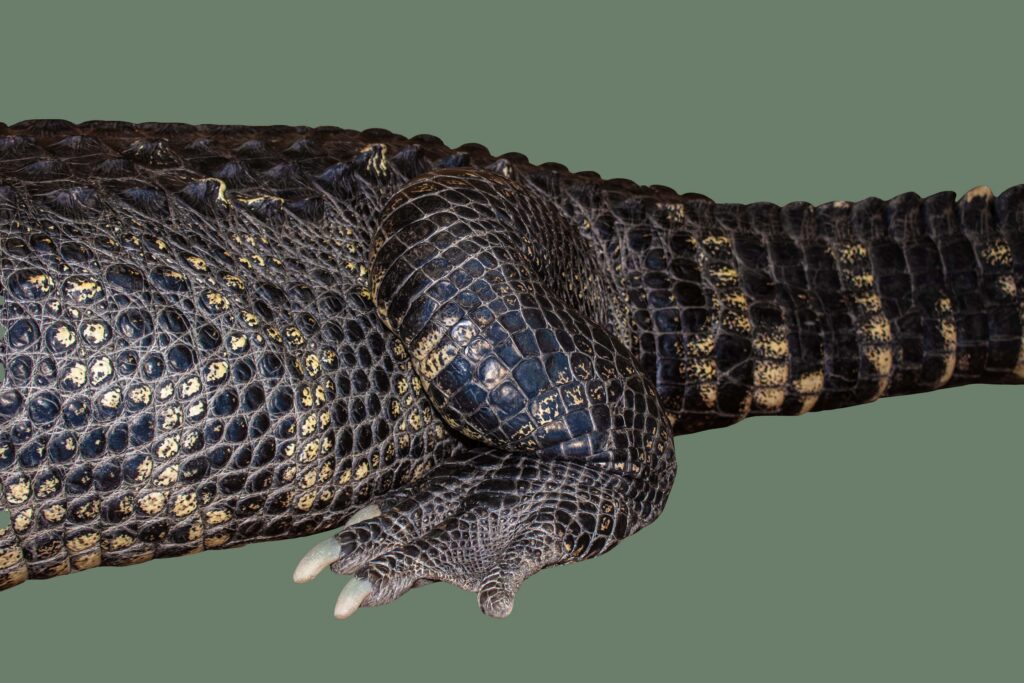
The tail is one of the most important parts of an alligator’s anatomy, making up half of their body length. It serves as the primary means of movement in water, propelling them forward with powerful sweeps. It also allows them to hydroplane across the surface, skimming along the water with remarkable speed. Using their tails, gators can launch themselves five feet out of the water to ambush prey. On land or in defense, the tail becomes a powerful weapon, capable of delivering strong, painful strikes to predators or threats.
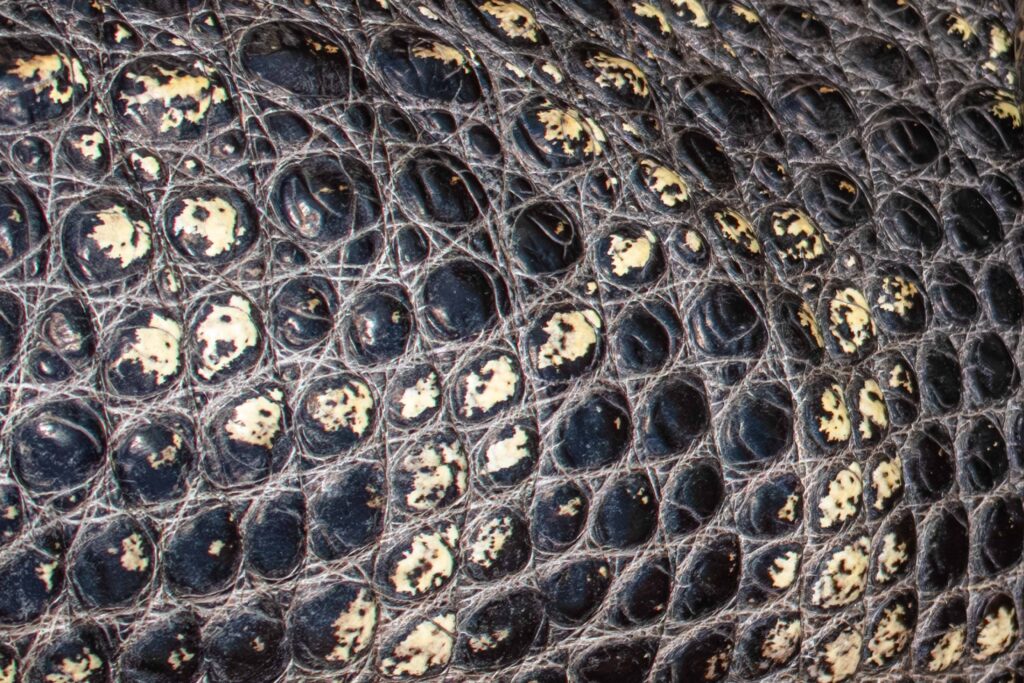
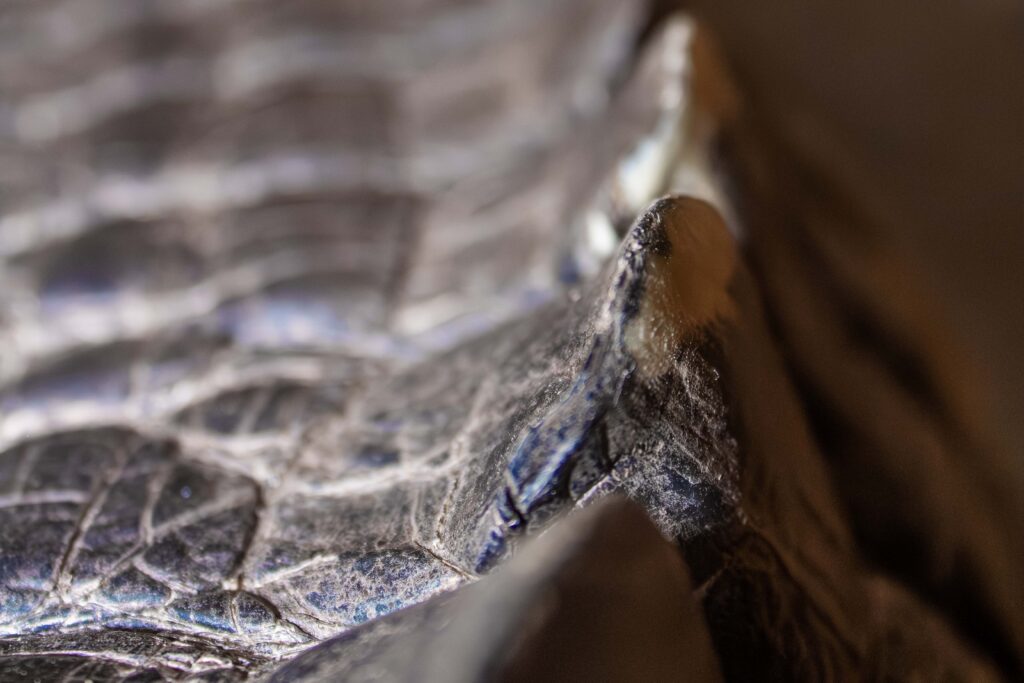
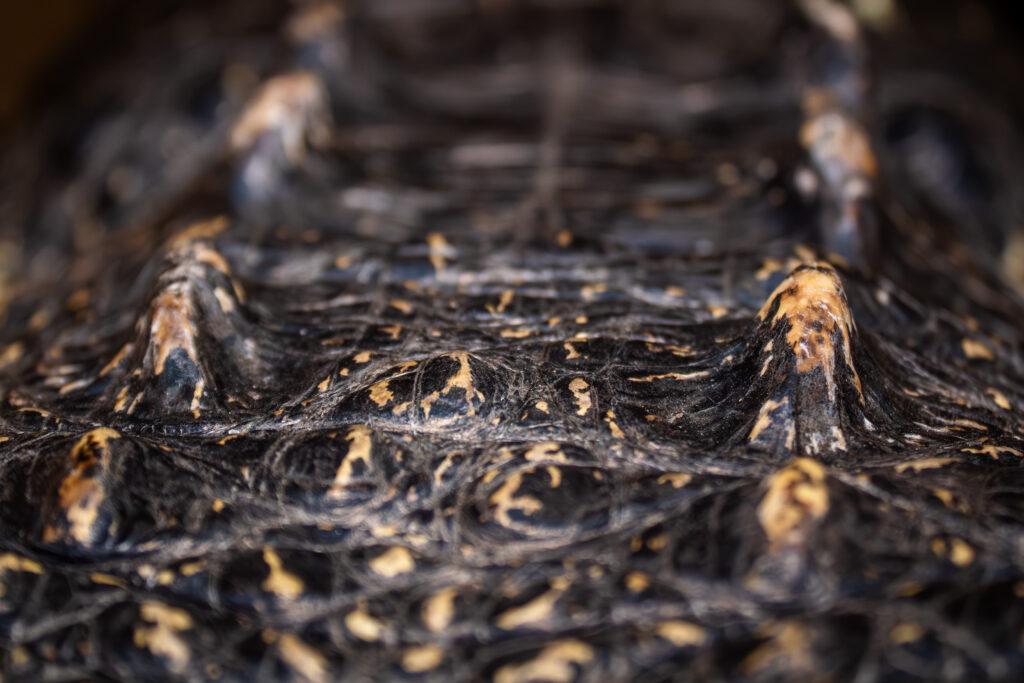
Alligators possess incredible skin, armored with thick scales and bony plates called osteoderms or scutes. These structures are carefully designed for multiple survival purposes. The osteoderms along their back provide a unique blend of protection and flexibility, exhibiting a pseudo-plastic response that absorbs impacts without breaking. They can even shift toward the back legs within milliseconds for quick, effective attacks. Meanwhile, the scales on their belly are smooth, allowing them to glide effortlessly over surfaces. This enables explosive bursts of speed on land to catch prey and drag it back to the water.
An alligator’s scales also play a vital role in thermoregulation. Blood vessels within the scales, particularly the osteoderms, help absorb and store heat while basking. This is essential for their cold-blooded metabolism, allowing them to maintain body temperature and energy levels. After a morning of basking, a gator can store enough heat to remain active and alert throughout the day, even during cooler weather.
SURVIVORS OF THE AGES
Alligators have survived ice ages, droughts, and the extinction of the dinosaurs. Their ability to brumate during cold weather, entering a state of dormancy similar to hibernation, allows them to survive freezing temperatures. When water freezes over, alligators will stick their snouts above the ice to breathe, remaining in a state of suspended animation until warmer weather returns. This incredible resilience has made them one of the most successful predators in North American history.
DARTH GATOR
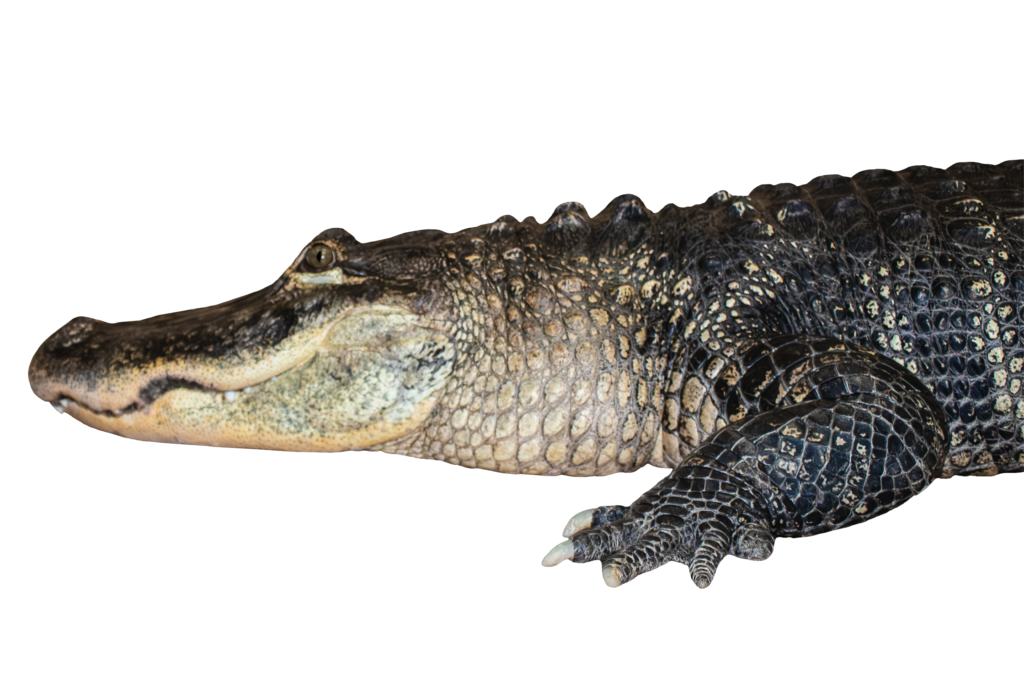
Darth is a true gentleman.
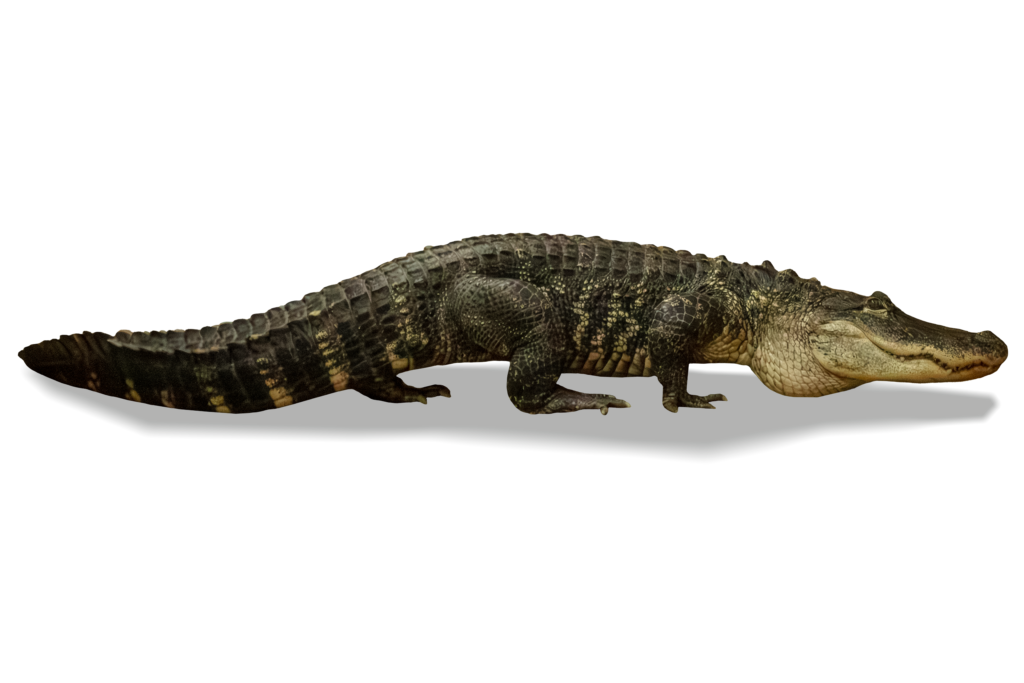
We at The Reptile Zoo are proud to have given a second chance to this remarkable alligator, rescuing him from a grim fate. Darth was born into the dark side of the multi-million dollar alligator leather industry, bred at a facility that prized his beautiful skin patterns and colors. These farms often raise alligators in crowded, stagnant conditions where they cannot properly walk or swim, all to meet the demand for luxury goods like belts and handbags.
For every alligator legally killed for its skin, another may be illegally poached, a statistic that once threatened to push the species to the brink of extinction. Darth was destined to become nothing more than a product, until he was given a new life.
Today, he lives a life of purpose as one of our most incredible ambassadors. He spends his days, alongside his reptile friends at the zoo, in a calm and stoic presence that naturally establishes him as a true leader in his domain. His journey from a facility that saw only his skin to a sanctuary that values his spirit serves as a powerful reminder that these animals are so much more than what humans take from them.