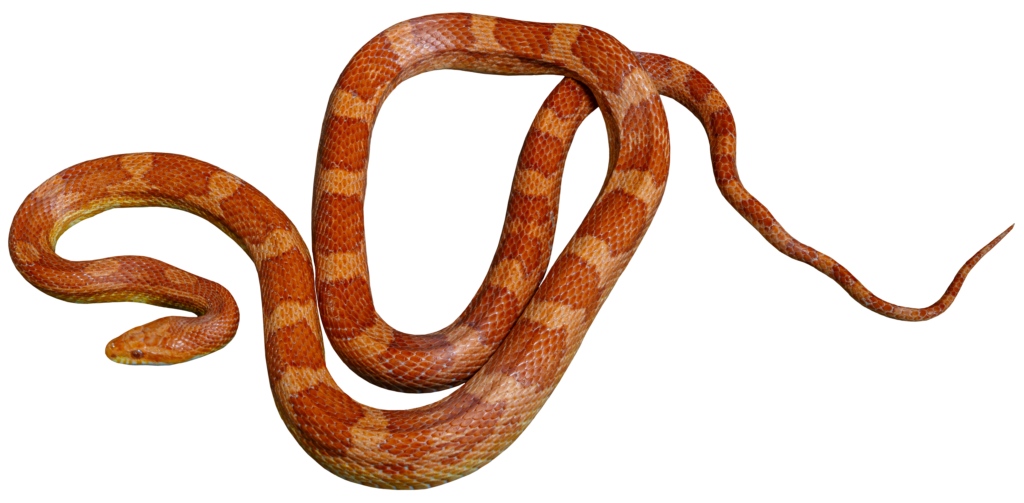
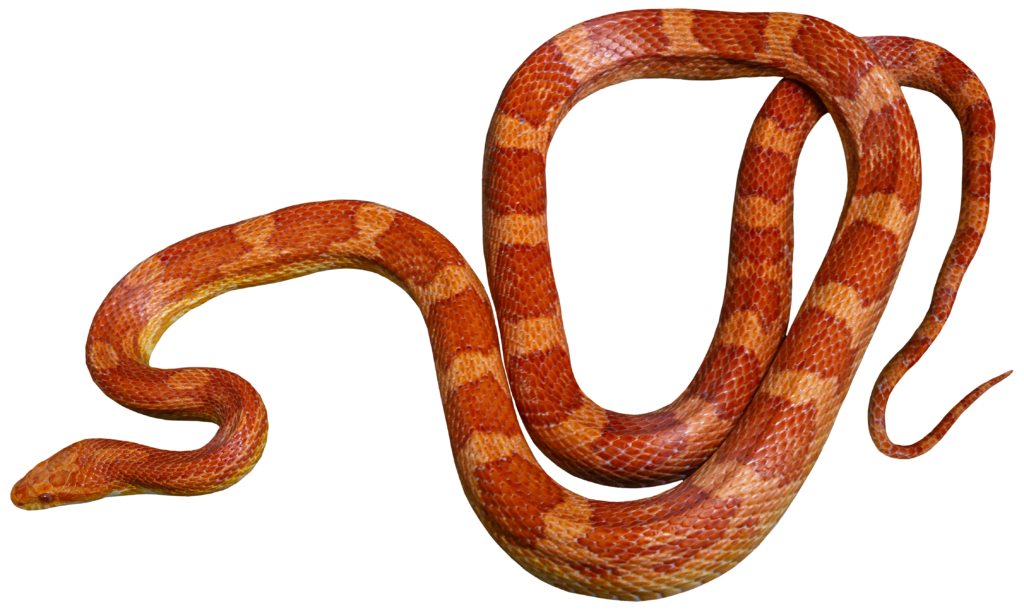
Albino Corn Snake
- Class: Reptilia
- Order: Squamata
- Family: Colubridae
- Scientific Name: Pantherophis guttatus
- Morph: Albino
- Class: Reptilia
- Order: Squamata
- Family: Colubridae
- Scientific Name: Lampropeltis getula nigrita
GEOGRAPHY
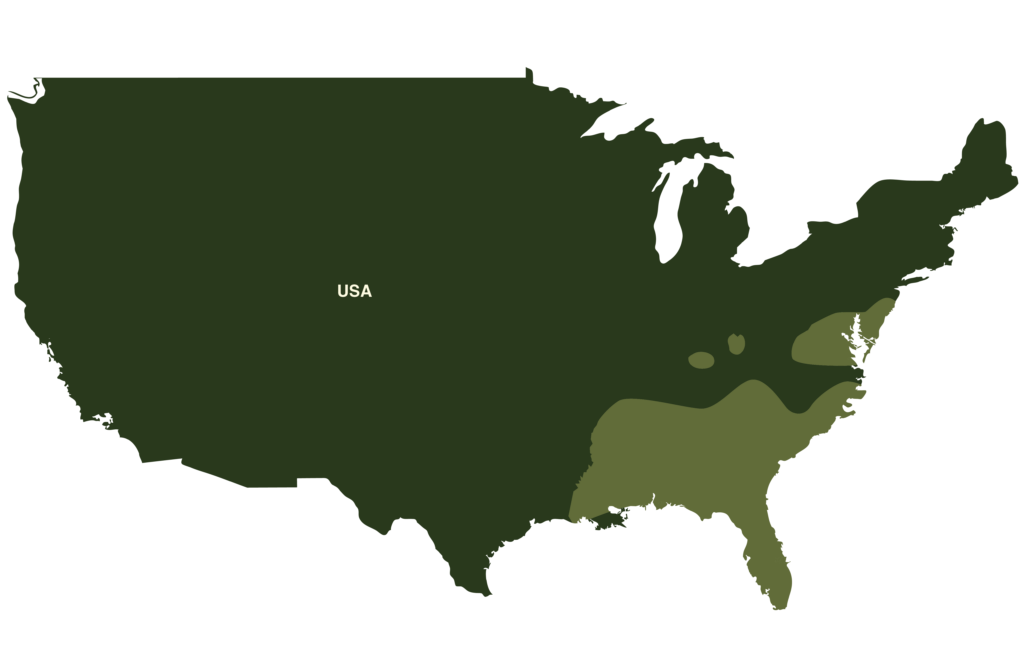
Corn snakes are native to the eastern and southeastern United States. Their range extends from southern New Jersey south through Florida, and west to Louisiana and parts of Kentucky. Introduced populations have become established in the Bahamas, Grand Cayman, the U.S. Virgin Islands, and parts of Australia. They inhabit temperate terrestrial environments including deciduous forests, overgrown fields, forest openings, palmetto flatwoods, and rocky hillsides. Corn snakes are highly adaptable and can be found in a variety of habitats from sea level to elevations of up to 6,000 feet. They prefer warm, dry areas with plenty of cover and are often associated with abandoned buildings, barns, and agricultural edges where rodents are plentiful.
CHARACTERISTICS
Corn snakes are long ambush predators that generally weigh between 300–800 grams and reach 2.0–5.97 feet in length. They are carnivorous constrictors whose diet consists mostly of small rodents, which make up over half of their food intake. They also eat birds, eggs, lizards, frogs, and other small vertebrates. Young snakes eat mostly ectotherms such as frogs and lizards, while adults switch to warm-blooded prey. In Florida, their diet consists mainly of reptiles and amphibians, which may contribute to the region’s smaller snake sizes. Corn snakes are efficient nest predators and have been identified as significant predators of quail and songbird nests, consuming both eggs and hatchlings.
They are primarily crepuscular, though during hot weather they become more nocturnal. They hunt using a combination of chemical cues detected via their forked tongue and Jacobson’s organ. They are skilled climbers and can ascend trees, cliffs, and buildings to hunt prey. When hunting, they bite to gain a grip, then quickly coil around their prey and squeeze until it is subdued before swallowing it whole, usually headfirst.
In the wild, corn snakes typically live 6–8 years, but they can live considerably longer in captivity. When threatened, corn snakes may vibrate their tails rapidly against dry leaves or debris, producing a rattling sound that mimics rattlesnakes. They may also release a foul-smelling musk from their cloaca as a defense mechanism. Their primary defense, however, is to flee and hide.
ALBINO MORPH
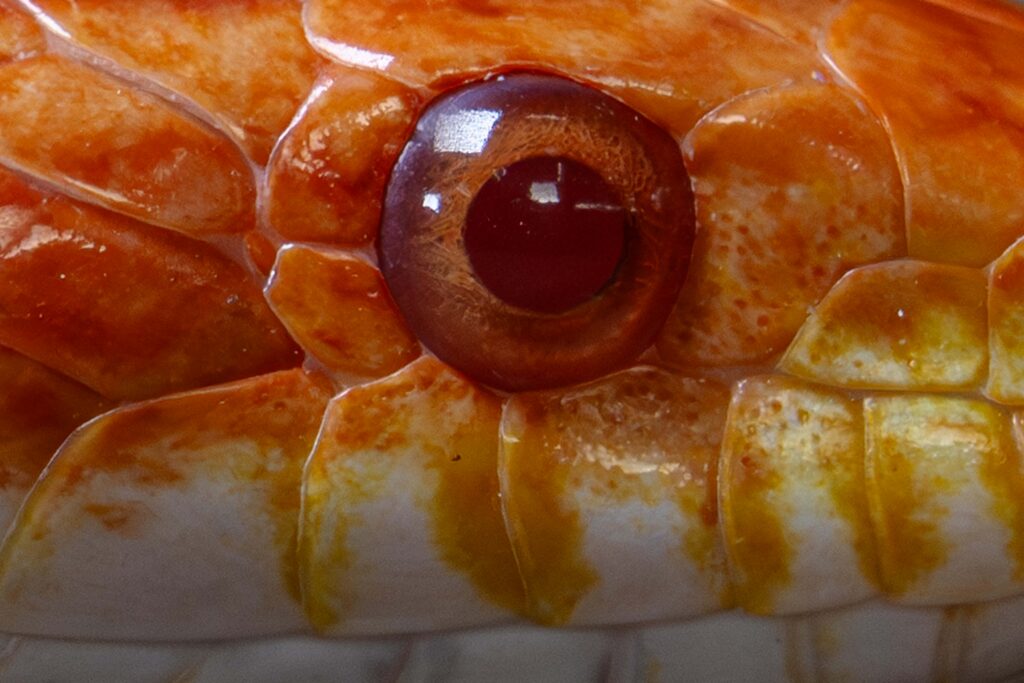
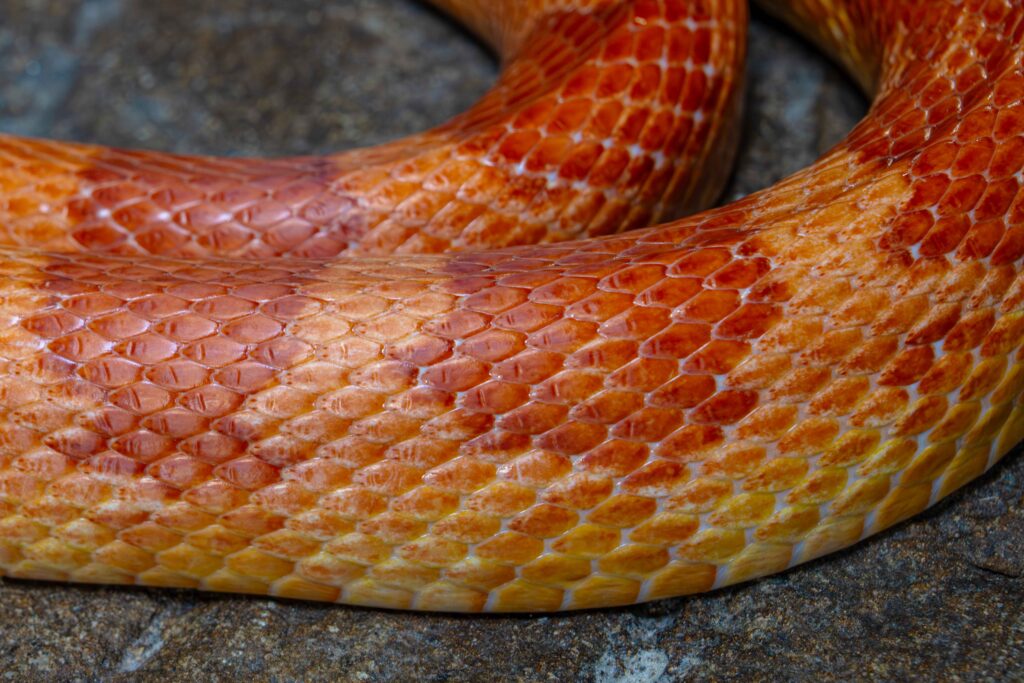
Albino corn snakes are one of the most popular and recognizable color morphs in the reptile. The albino trait in corn snakes is recessive, meaning both parents must carry the gene for offspring to display the albino appearance. When two albino corn snakes are bred together, 100 percent of their offspring will be albino. In the wild, albino corn snakes are extremely rare because their lack of camouflage makes them highly visible to predators and their lighter skin offers less protection from ultraviolet radiation.
INTELLIGENCE
Corn snakes have demonstrated impressive cognitive abilities. A 1999 study by Dr. David Holzman at the University of Rochester found that corn snakes’ capacity for spatial learning rivals that of birds and rodents. When given a biologically meaningful objective, finding shelter from bright light, they exhibited
an acute ability to learn and navigate their surroundings. The study also revealed that snakes rely more heavily on vision than previously assumed, though younger snakes were more resourceful in applying multiple senses while older snakes relied more on sight.
ECOLOGICAL IMPORTANCE
Corn snakes play a vital role in controlling rodent populations, which helps prevent the spread of rodent-associated diseases and reduces crop damage in agricultural areas. They are also an important food source for larger predators, including other snakes (kingsnakes and racers), birds of prey, and mammals such as opossums, raccoons, and feral cats.