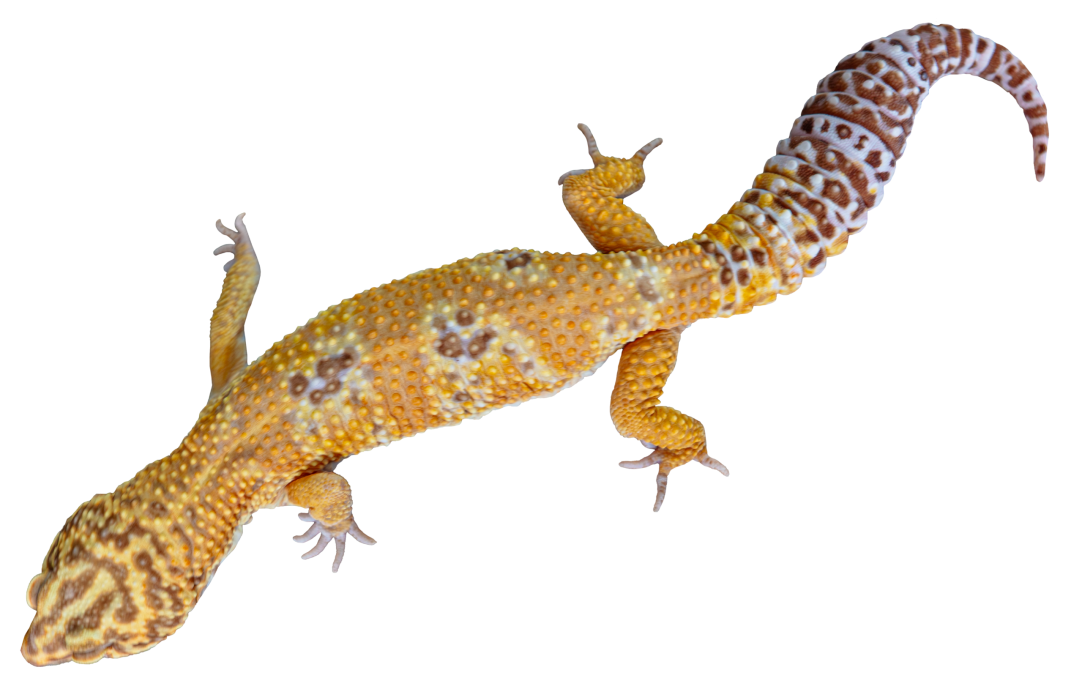
Leopard Gecko
- Class: Reptilia
- Order: Squamata
- Family: Eublepharidae
- Scientific Name: Eublepharis macularius
- Class: Reptilia
- Order: Squamata
- Family: Diplodactylidae
- Scientific Name: Correlophus ciliatus
Taxonomic Note: Unlike most geckos, Leopard Geckos possess movable eyelids and lack adhesive toe pads, making them true ground-dwelling specialists rather than climbers.
GEOGRAPHY
The Leopard Gecko is native to south-central Asia, including Afghanistan, Pakistan, northwestern India, Iran, Iraq, and western Nepal, with additional reports in parts of the Middle East. Unlike their rainforest relatives, Leopard Geckos are terrestrial, spending their days hiding under rocks, inside burrows, or within rock crevices to escape daytime heat and predators. They may also shelter beneath loose tree bark in arid forests. In the wild, they experience cool winter temperatures dropping below 10°C (50°F), during which they undergo brumation; a hibernation-like state that helps them survive harsh conditions.

CHARACTERISTICS
In the wild, Leopard Geckos live an average of 4.9 years. Adults typically measure 7–11 inches in length and can weigh up to 80 grams. They are insectivorous and opportunistic carnivores, feeding on insects, spiders, scorpions, centipedes, beetles, and other invertebrates. Remarkably, they are unaffected by scorpion stings, allowing them to prey on scorpions without risk. Leopard Geckos are polyphyodonts, meaning they continuously replace their teeth throughout their lives—each of their approximately 100 teeth is replaced every 3–4 months.
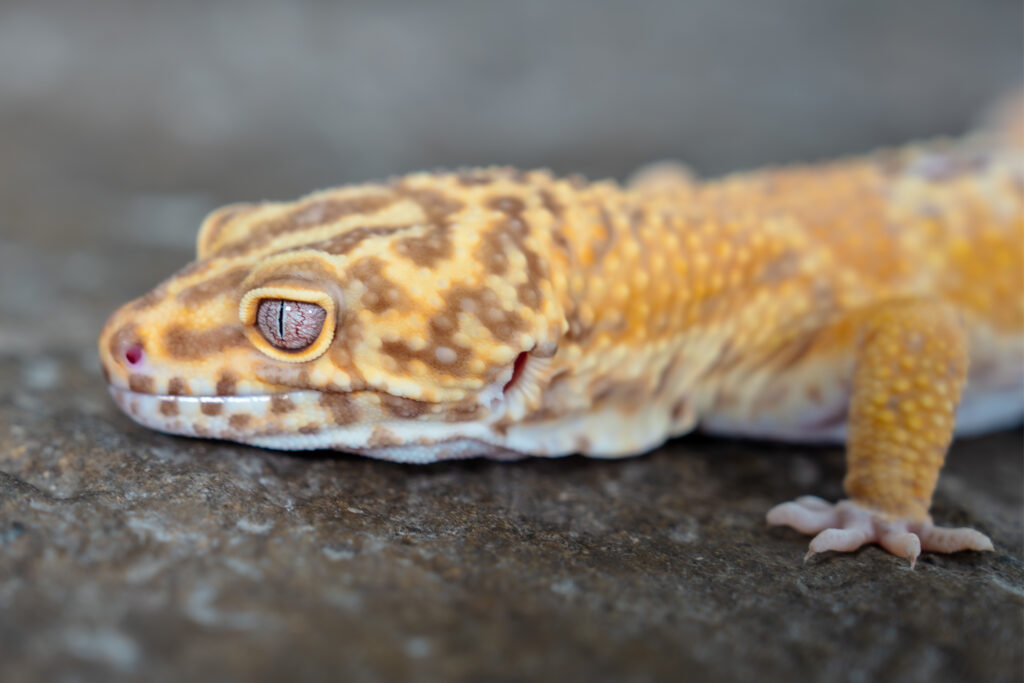
Leopard Geckos primarily hunt at dusk and night when temperatures are favorable. When stalking prey, they lift and wiggle their tail before striking, a distinctive behavior that may distract or confuse their target. They rely on their keen sense of hearing and sight to locate food. Unlike most geckos, they have fully functional upper and lower eyelids that can blink and close while sleeping, protecting their eyes from debris in their dry, dusty habitat. They lack adhesive toe pads, so they cannot climb smooth vertical surfaces; instead, they use clawed toes to grip rocks and branches with confidence.
Females can store sperm from a single mating and produce up to three clutches of eggs without needing to mate again. A healthy female can lay 6–8 clutches per year, each containing two eggs. Like many reptiles, the sex of Leopard Gecko hatchlings is determined by incubation temperature, not genetics. Cool temperatures (26–30°C / 79–86°F) produce mostly females; intermediate temperatures (31–33°C / 88–91°F) produce mostly males; and very warm temperatures (34–35°C / 93–95°F) produce mostly females that are often aggressive and may be infertile.
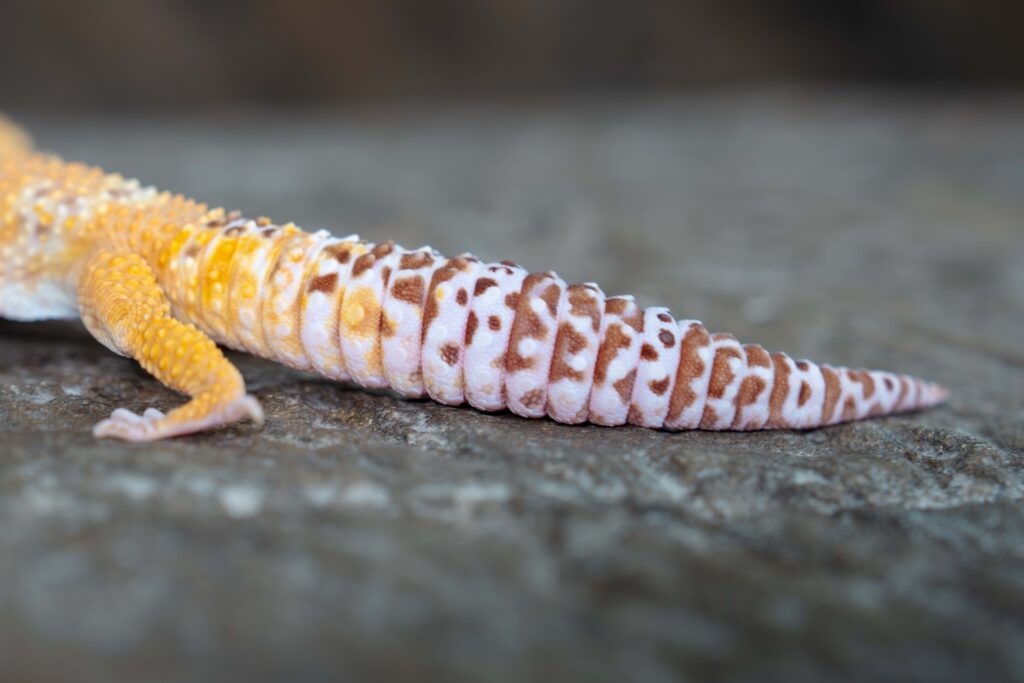
When threatened by predators, Leopard Geckos may hiss or voluntarily detach their tail. The detached tail continues to twitch for up to 30 minutes, distracting the predator while the gecko escapes. The tail regenerates, but the new one appears stumpy, shorter, and smoother than the original. Their thick tail also stores fat reserves, functioning like a camel’s hump to provide energy during food scarcity.
FIRST DOMESTICATED LIZARD
The Leopard Gecko is sometimes referred to as the first domesticated species of lizard, thanks to extensive captive breeding programs. Today, it remains one of the most popular pet reptiles in the world, with nearly 3 million captive-bred individuals in the United States alone.