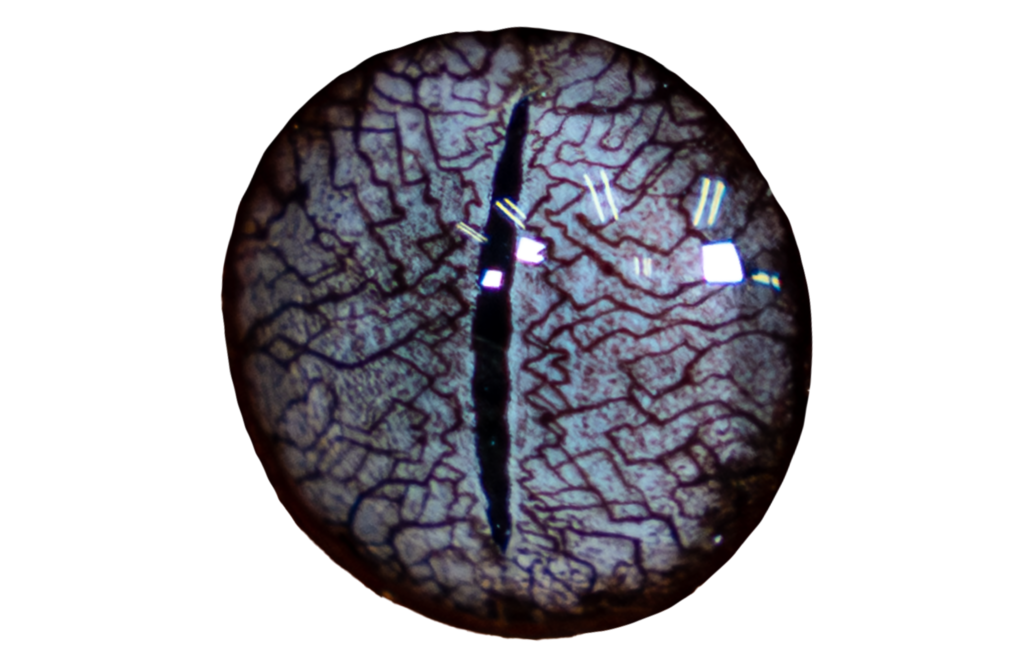
Gargoyle Gecko
- Class: Reptilia
- Order: Squamata
- Family: Diplodactylidae
- Scientific Name: Rhacodactylus auriculatus
- Class: Reptilia
- Order: Squamata
- Family: Colubridae
- Scientific Name: Lampropeltis getula nigrita
Taxonomic Note: They are one of six recognized species in the genus Rhacodactylus and are the smallest member of their genus.
GEOGRAPHY
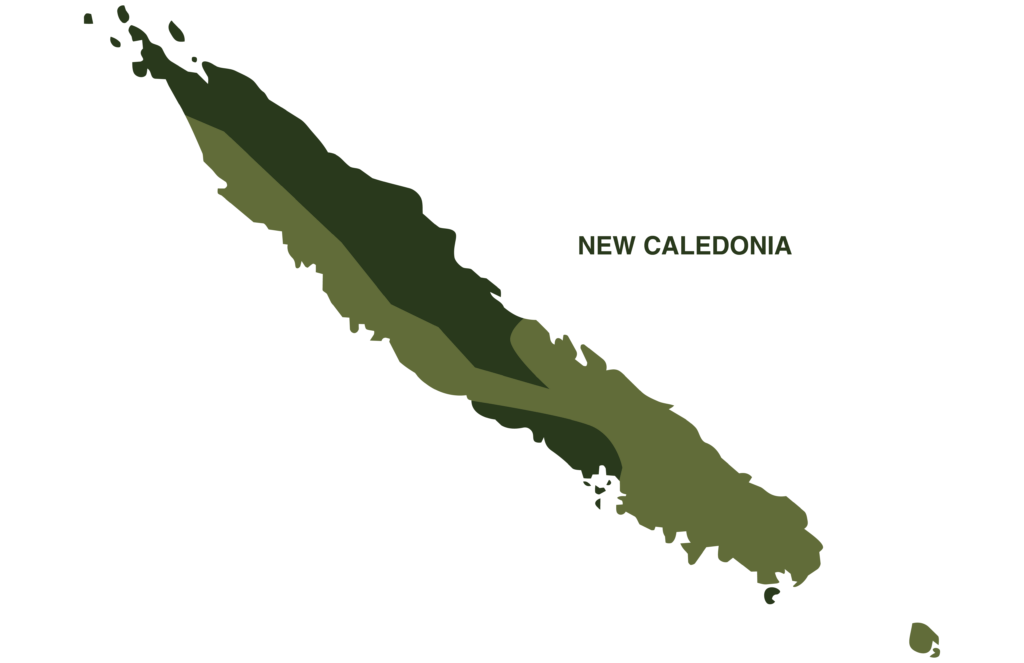
The Gargoyle Gecko is endemic to New Caledonia, an archipelago in the southwest Pacific Ocean. They are found only on the southern end of the island of Grande Terre (the main island), as well as on the Île des Pins. They inhabit tropical scrub forests and dense low brush. The climate is tropical with distinct wet and dry seasons, but high relative humidity is constant. They are semi-arboreal and are typically found within a few feet of the ground, favoring thick, low scrub and vegetation that provides concealment from predators. They spend their time on lower levels of tree trunks and in dense brush along the edges of trails and clearings.
CHARACTERISTICS
Gargoyle geckos are omnivorous generalists. In the wild, they consume a wide variety of arthropods, smaller lizards (including their own species), and various plant materials such as floral parts and sap. In captivity, they thrive on commercial powdered gecko diets supplemented with live insects such as crickets and dubia roaches. As primarily nocturnal foragers, they hunt insects at night and lap up fruit purees and nectar. They have adhesive toe pads and thin, prehensile tails that help them climb on trees. When threatened, they might drop their tail to escape predators and are capable of regenerating it. They have loose, stretchy skin that helps them move from tree to tree.
Gargoyle geckos are known for being docile and generally don’t mind being handled regularly once they have acclimated, though adults rarely bite—hatchlings and subadults may bite when scared, but the bites are superficial. In captivity with proper care, they typically live 15–20 years, and adults typically weigh between 60–80 grams. Adults reach an average total length of 7–9 inches.
Females lay two eggs per clutch, one from each ovary, and can lay 8–9 clutches per year, producing eggs roughly every 30–60 days. They bury their eggs in a moist substrate, and the eggs are about the size of a jelly bean. Eggs hatch in approximately 60–90 days after being laid. On rare occasions, gargoyle geckos can reproduce asexually via parthenogenesis (virgin birth).
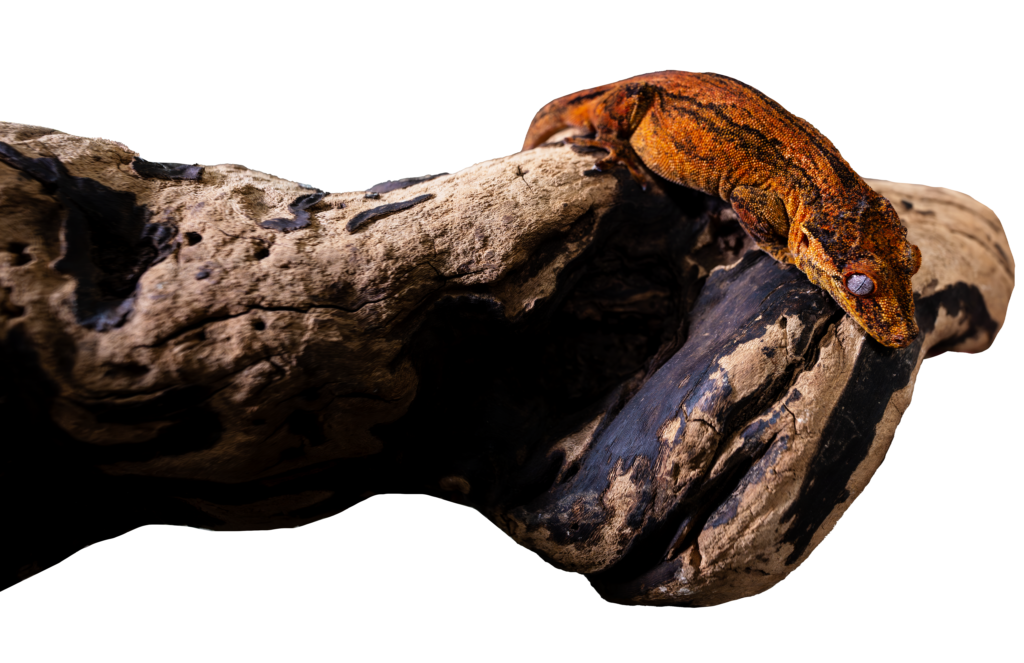
RAREST IN THE WILD, COMMON IN CAPTIVITY
Wild gargoyle geckos are found only on the southern tip of one island in the world. This extremely limited natural range makes them one of the most geographically restricted gecko species. Yet through captive breeding, they have become widespread in the pet trade, serving as an “assurance colony” for the species’ survival. This conservation success story means that even though their wild population is small and vulnerable, the species as a whole is thriving under human care.
COLOR CHANGE
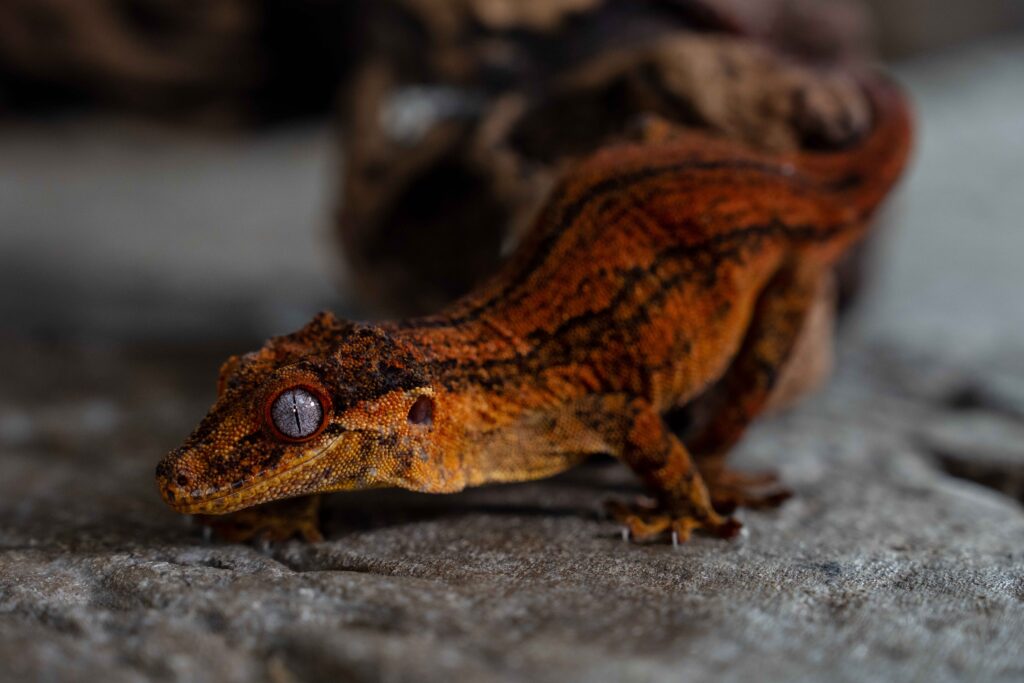
Gargoyle geckos exhibit metachrosis, meaning their coloration is invariably more vivid at night than during the day. While many have a rather drab marbled pattern in daylight, some specimens display much more vivid patterns consisting of bold longitudinal stripes and orange or red body coloration after dark. This nighttime color shift is a stunning example of how these geckos are adapted for life under the cover of darkness.
GARGOYLE APPEARANCE
The most distinctive feature of the gargoyle gecko is the bony projections on their skull that give them their “gargoyle” appearance. Hatchlings emerge with a rounded, normal-looking skull, and the characteristic “knobs” develop as the gecko matures. This means a baby gargoyle gecko looks completely different from their parents.