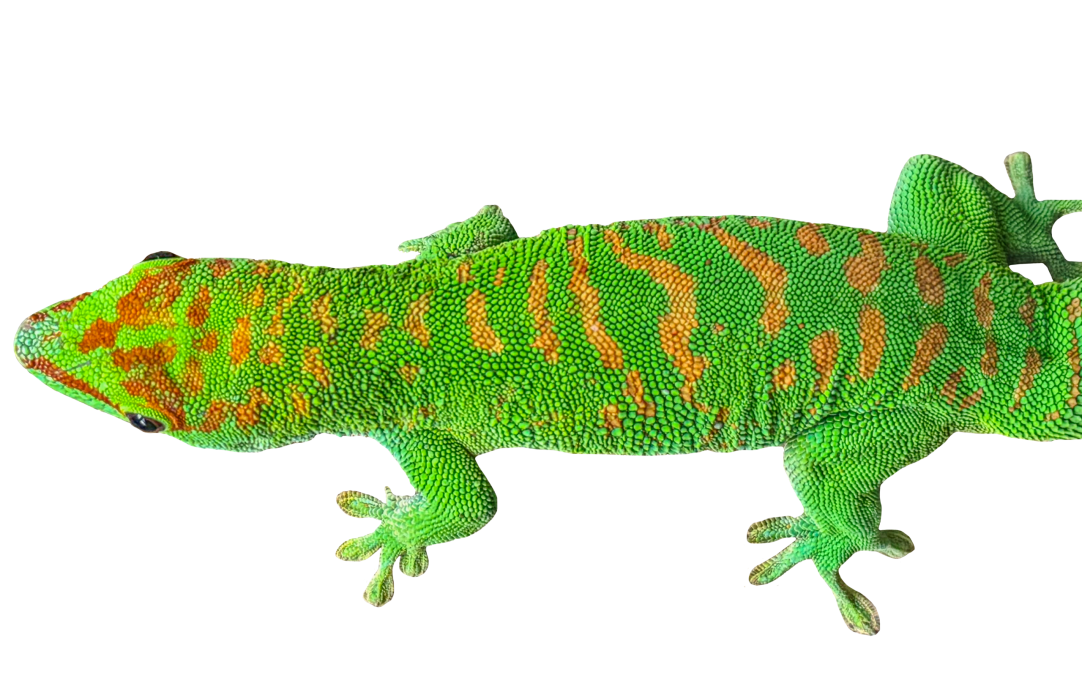
Day Gecko
- Class: Reptilia
- Order: Squamata
- Family: Gekkonidae
- Scientific Name: Phelsuma grandis
- Class: Reptilia
- Order: Squamata
- Family: Diplodactylidae
- Scientific Name: Correlophus ciliatus
Taxonomic Note: There are over 70 recognized species of day geckos, with new species still being discovered.
GEOGRAPHY
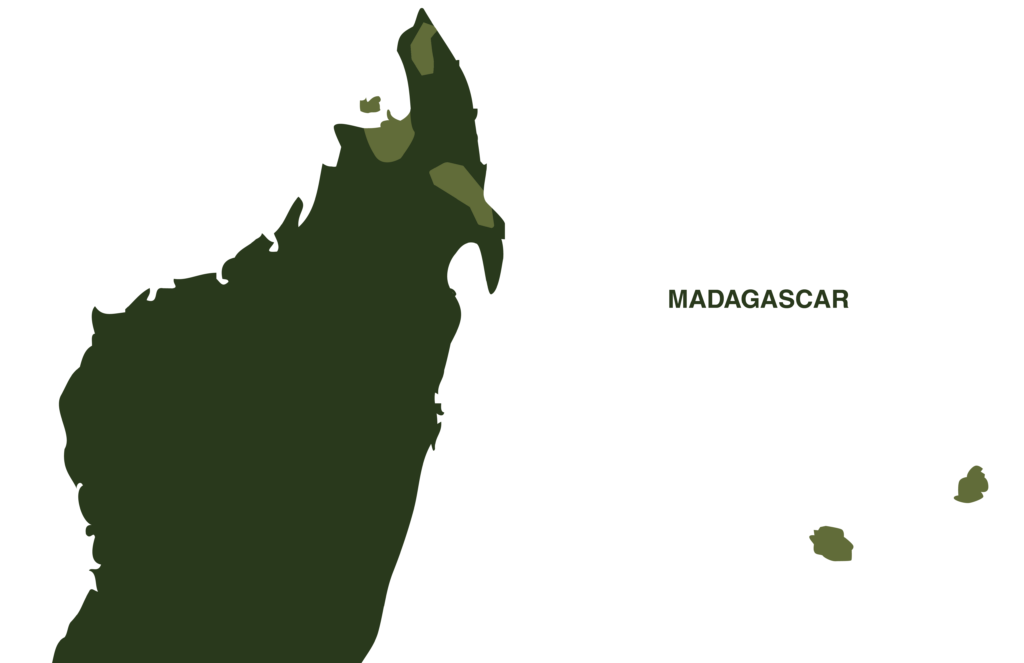
Day Geckos are primarily native to Madagascar and surrounding islands in the southwestern Indian Ocean, including Mauritius, Réunion, the Seychelles, and the Comoros. They inhabit tropical and subtropical environments, from sea level up to 7,500 feet. Most Day Geckos are arboreal, living in trees, coconut palms, banana trees, and bushes. They are also commonly found near human settlements, on fences, houses, and in gardens.
CHARACTERISTICS
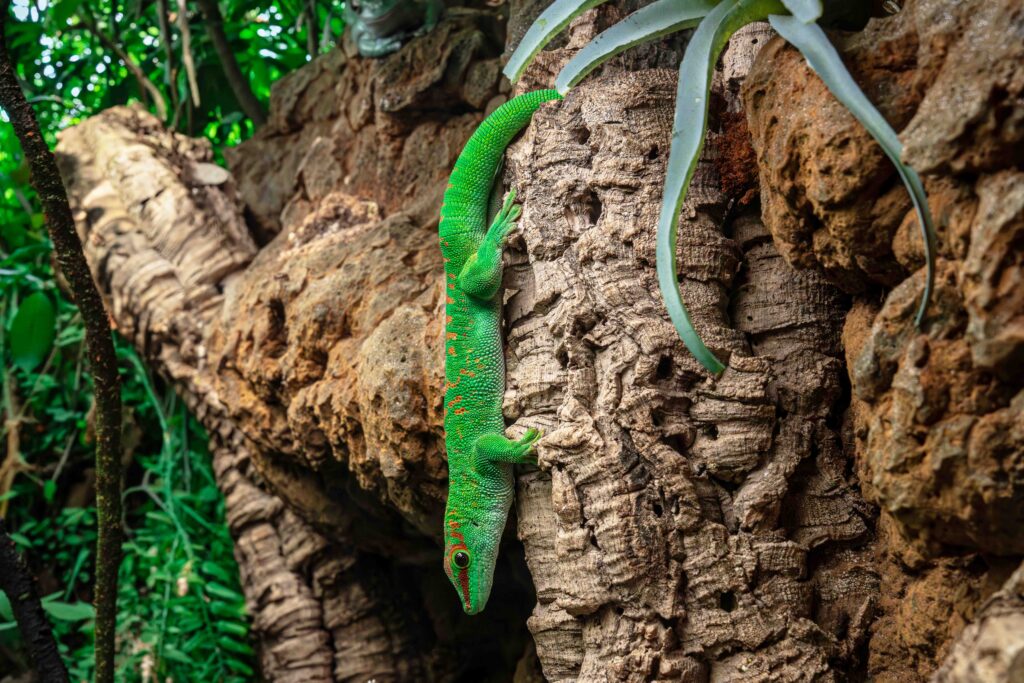
Day Geckos may live up to 10 years, while larger species have been reported to live more than 20 years in captivity. They weigh between 60–70 grams and range from 2.6–11.8 inches in length, depending on the species. Unlike most geckos, they are active during the day and have round pupils to accommodate their daytime lifestyle. They are active foragers, leaping along leaves and branches to hunt insects and lap up nectar and fruit juices. They are omnivores, feeding on insects, other invertebrates, nectar, pollen, and soft, ripe, sweet fruits such as bananas. They use their excellent eyesight to spot prey. Like most geckos, they lack eyelids and have a clear, fixed plate covering their eyes, using their tongues to clean away dust and debris.
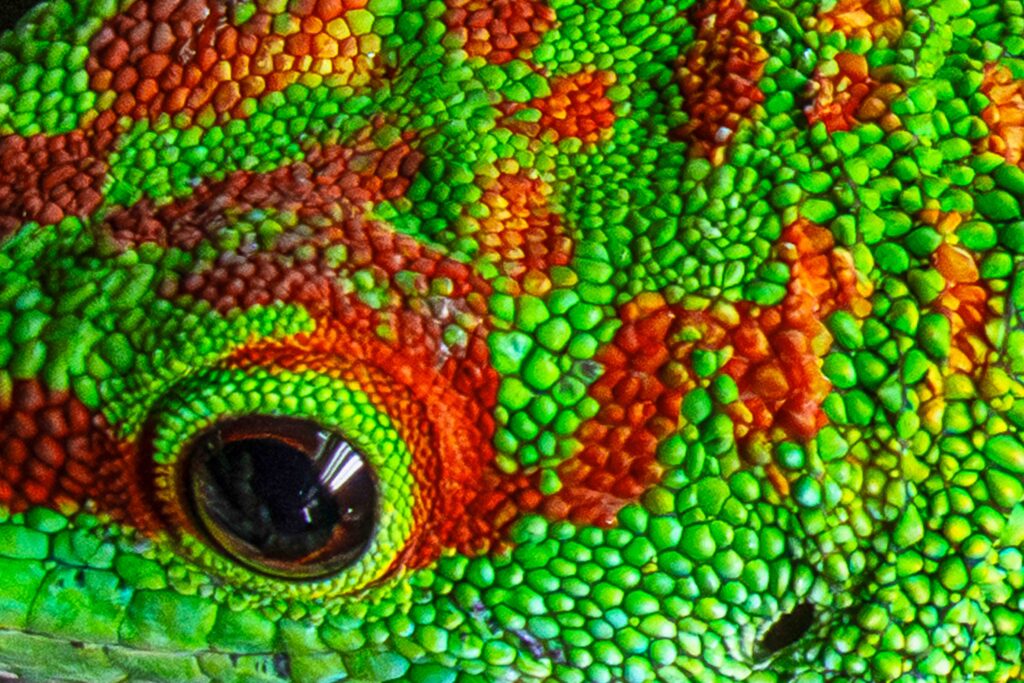
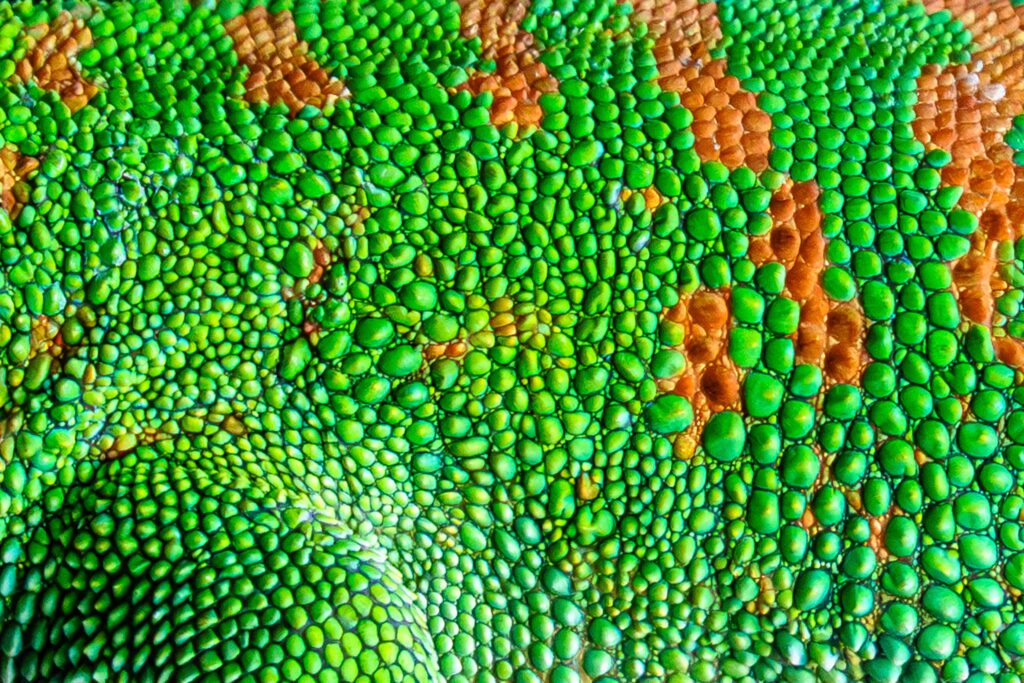
Day Geckos are among the most vocal lizards, producing clicking sounds by clicking their tongues against the roof of their mouths. They have soft, sensitive skin that tears easily, allowing them to escape predators that grab them. They can also drop their tail or bite if they feel threatened.
Females have well-developed endolymphatic chalk sacs on the sides of their necks that store calcium for egg production. Female Day Geckos are called “gluers” because they attach their one or two eggs firmly to a substrate using a sticky secretion. Once attached, the eggs cannot be safely removed without breaking the shell. Females may hold the eggs with their hind legs until the shells harden.
DEFENSIVE SKIN SHEDDING
One of the most remarkable and unusual defense mechanisms of the Day Gecko is their ability to shed their skin when frightened. When a predator grabs them, their soft, delicate skin literally tears and peels away, allowing the gecko to slip free and escape while the predator is left holding nothing but a flap of skin. This is not the same as the regular shedding process that all reptiles undergo. The exposed area underneath is moist and sensitive, but it heals quickly. This dramatic escape strategy, combined with their ability to drop their tail (caudal autonomy), gives them two powerful ways to survive encounters with predators. In the wild, it is not uncommon to see Day Geckos with patches of regenerating skin, proof that this defense mechanism works.