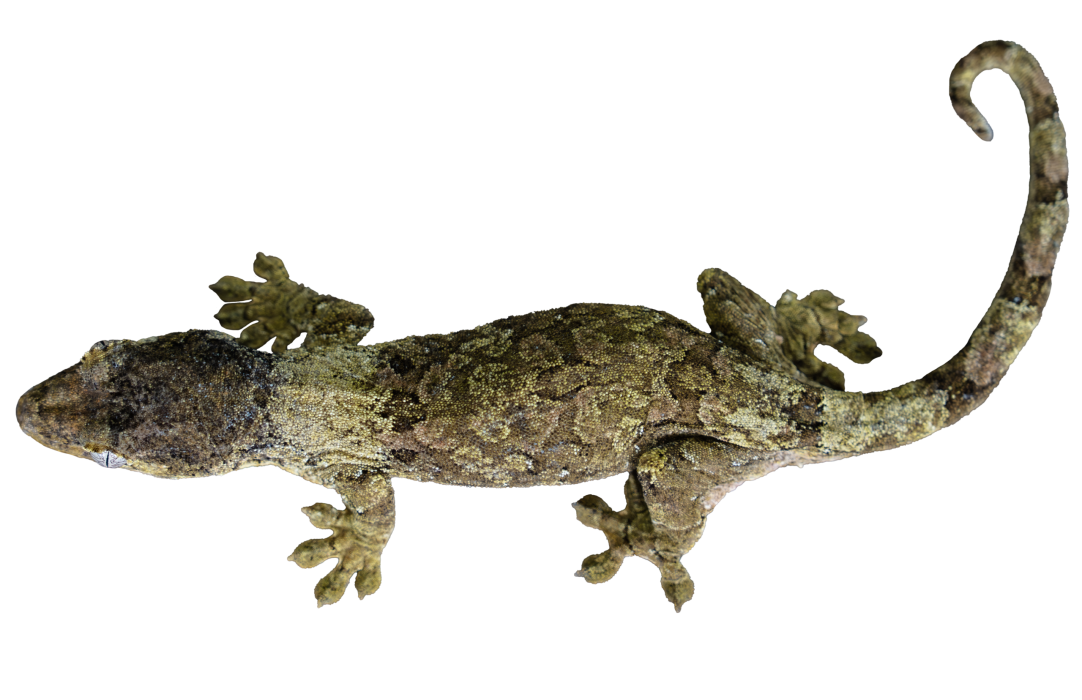
Chahoua Gecko
- Class: Reptilia
- Order: Squamata
- Family: Diplodactylidae
- Scientific Name: Mniarogekko chahoua
- Class: Reptilia
- Order: Squamata
- Family: Diplodactylidae
- Scientific Name: Correlophus ciliatus
Taxonomic Note: Their common name is often shortened to “Chahoua” or “Chewie” by reptile enthusiasts.
GEOGRAPHY
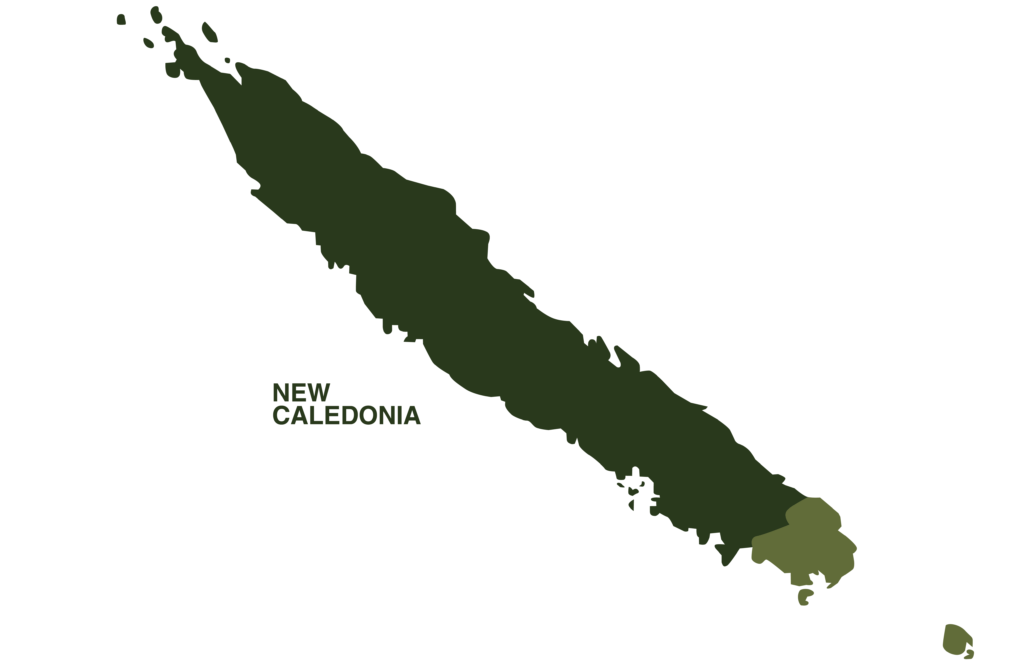
The Chahoua Gecko is endemic to New Caledonia, an archipelago in the southwest Pacific Ocean. They are found on the southern portion of the main island of Grande Terre and on the outlying islands of Île des Pins and Île Belep. They inhabit tropical riverine forests and closed-canopy rainforests and are typically found at elevations of up to 1,640 feet. They are arboreal, spending their days hidden in tree crevices and emerging at night to forage in the canopy. They are strongly associated with humid environments and rely on their prehensile tail to navigate through branches. Unlike many tropical reptiles, Chahoua geckos are heat-sensitive and prefer a temperature range of 72–78°F (22–25°C), and temperatures above 85°F (29°C) can be fatal.
CHARACTERISTICS
Chahoua geckos are omnivorous and seasonally dependent frugivores. Their wild diet consists of various insects and fruits, with the ratio shifting based on seasonal availability and fruit blooming times. They may also supplement their diet with small lizards. In captivity, they thrive on commercial powdered gecko diets mixed with water, supplemented with live insects such as crickets, dubia roaches, mealworms, and flies. As nocturnal foragers, they actively hunt insects at night and lap up fruit purees and nectar.
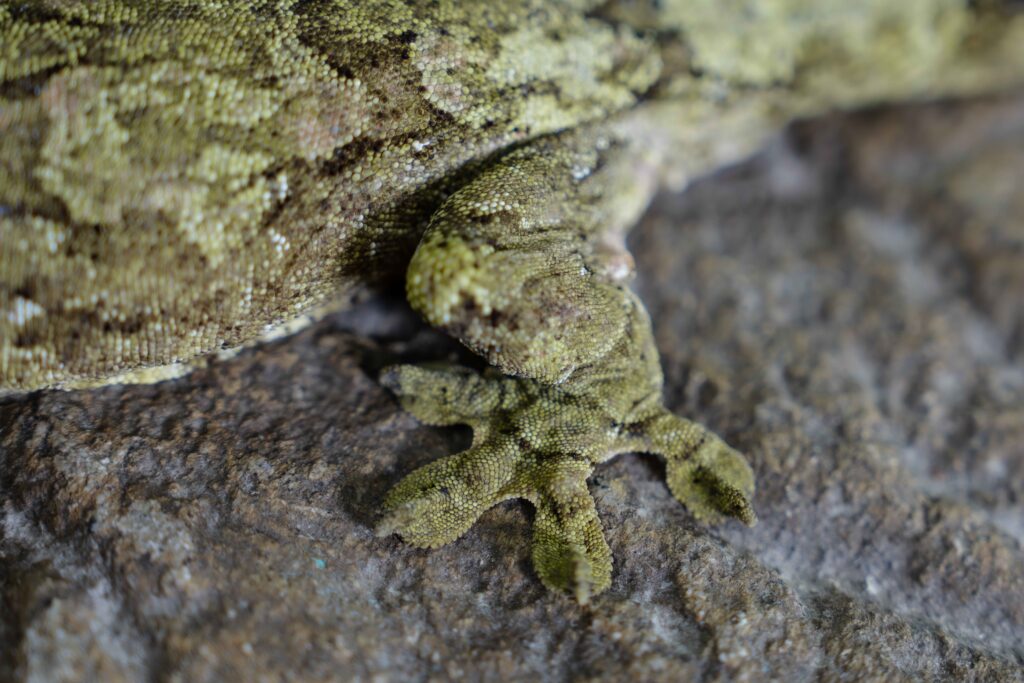
Chahoua geckos are skilled climbers, possessing a strong, well-muscled, fully prehensile tail that they use like a fifth limb to grip branches and stabilize themselves while climbing. Unlike crested geckos, which drop their tails easily, Chahouas do not lose their tail readily and will not regenerate a tail if lost. They have specialized toe pads covered in microscopic hairs (setae) that allow them to climb smooth vertical surfaces using van der Waals forces. Adults typically measure 8–12 inches in total length, with the tail accounting for the majority, making them fast and agile. They typically live 15–20 years, but some captive Chahouas have been reported to live 20–30 years with exceptional care.
Female Chahouas lay two well-calcified eggs that become adhered to one another shortly after laying, a behavior known as “egg gluing.” They are the only gecko in the former Rhacodactylus genus that lays adhering eggs. They generally lay a clutch of 2 eggs on top of the substrate rather than buried, and the female may guard the clutch. Eggs hatch in approximately 60 to 90 days. Females can produce up to 3 clutches per year at roughly 60-day intervals.
Chahoua geckos are described as timid but can be handled for brief periods. They are known to enjoy jumping and may prefer hand-to-hand movement during handling. They are generally docile and considered a beginner-friendly species due to their hardiness and relatively straightforward care requirements. However, they are more nervous than crested geckos and should be acclimated slowly to handling.
DESIGN FEATURES
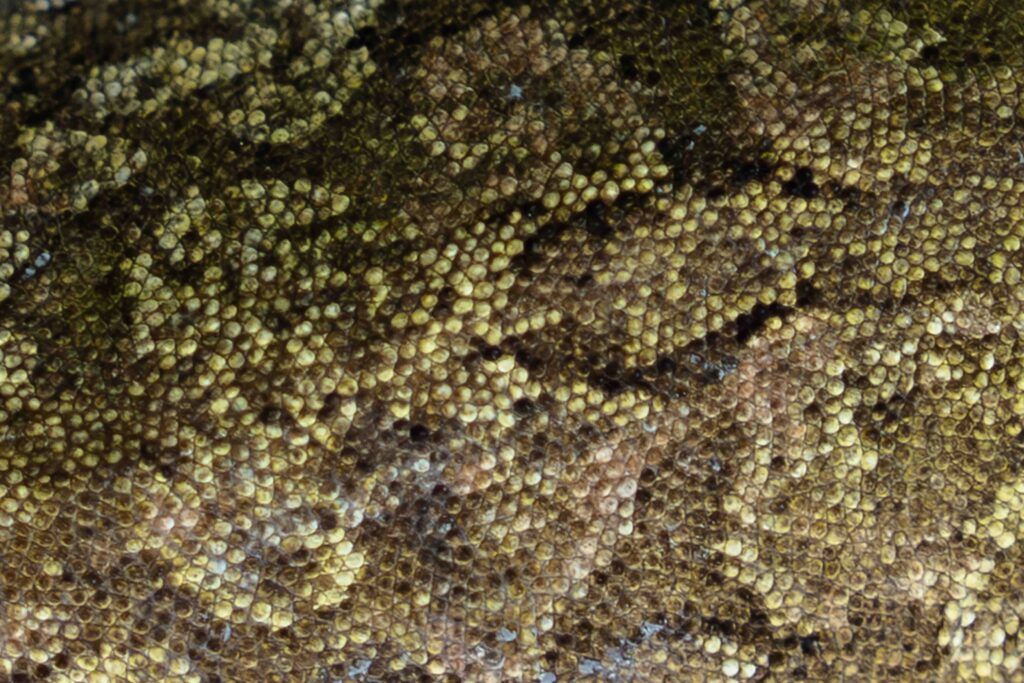
Chahoua geckos have incredible camouflage with their skin pattern that resembles moss or lichen. Their colors range from rusty red and brown to green and gray, a perfect match against tree bark in their rainforest habitat. Interestingly, there is some evidence that color may be a geographic indicator, with geckos from the outer islands (such as Île des Pins) displaying lighter gray patterns.