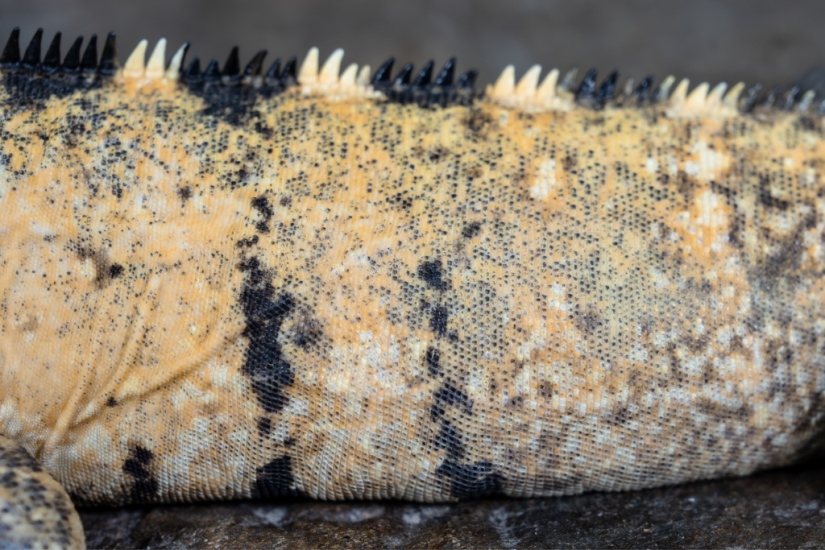
Banana Pied Pectinata Mexican Spiny-Tailed Iguana
- Class: Reptilia
- Order: Squamata
- Family: Iguanidae
- Scientific Name: Ctenosaura pectinata
- Morph: Banana Pied
- Class: Reptilia
- Order: Squamata
- Family: Iguanidae
- Scientific Name: Ctenosaura pectinata
Taxonomic Note: There are currently 15 recognized species in the genus Ctenosaura, making it the most diverse group of iguanas.
GEOGRAPHY
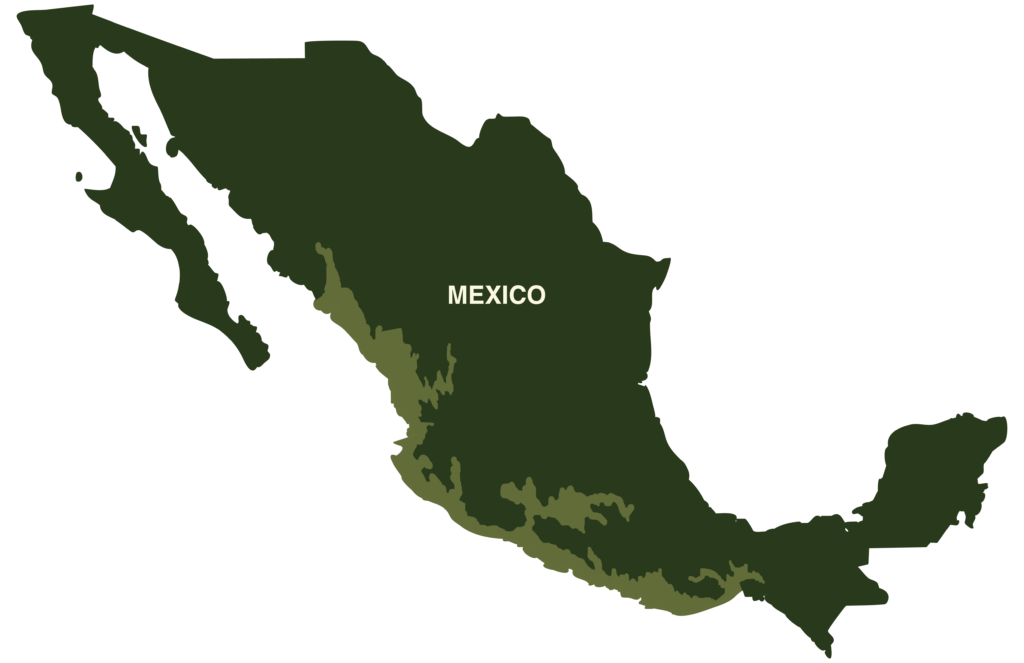
The Mexican Spiny-Tailed Iguana is native to western Mexico, ranging from central Sinaloa to southern Chiapas, with introduced populations in southern Texas and Florida. They inhabit lowland dry forests, woodlands, and semi-open habitats below 3,900 feet in elevation, preferring hot, dry environments with plenty of rocky outcrops for basking and hiding. They are terrestrial and rock-dwelling, spending much of their time on the ground and among boulders, though they are excellent climbers when necessary. Highly adaptable, they can thrive in disturbed areas near human habitation.
CHARACTERISTICS
The Mexican Spiny-Tailed Iguana is one of the larger members of their genus, capable of growing up to 4.3 feet in length, with females being slightly smaller. They are omnivorous with a tendency toward herbivory as adults, feeding primarily on leaves, flowers, and fruits, though they will also eat insects, eggs, and occasionally small animals when the opportunity arises.
As diurnal foragers, they spend daylight hours actively searching for food, basking in the morning sun to raise their body temperature before becoming active. Unlike most other spiny-tailed iguanas, which tend to be solitary, the Mexican Spiny-Tailed Iguana is a social species that lives in large colonies with a strict pecking order, making them more tolerant of captive group housing than many other lizard species. They are fast-moving and retreat quickly when threatened, but if cornered, they will lash with their tail and bite in defense. Their tail is ringed with rows of sharp, curved, keeled scales and can be used as a powerful whip.
Males possess a well-developed dorsal crest and small dewlaps, while females lack these features. Males also have larger heads, more pronounced femoral pores, and develop faint blue or green tones during breeding season; a temporary coloration that signals reproductive readiness. Females are oviparous, laying clutches of 20–30 eggs in burrows or rocky crevices. Hatchlings are fully independent and begin feeding on small insects immediately.
MORPH DETAIL
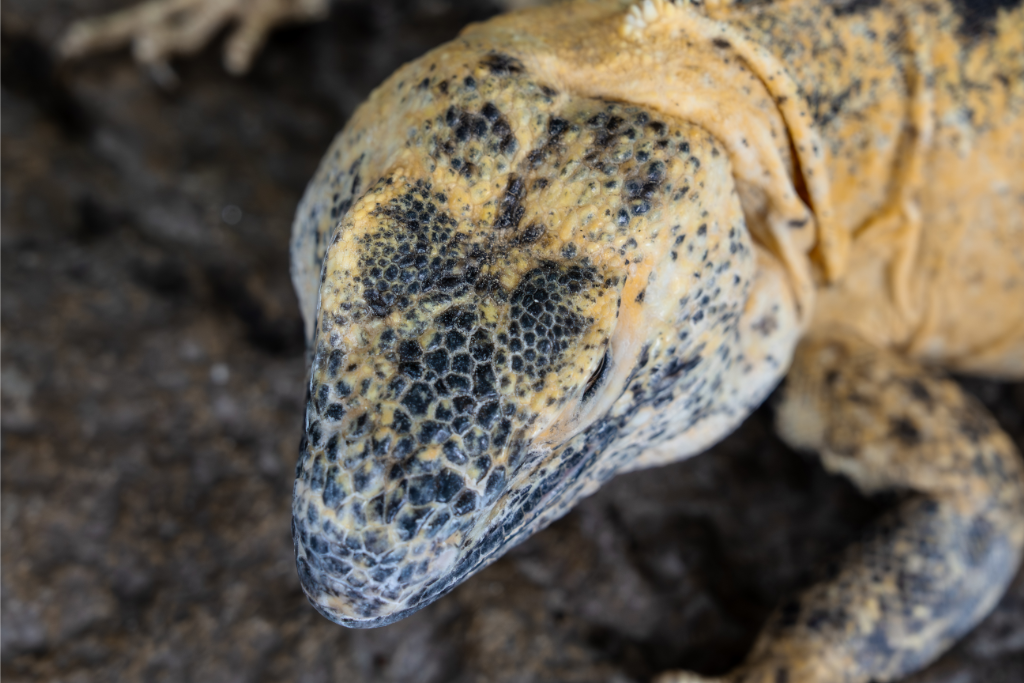
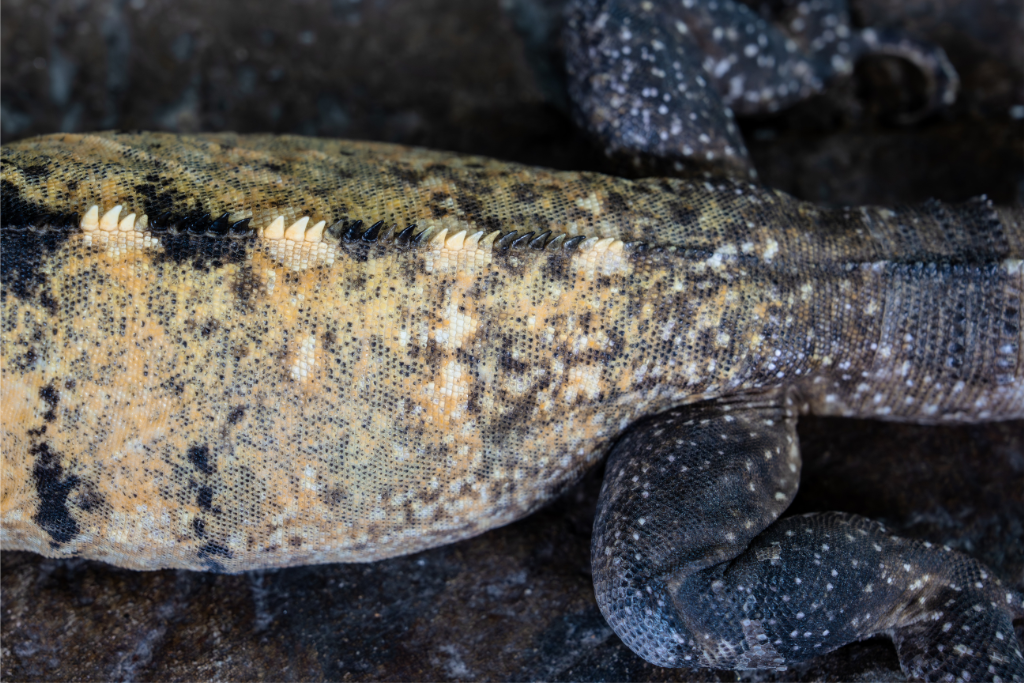
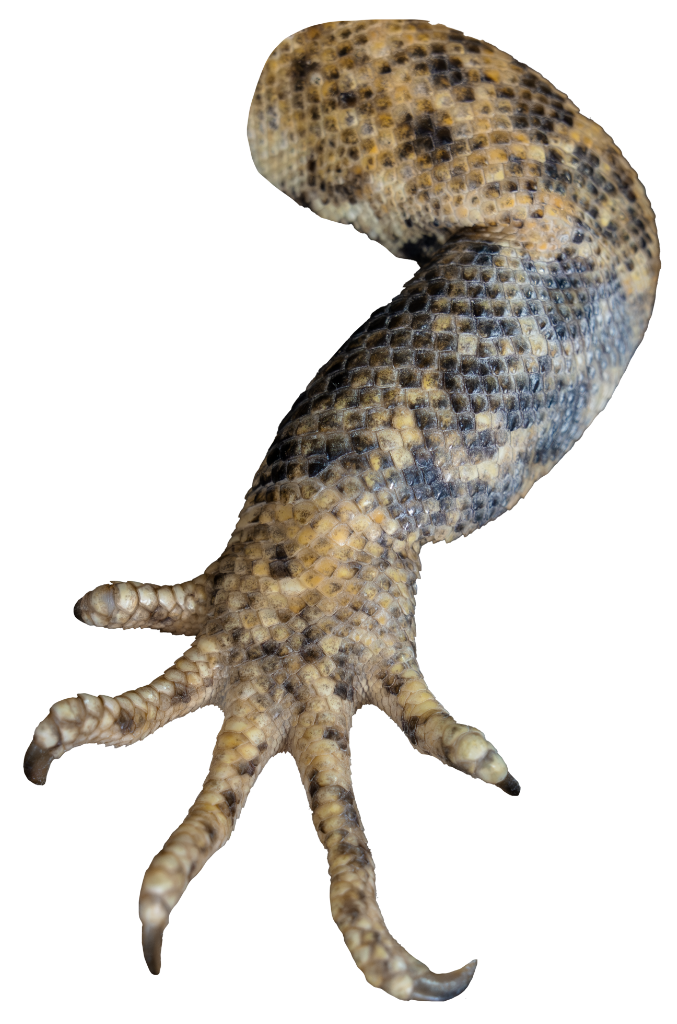
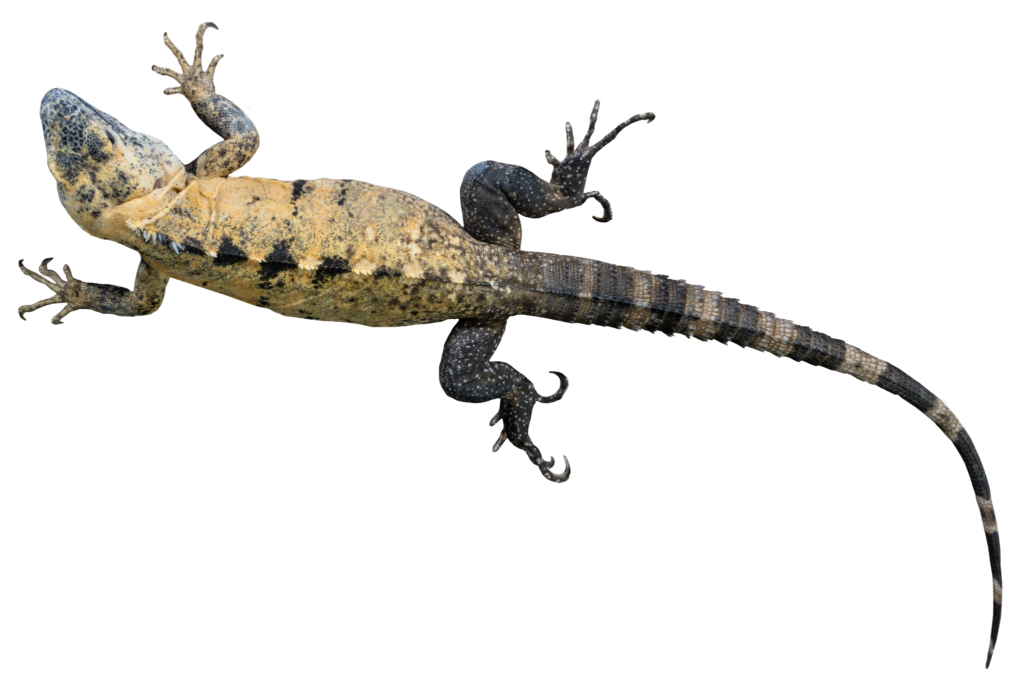
The “Banana Pied” is a combination of two distinct color morphs in captive-bred Mexican Spiny-Tailed Iguanas. The “banana” trait produces a bright yellow to golden-orange coloration across the body, replacing the typical dark grey or brown of wild-type individuals. The “pied” trait arises from leucistic-type depigmentation; a reduction in pigmentation that does not affect eye color, characterized by irregular patches of white or cream contrasting against the base color. Pectinata is the specific epithet in their scientific name, derived from the Latin word for “combed,” referring to the comb-like spines along their tail. In banana phase individuals, hatchlings display yellow tones from birth that intensify rather than fade. Interestingly, while wild-type individuals typically darken with age, pied individuals often show increased white depigmentation as they mature; meaning a baby pied may have minimal white patches that expand dramatically as the lizard grows.