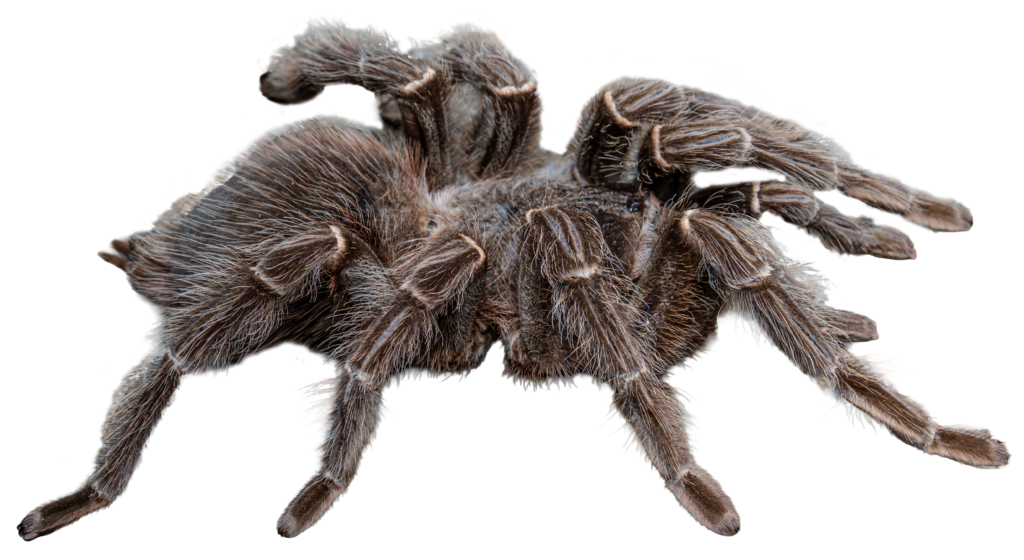
Brazilian Salmon Pink Bird-Eating Tarantula
- Class: Arachnida
- Order: Araneae
- Family: Theraphosidae
- Scientific Name: Lasiodora parahybana
- Class: Reptilia
- Order: Squamata
- Family: Iguanidae
- Scientific Name: Ctenosaura pectinata
GEOGRAPHY
The Salmon Pink Bird-Eater is endemic to eastern Brazil, specifically found in the Atlantic Forest biome of the state of Paraíba and surrounding areas in the northeastern region of the country. They are primarily a terrestrial and fossorial species. In the wild, they inhabit the humid, tropical leaf litter and forest floors of the Atlantic Forest, often sheltering under roots, rocks, or in natural crevices and shallow burrows. Despite being ground-dwelling, they are ambush predators that rely on vibrations to detect passing prey.

CHARACTERISTICS
As opportunistic carnivores, the Salmon Pink Bird-Eater’s diet consists of large insects, small lizards, and rodents. Despite the dramatic “bird-eating” name, this tarantula does not regularly prey on birds; the term is a historical reference to the family’s sheer size and capability, not a dietary staple. This species is a master of efficiency. They subdue their prey with powerful fangs, injecting venom and digestive enzymes that liquefy the victim’s insides, allowing the spider to then suck up the resulting “soup.”
When threatened, the Salmon Pink Bird-Eater is generally reluctant to bite and prefers to flee or use the barbed hairs on their abdomen to deter predators. These irritating hairs can affect the skin, eyes, and respiratory tract of potential threats. However, the spider can deliver a painful bite as a last resort. While their venom is not considered medically significant to humans, their fangs; which can exceed 2 centimeters, can cause severe mechanical damage.
The Brazilian Salmon Pink Bird-Eating Tarantula is one of the world’s largest tarantula species. Their leg span can reach up to 11 inches, and females can weigh over 100 grams. They are nocturnal and grow at a famously rapid rate, reaching impressive sizes in just a few years. Females have a longer lifespan of 15–20 years, while males have a much shorter life, typically living only 2–4 years after reaching maturity.

UNIQUE REPRODUCTION PROCESS
It is not a myth that male tarantulas risk their lives to mate. A female is a solitary, territorial predator, and a potential mate is just another large creature in her space. In this species, as in many others, the male must use his specialized tibial hooks to hold her fangs back to avoid being eaten before, during, or after the mating process. After a successful copulation, the male must make a very fast retreat. Females are incredibly prolific, laying an egg sac containing up to 2,000 eggs. She will guard this sac fiercely in her burrow, protecting her countless offspring with unwavering dedication.