
Chuckwalla Iguana
- Class: Reptilia
- Order: Squamata
- Family: Iguanidae
- Scientific Name: Sauromalus ater
- Class: Reptilia
- Order: Squamata
- Family: Colubridae
- Scientific Name: Thamnophis marcianus
- Morph: Albino
GEOGRAPHY
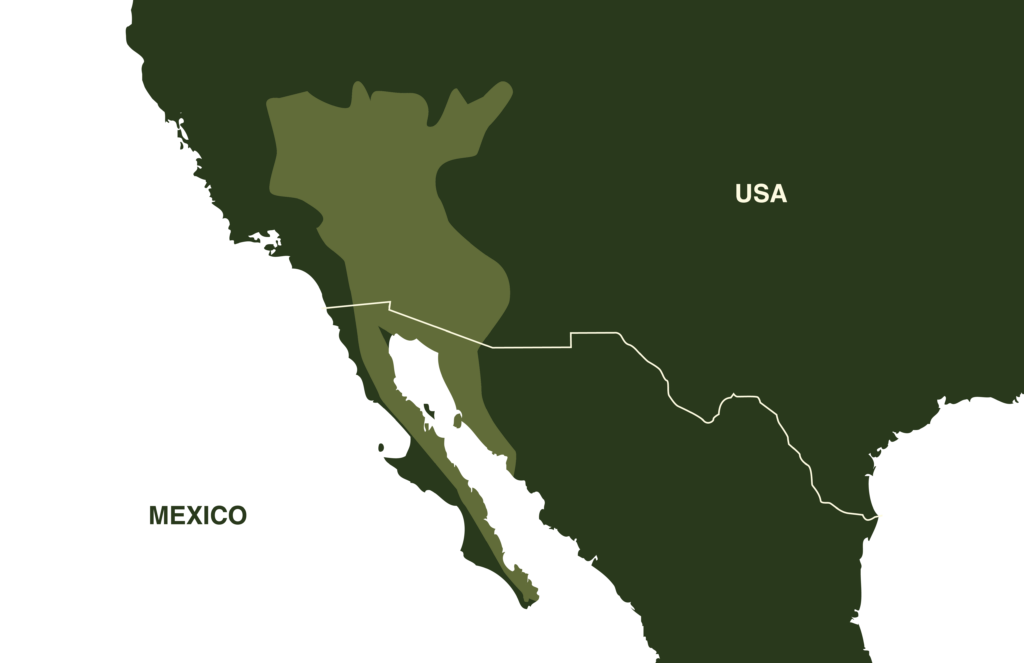
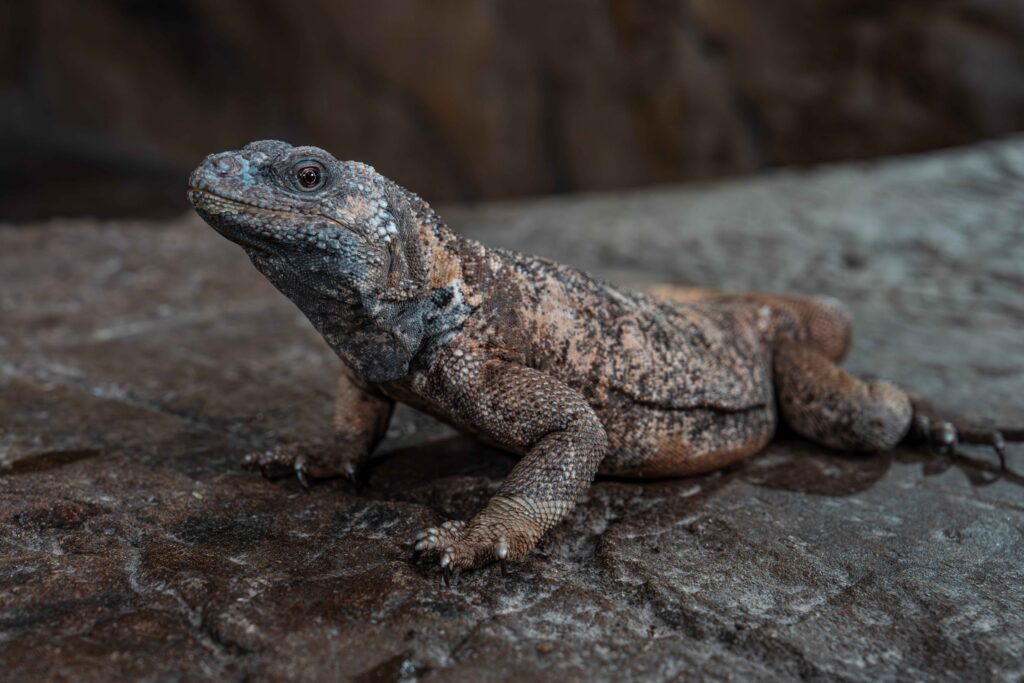
Chuckwallas are found in the Mojave and Sonoran Deserts of the southwestern United States (southern California, Nevada, Utah, Arizona) and northwestern Mexico (Baja California, Sonora). Several island species are restricted to specific Gulf of California islands, including San Esteban, Angel de la Guarda, and Montserrat. They inhabit hot, arid deserts with rocky terrain, lava flows, and boulder-strewn hillsides where daily temperatures can exceed 104°F (40°C) and rainfall is scarce. Chuckwallas are rock-dwelling specialists that live almost exclusively in areas with large boulders and crevices. They prefer lava fields, rocky outcrops, and hillsides with abundant cracks and fissures that provide shelter from predators and extreme temperatures.
CHARACTERISTICS
Chuckwallas are primarily herbivorous, feeding on leaves, flowers, buds, and fruits of desert plants, with a particular preference for yellow flowers such as those of the brittlebush, creosote bush, and prickly pear cactus, along with other drought-tolerant scrub vegetation. Insects are only a supplementary part of their diet. As diurnal foragers, they bask in the morning to raise their body temperature to around 100°F, sometimes changing their skin color to absorb more heat, before actively searching for food. They obtain most of their water from the plants they eat, allowing them to survive in extremely dry conditions. When food and water are abundant, chuckwallas store water in lymph sacs beneath the loose folds of skin on their sides, as well as fat in their thick tails. These reserves sustain them during periods of scarcity.
Chuckwallas have multiple uses for the unique qualities of their body and skin. Their flat body allows them to warm quickly on cool mornings, but they also use their rock crevice homes as natural “air conditioning.” They can survive and remain active at temperatures up to 102°F (39°C), retreating to cooler depths within the rocks when it gets too hot. When threatened, a chuckwalla will scurry into a rock crevice and gulp large amounts of air, inflating their lungs to expand their body by over 50 percent. Loose skin folds around the neck and shoulders unfold to accommodate this expansion, wedging the lizard tightly against the surrounding rocks. This makes it virtually impossible for predators like coyotes, snakes, and raptors to pull them out. Once the danger passes, they deflate and emerge. Like many lizards, chuckwallas can sacrifice their tail to a predator, allowing it to break off at a specialized fracture point. The tail also serves as a fat storage organ for use during lean times. If lost, a replacement tail will grow, but it will not match the original in length or color.
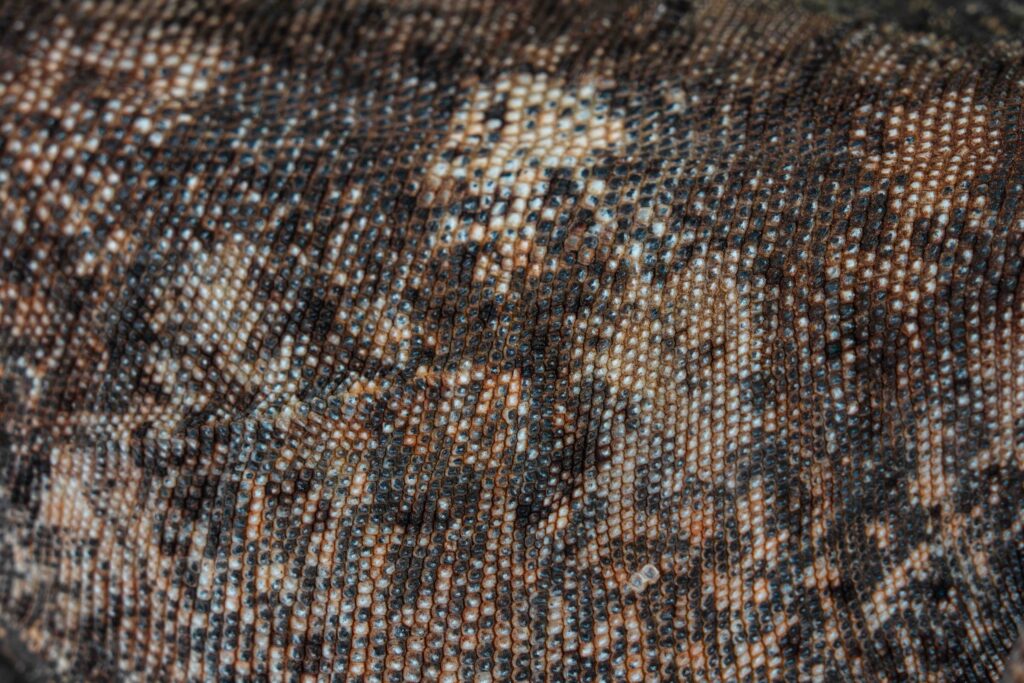
Chuckwallas exhibit many examples of sexual dimorphism, with males much more colorful than females. Males have reddish-pink, orange, yellow, or light gray bodies with black heads, shoulders, and limbs. In some species, the tail displays red, gray, or yellow tones. Females and juveniles are more subdued, with crossbanded patterns of yellow and gray stripes or scattered spots, providing camouflage against the rocks. Males possess well-developed femoral pores on the inner sides of their thighs. These pores secrete chemical pheromones believed to play a role in marking territory and attracting mates.
In the wild, chuckwallas typically live 10–25 years. Adults typically weigh between 8 ounces and 2 pounds, and they range from 11–18 inches in total length, with the tail accounting for a significant portion. Females lay a clutch of 5–16 eggs between June and August. The eggs are deposited in a hidden nest, typically in a rock crevice or burrow, that is protected from predators. After the female lays her eggs, she provides no further parental care. The eggs incubate for approximately one month and hatchlings are fully independent from birth and must fend for themselves.
ISLAND GIANT
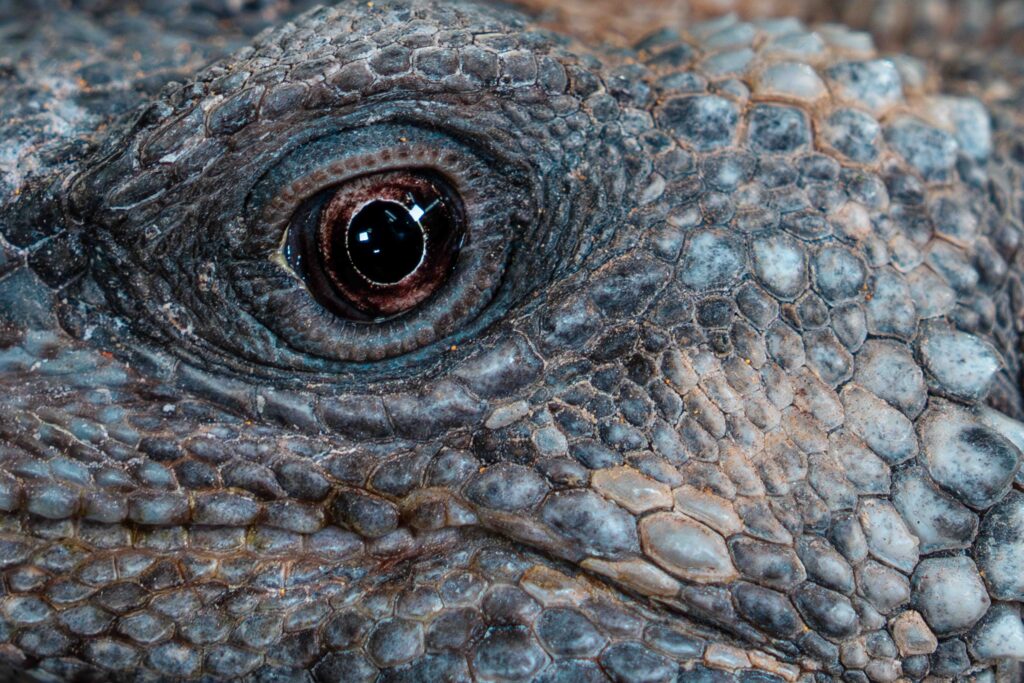
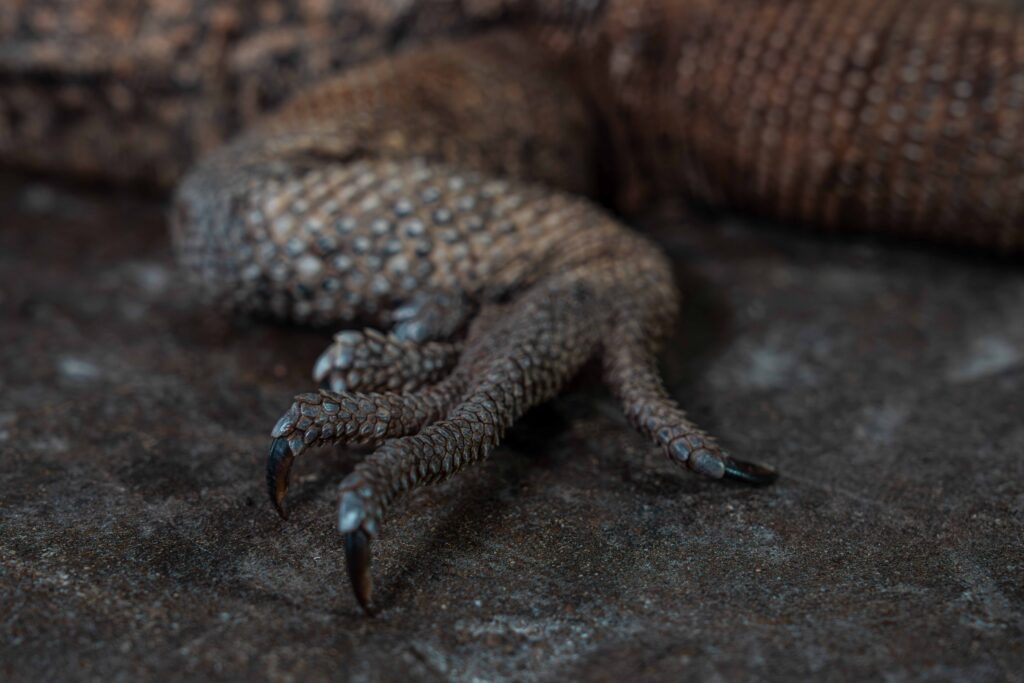
The San Esteban chuckwalla, found only on San Esteban Island in the Gulf of California, is a classic example of insular gigantism; the phenomenon where island species evolve to much larger sizes than their mainland relatives. This species can reach 30 inches in length, making it one of the largest iguanids in North America. Living on an island with fewer predators and less competition, they simply kept growing.
HISTORICAL FOOD SOURCE
The Seri people of Mexico considered the Angel Island chuckwalla an important food source. Evidence suggests they intentionally transported the lizards to various islands in the Bahia de los Angeles region to serve as a reliable food cache for times of need. This represents one of the few documented examples of reptile translocation by indigenous peoples in North America, a fascinating glimpse into the relationship between humans and reptiles long before modern conservation.
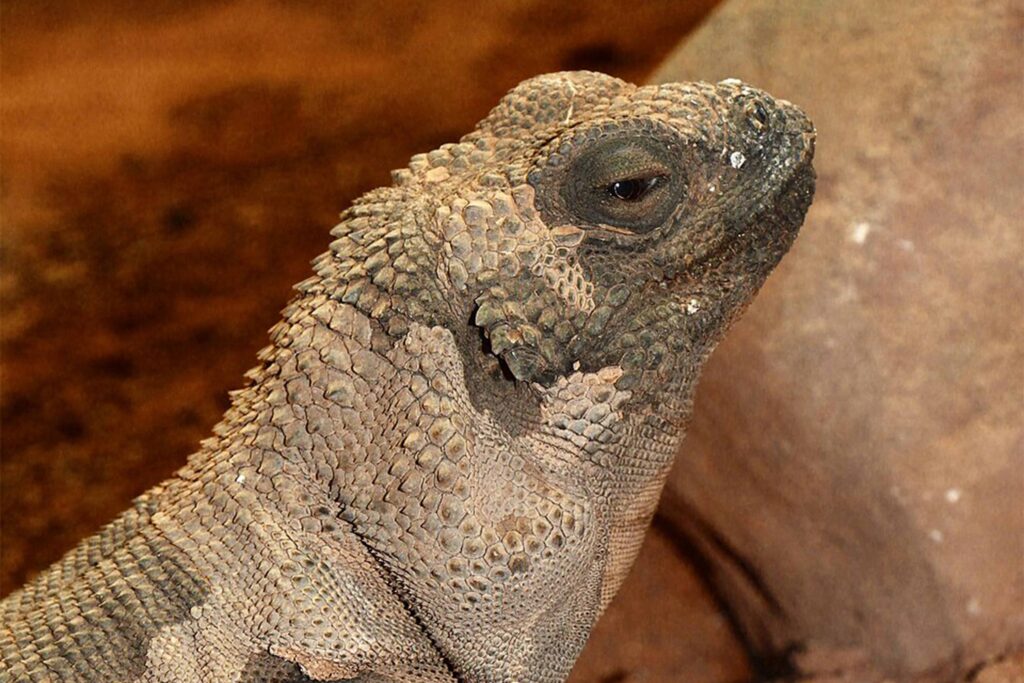
“Sauromalus hispidus” by H. Zell, via Wikimedia Commons, used under CC BY-SA 3.0.