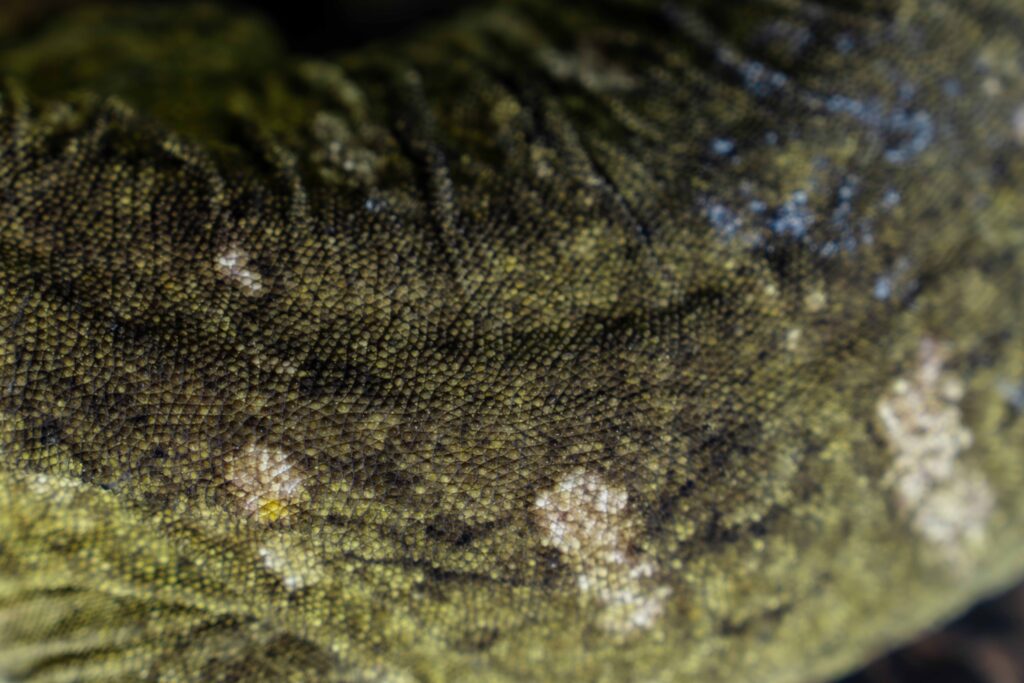
Leachie's Giant Gecko
- Class: Reptilia
- Order: Squamata
- Family: Diplodactylidae
- Scientific Name: Rhacodactylus leachianus
- Class: Reptilia
- Order: Squamata
- Family: Colubridae
- Scientific Name: Lampropeltis getula nigrita
Taxonomic Note: They are called New Caledonian Giant Geckos due to their large size and restricted range.
GEOGRAPHY
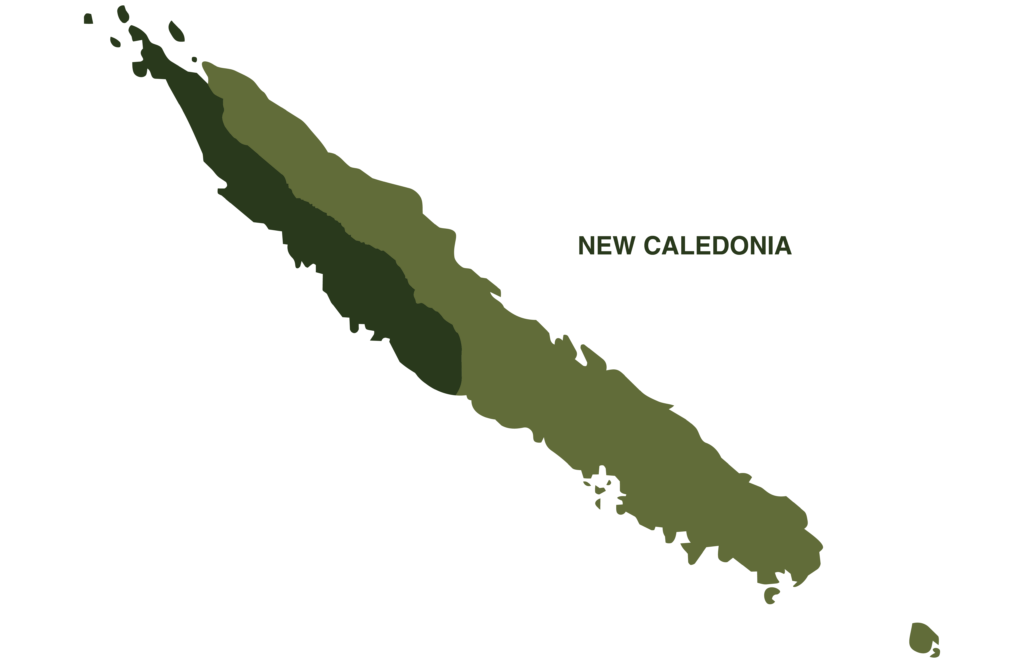
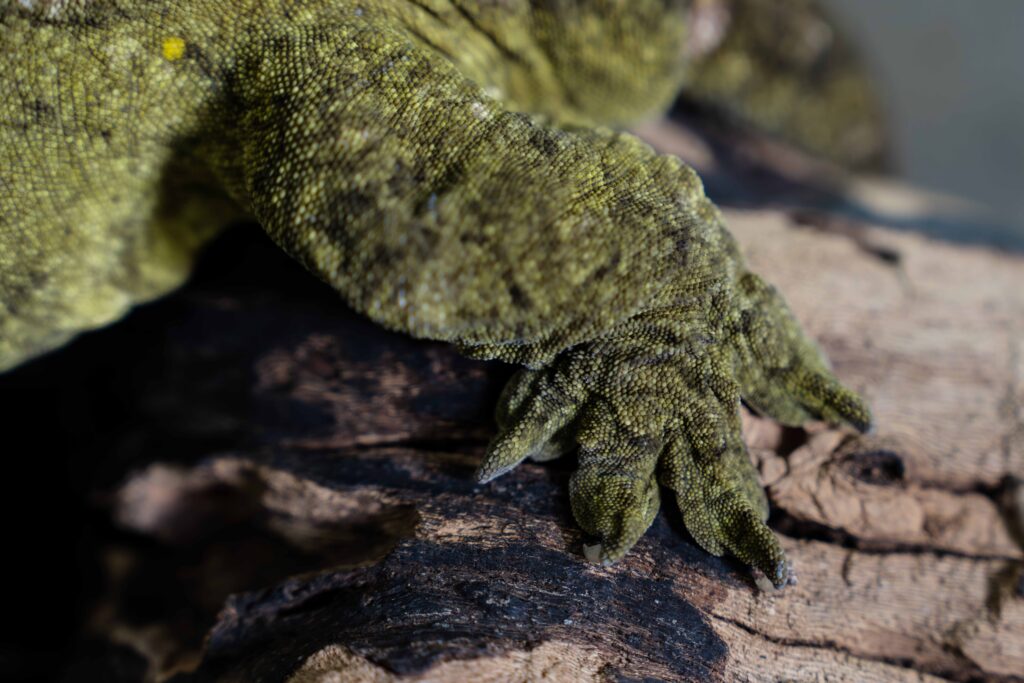
The Leachie’s Giant Gecko is endemic to New Caledonia, an archipelago in the southwest Pacific Ocean. Different locale types are found on the main island of Grande Terre and the surrounding islands of Île des Pins and Isle of Pines. They are arboreal, inhabiting the upper canopy of tropical forests and scrublands. In the wild, they are often found in hollow tree trunks, which serve as their daytime refuges. Their entire lives are spent in trees. They have specialized adaptations for this lifestyle, including the ability to climb smooth surfaces with their toe pads, a prehensile tail tip for gripping, and loose, baggy skin that helps them camouflage against tree bark.
CHARACTERISTICS
The Leachie’s Giant Gecko can reach 14–17 inches in total length and can weigh between 115–280 grams, with the largest recorded individuals reaching nearly 500 grams, making them the heaviest gecko species in the world. They are omnivorous generalists and will eat a variety of insects, smaller lizards (including their own species), and fruits. In captivity, their diet should be a balanced rotation of gecko fruit powdered mix, insects (crickets or dubia roaches) dusted with calcium and D3, or pureed fruits.
Leachies are well-known for their “bone-chilling” calls, which include grunts, hisses, chirps, growls, and whistles. These vocalizations are used as warnings to other geckos and potential predators. When threatened, they could drop their tail, but because this process is extremely stressful, in captivity this is very rare. It is common to find leachies in the wild with imperfect tails, since they can regenerate them after dropping, but they don’t always grow back perfectly. They are highly territorial and not considered a “cuddly” pet. They can become defensive, especially in their enclosure. An adult bite can be painful, breaking the skin and requiring medical attention.
Leachies are a long-term commitment. In captivity, they can easily live 15–20 years, and some have been known to live past 40 years. These geckos can take up to 3 years to reach full adult size and sexual maturity. Leachie geckos are notoriously tricky to breed. While they must be paired to reproduce, females are known to be extremely picky about their mates. If a female rejects a male, she will not just refuse him, she may attack and severely injure or kill him if they are not separated in time. Once the female picks her mate, she can lay a clutch of 2 eggs roughly every 30 days. Depending on incubation temperature, the eggs can take anywhere from 45–50 days to hatch. Cooler temperatures tend to produce females and longer hatch times, while warmer temperatures produce more males.
LOCALE VARIATIONS
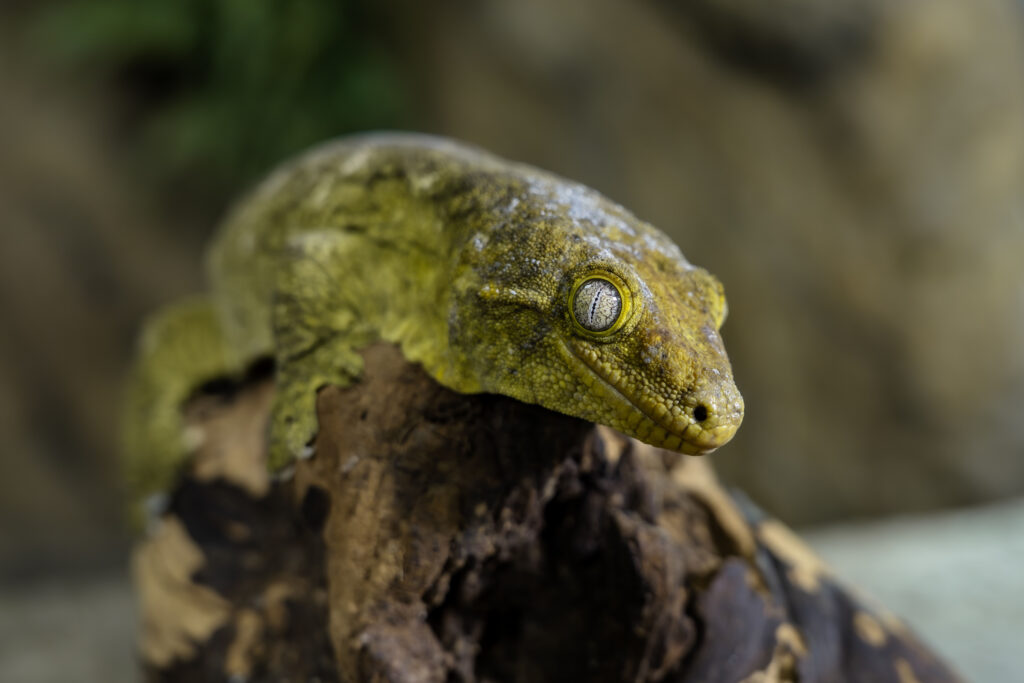
One of the most fascinating aspects of Leachie geckos is the existence of distinct “locales” — populations from different islands or regions that have evolved unique physical characteristics. For example, geckos from the Isle of Pines tend to be larger and more heavily built, with smoother skin and greener coloration. In contrast, those from the main island of Grande Terre are often smaller, more slender, and display rougher, more granular skin with brown or gray tones. Some locales have even been proposed as potential subspecies, though this remains debated among herpetologists.