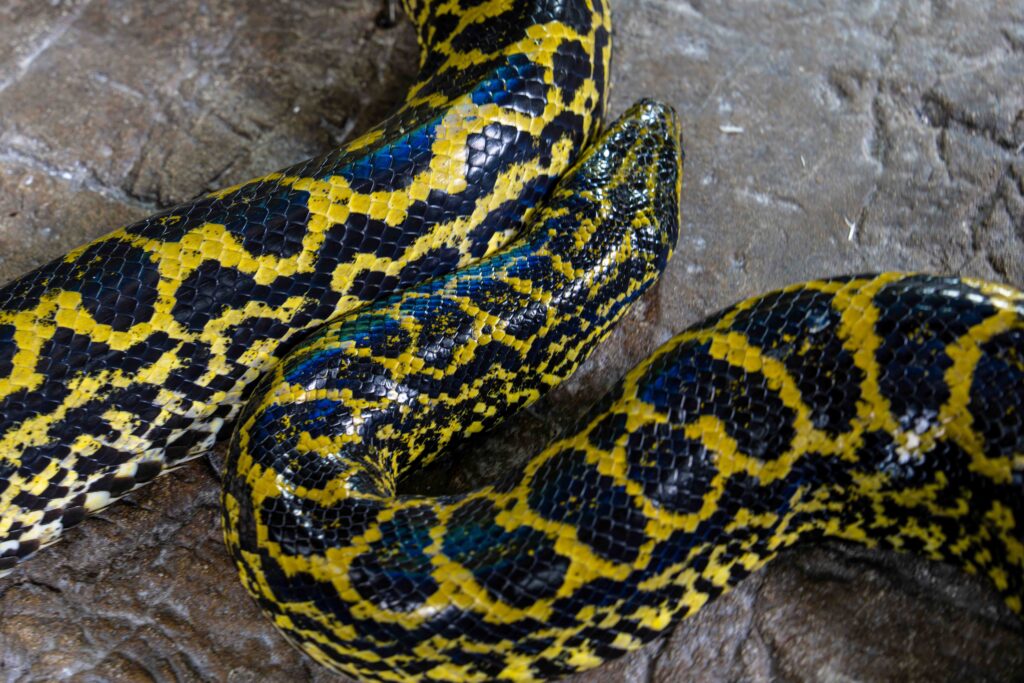
YELLOW ANACONDA
- Class: Reptilia
- Order: Squamata
- Family: Boidae
- Scientific Name: Eunectes notaeus
- Class: Reptilia
- Order: Squamata
- Family: Boidae
- Scientific Name: Epicrates maurus
- Morph: Ghost
Taxonomic Note: The Yellow Anaconda is the second-largest of the four recognized anaconda species, surpassed only by the Green Anaconda.
GEOGRAPHY
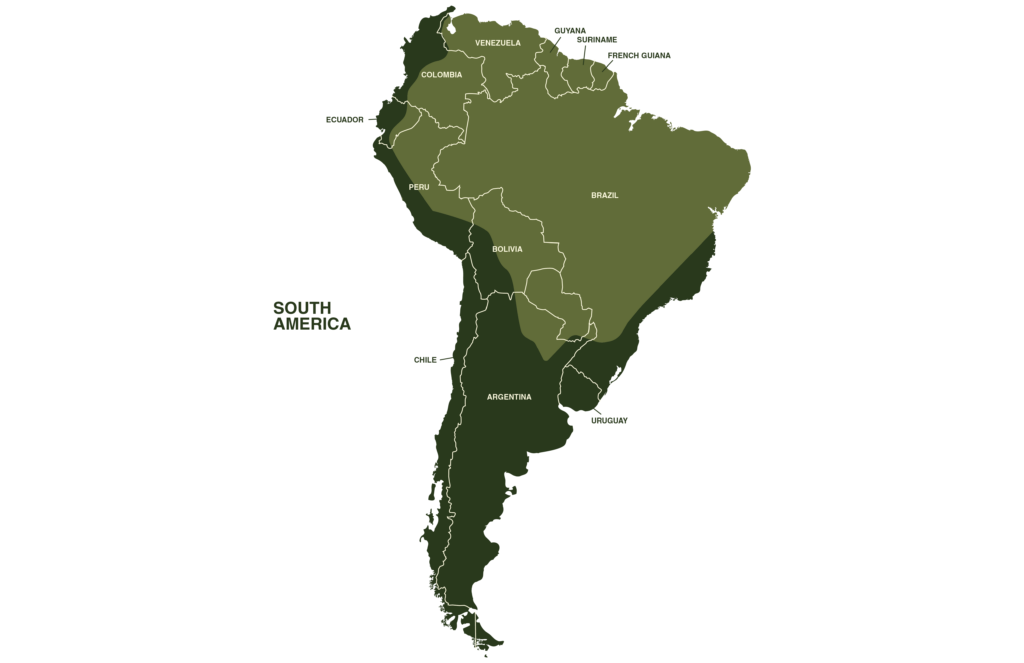
The Yellow Anaconda is native to southern South America. Their range includes the Paraguay River and its tributaries, spanning the Pantanal region of Bolivia, Paraguay, western Brazil, and northeastern Argentina. The species is considered established in Florida, where they were likely introduced through pet releases. Yellow Anacondas prefer aquatic habitats such as swamps, marshes, seasonally flooded grasslands, and the brush-covered banks of slow-moving rivers and streams.
CHARACTERISTICS
As an apex predator that can reach lengths of 12–15 feet and weigh between 55–77 pounds, the Yellow Anaconda is considered a keystone species. This means they help control prey populations and maintain the balance of their ecosystem.
Their eyes and nostrils are positioned on top of their head, allowing them to hide the rest of their body beneath murky water while remaining completely stealthy. Heat-sensing pits along their mouth detect the body heat of warm-blooded prey. As ambush predators, they use their environment for camouflage, waiting for unsuspecting prey to come close enough to strike.
The Yellow Anaconda is a generalist carnivore, feeding mostly on aquatic or semi-aquatic species, including fish, birds, eggs, caimans, turtles, lizards, capybaras, and other manageable mammals. As a constrictor, they catch prey with their powerful jaws, then coil around and squeeze until the prey suffocates or drowns. Their jaws can unhinge to swallow prey much larger than their head, and they have over 100 recurved teeth to help hold and maneuver their meal.
In the wild, Yellow Anacondas typically live 15–20 years. In captivity with proper care, they can live up to 25 years. They breed annually, often between April and May, sometimes forming “breeding balls” in which multiple males compete for one female. Females are ovoviviparous, meaning the eggs hatch inside the mother’s body, and they give birth to fully developed young after a gestation period of about six months. Litters typically range from 4–82 offspring, and baby Yellow Anacondas are born ready to survive on their own.
ORIGIN MEANING
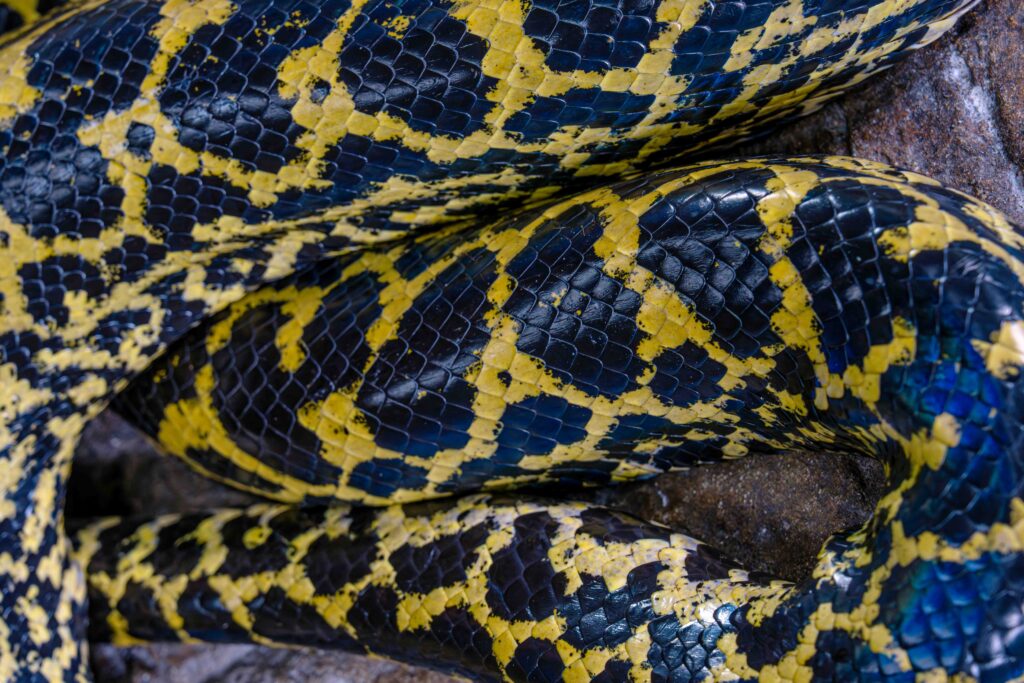
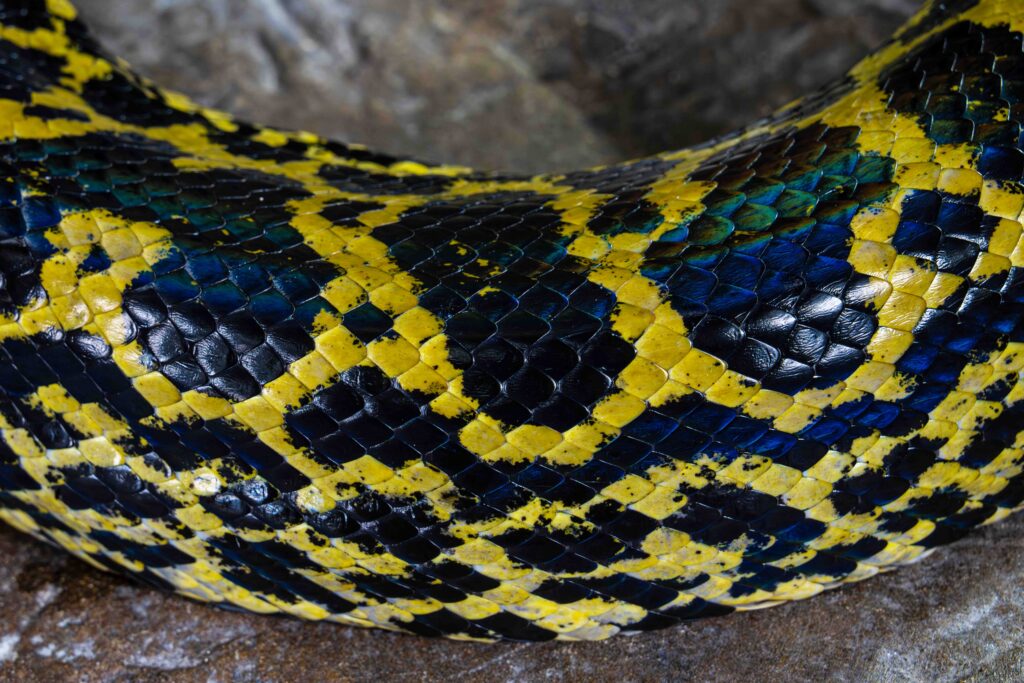
The genus name Eunectes comes from the Greek words eu (good) and nectes (swimmer), a fitting name for these highly aquatic snakes. The scientific name notaeus comes from the Ancient Greek word for “dorsal,” referring to the large scales along the snake’s back. Their yellow and black spotted pattern not only gives the species its common name but also provides excellent camouflage in the murky waters of their swampy habitat.