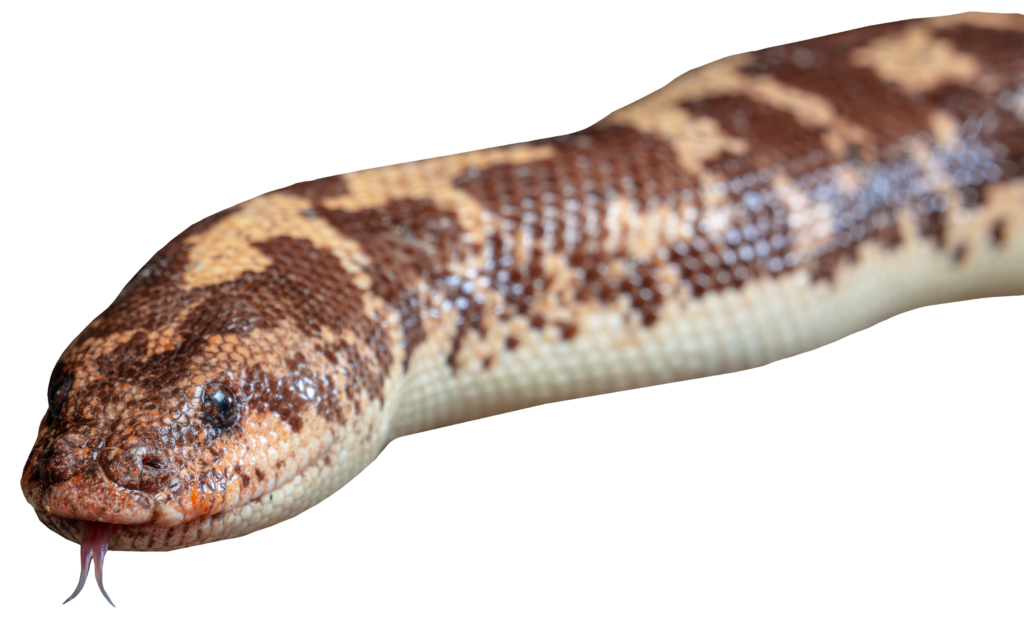
Kenyan Sand Boa
- Class: Reptilia
- Order: Squamata
- Family: Boidae
- Scientific Name: Gongylophis colubrinus
- Class: Reptilia
- Order: Squamata
- Family: Boidae
- Scientific Name: Epicrates maurus
- Morph: Ghost
Taxonomic Note: There is ongoing debate regarding the genus name. Some sources classify them as Gongylophis colubrinus, while others use Eryx colubrinus. Two subspecies are sometimes recognized: the Egyptian Sand Boa, found in the northern part of the range, and the Kenyan Sand Boa, found in the southern and eastern part.
GEOGRAPHY
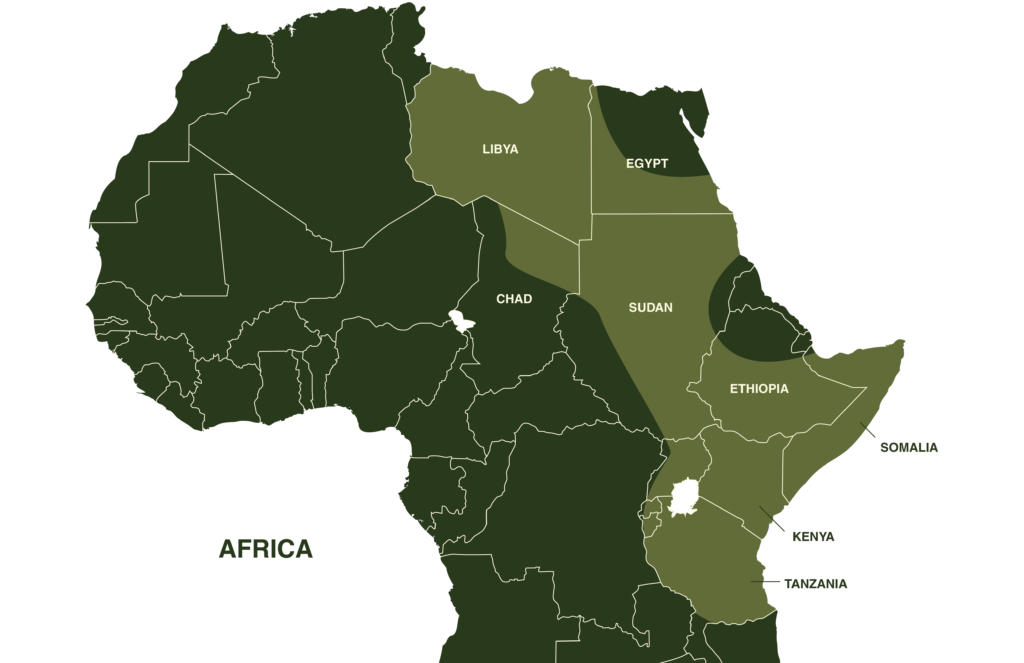
The Kenyan sand boa is native to East and North Africa, spanning across countries like Egypt, Kenya, and Tanzania. They prefer loose, sandy soil in desert margins, arid scrubland, and rock outcroppings. They are found at low altitudes, from sea level up to 1,500 meters.
CHARACTERISTICS
This species exhibits significant sexual dimorphism. Females are much larger, reaching 26–32 inches in total length, while males are smaller, typically growing to only 15 inches. Adults typically weigh up to 1–2 pounds.
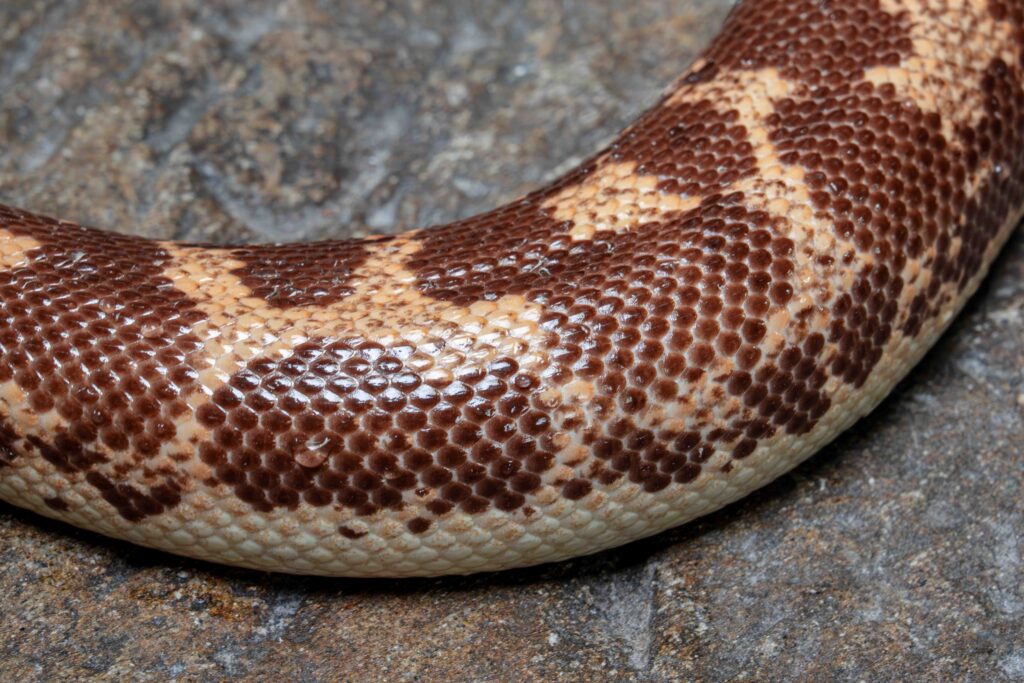
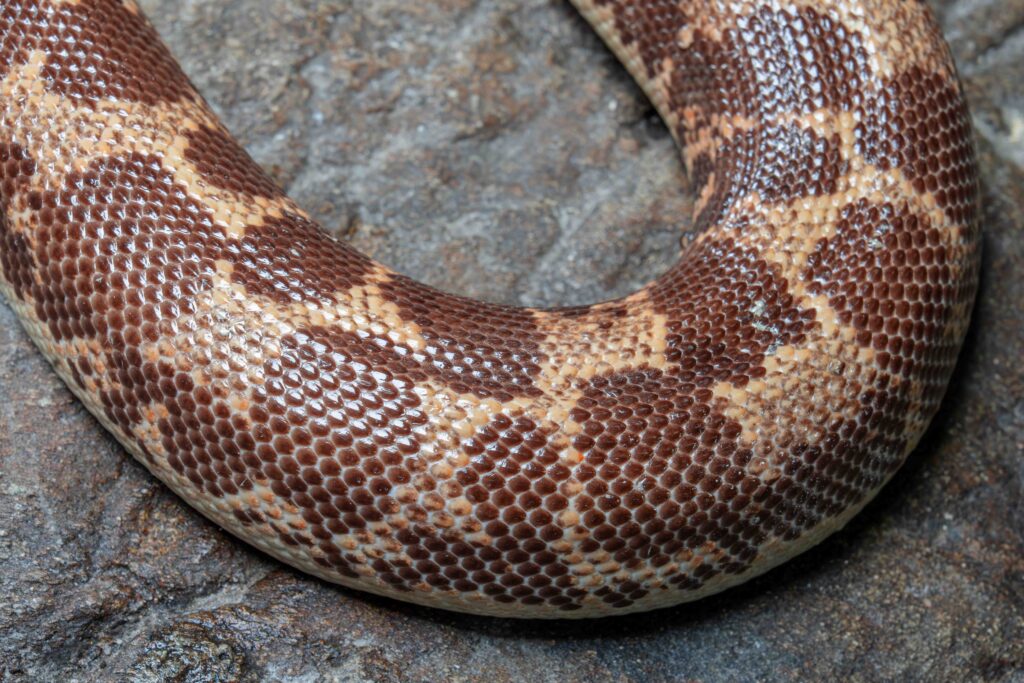
As ambush predators, Kenyan Sand Boas spend most of their time buried in the sand. Their eyes and nostrils are positioned on top of their heads, allowing them to remain hidden while waiting for prey to pass within striking range. Their wedge-shaped snout prevents sand from entering the mouth while burrowing, and they have extremely small, smooth scales that protect their skin from fine sand granules. They kill through constriction and may also suffocate prey by dragging it beneath the sand. As carnivores, they primarily prey on small mammals such as rodents, as well as small lizards, birds, and nestlings.
In the wild, they typically live 10–20 years, but can live 20–30 years in captivity. Unlike many snakes that lay eggs, the Kenyan Sand Boa is ovoviviparous. Females incubate the eggs internally for about four months and give birth to live young encased in membranous sacs. Litters typically range from 4–20 neonates, each measuring 8–10 inches at birth.
FOSSIL HISTORY
The discovery of fossilized sand boa remains in rocks dating back 50 million years to the Eocene Epoch reveals that this group’s specialized burrowing lifestyle was established shortly after the age of dinosaurs. These fossils show that the compact, heavy-bodied form with a blunt head—traits perfectly suited for an ambush predator hidden beneath the sand—has remained largely unchanged for tens of millions of years. This remarkable evolutionary stability means that the Kenyan Sand Boa kept in modern vivariums is a living representation of one of the oldest and most resilient lineages among advanced snakes.