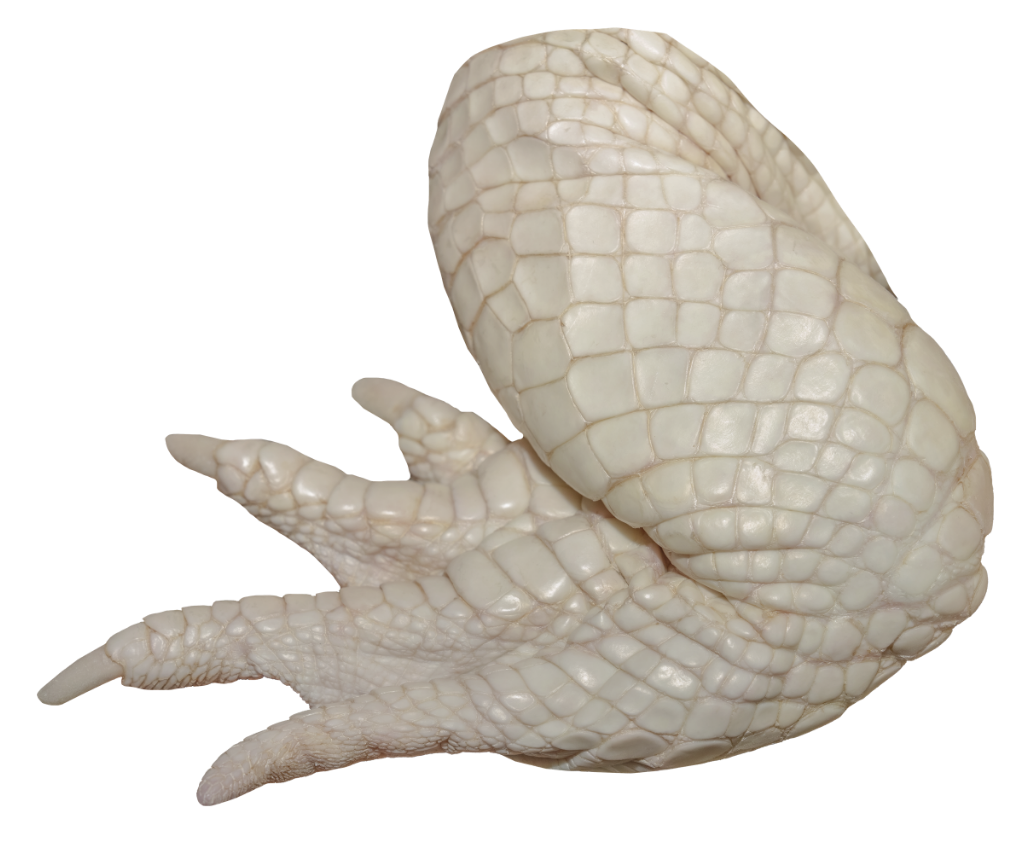
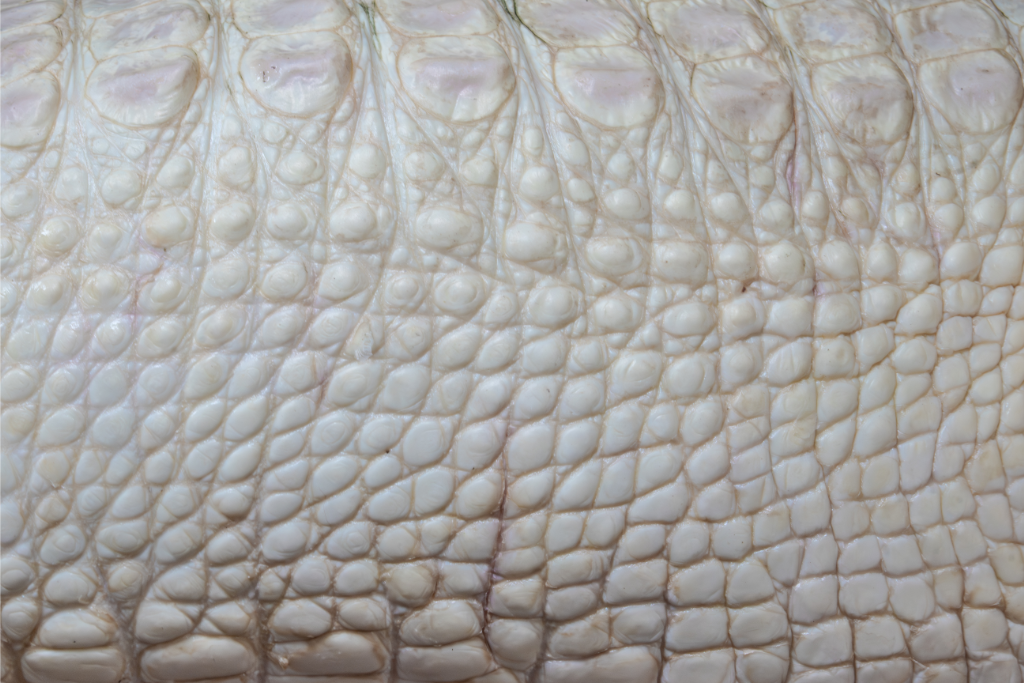
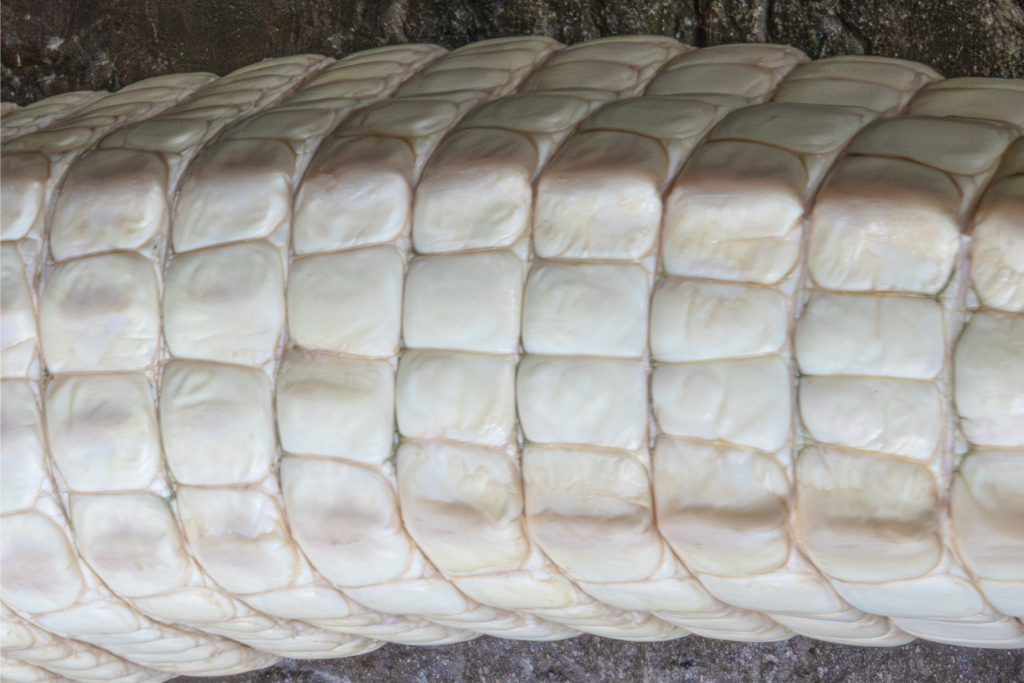
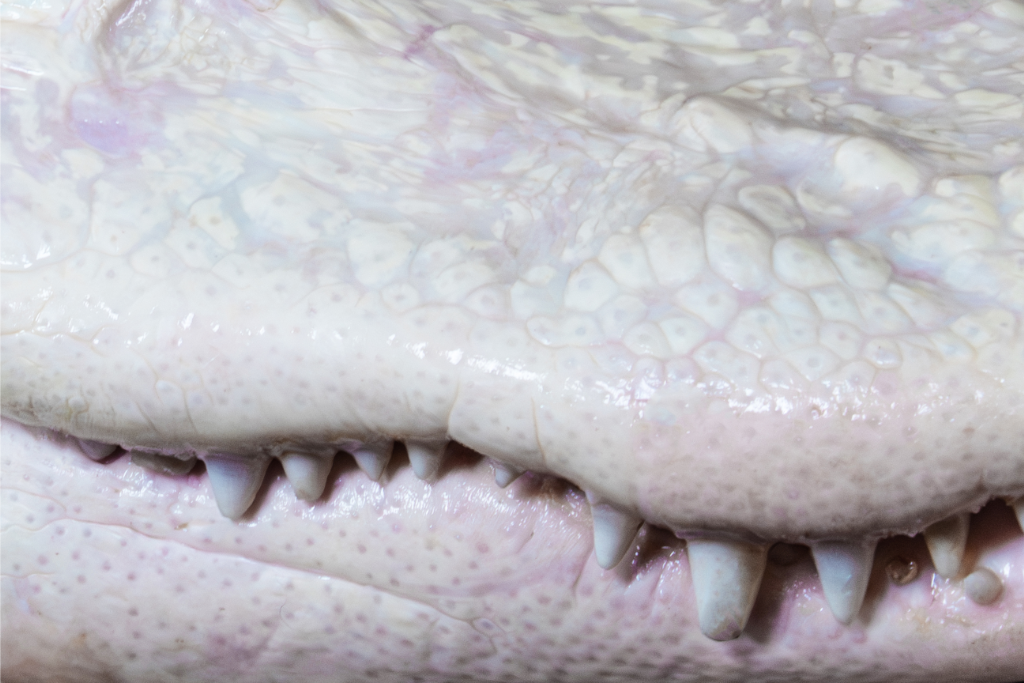
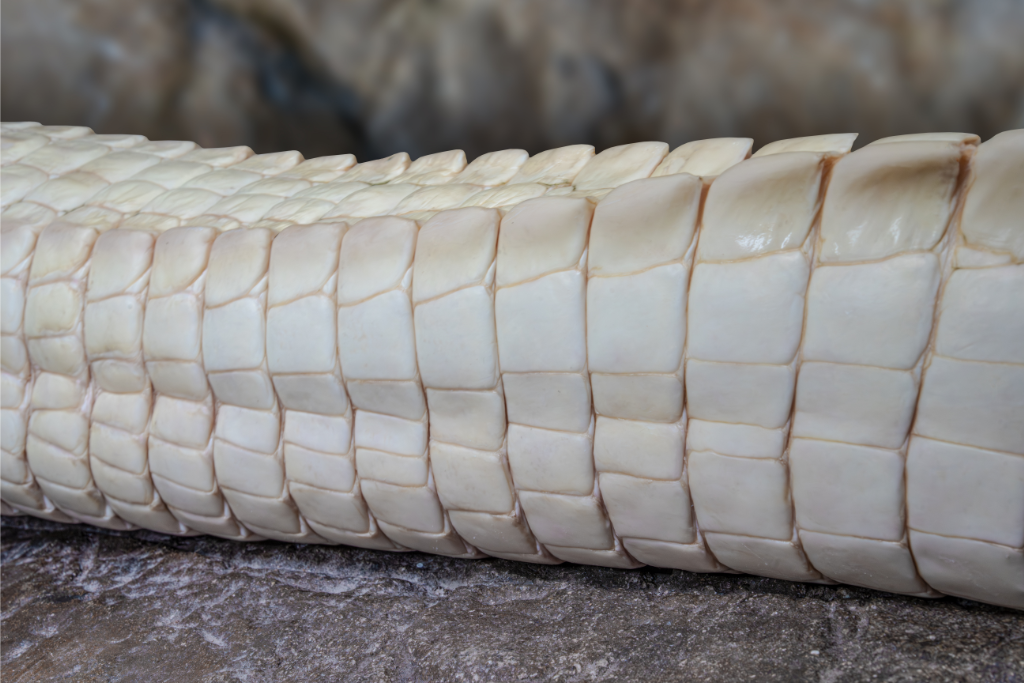
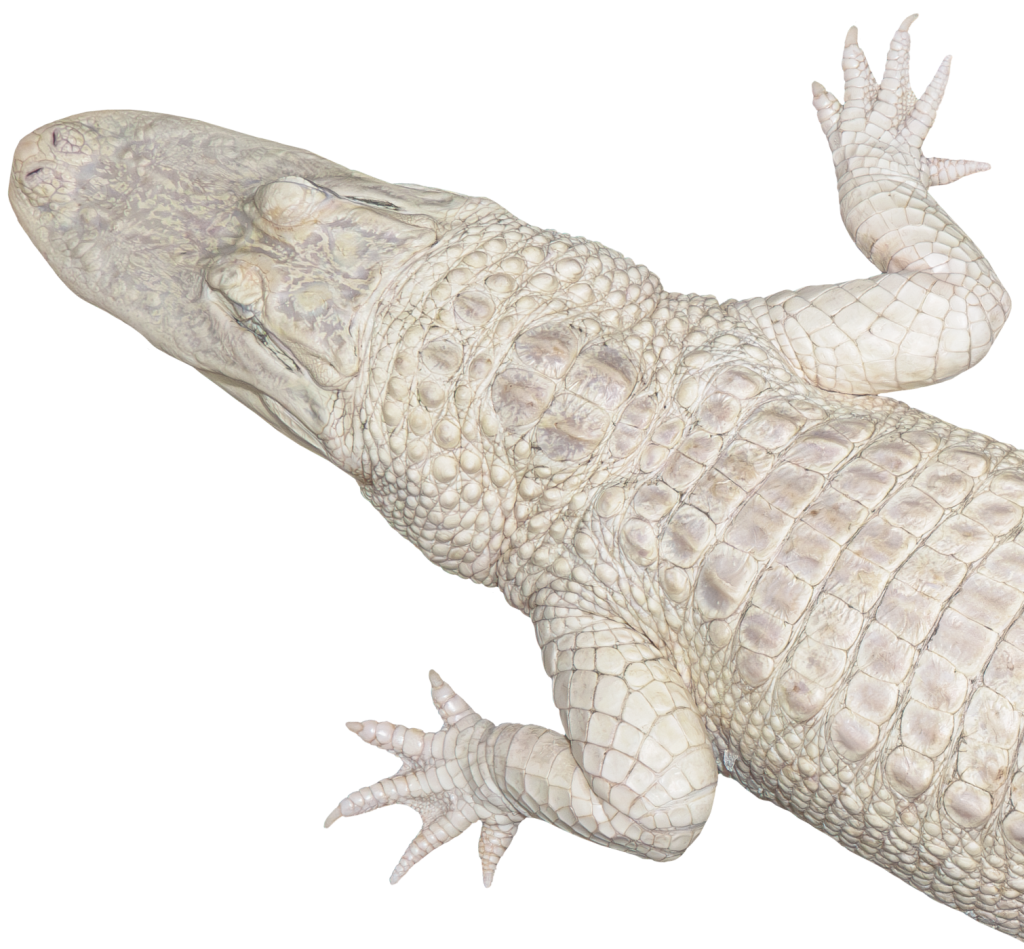
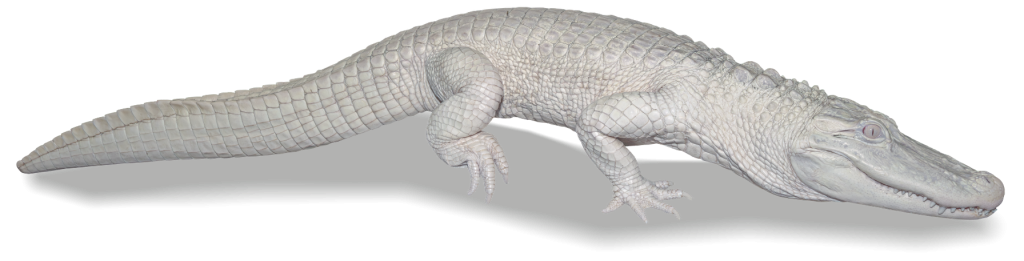
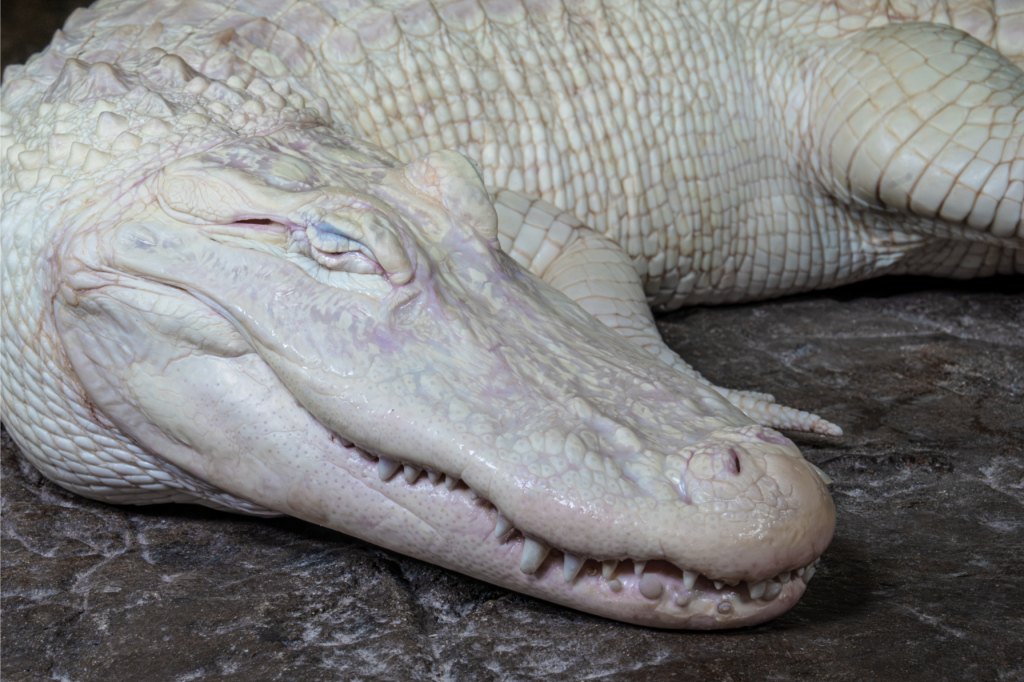
EXPERTS BELIEVE THERE ARE UNDER 200 ALBINO AMERICAN ALLIGATORS IN THE WHOLE WORLD.
FEMALE ALLIGATORS
Most of the year, female alligators are not aggressive, but everything changes when she becomes a mother. During nesting season, she becomes fiercely protective, guarding her eggs for about two months and attacking anything she sees as a threat. After her babies hatch, she gently carries them to the water and stays with them for up to two years, watching over her young and keeping them safe from predators.
A female alligator guards her nest in a Louisiana marsh. The Advocate Photo.
WHAT IS ALBINISM?
Albinism in alligators is caused by a genetic mutation affecting melanin production, the pigment that colors the skin, scales, and eyes. This mutation often impacts the TYR gene, which produces the enzyme tyrosinase. Without it, the body cannot synthesize melanin.
This trait is recessive, so an alligator must inherit the gene from both parents to be albino. However, even two albino parents do not always produce albino offspring, as genetics are complex. Albinism is extremely rare, occurring naturally in only about 1 in every 100,000 alligator egg hatches.
ALBINO EYES
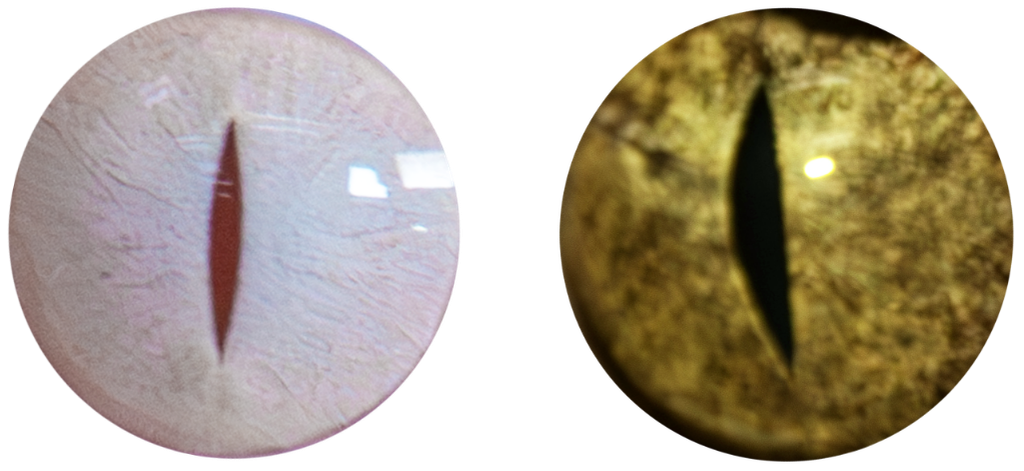
An albino alligator’s eyes appear pink or red because blood vessels in the retina are visible through the transparent, unpigmented iris. They often have severe vision impairment, as melanin is essential for eye and optic nerve development. Without it, they struggle with focusing and depth perception, and their eyesight deteriorates faster with age than that of a normal alligator.
ALBINO ALLIGATOR SURVIVAL CONDITIONS IN THE WILD
Alligators bask in the sun to regulate body temperature, making melanin crucial for protection. Albino alligators lack this protection, so their skin burns easily and their eyes are hypersensitive to bright light, impairing vision.
Their lack of color also eliminates camouflage. Without dark scales, their stark-white bodies stand out against dark swamps, making them easy targets for predators and easily spotted by prey.
COCONUT
Birthday: Valentine’s Day! She was gifted to Juliette by her father, Jay, as a Valentine’s Day gift.
Research on albino alligators is still ongoing, and every individual helps us learn more. The majority of known albino alligators live in protected environments with expert care. There hasn’t been any record of an albino alligator living longer than a regular alligator’s life cycle. Only time will tell how long Coconut will live, but with dedicated caretakers, she has a wonderful future ahead.
Albino alligators typically don’t grow as large as normal ones, usually reaching 8–9 feet. Coconut is right on track. She currently weighs 40–50 pounds and measures about 6 feet long, a healthy size for her age.
COCONUTS EYE SURGERY
Coconut developed glaucoma, a condition where fluid pressure inside the eye damages the optic nerve. Albino alligators are born with vision impairment and lack the protective pigmentation that shields the eyes, making them prone to issues like glaucoma and cataracts.
Unfortunately, her right eye had to be removed, but it does not bother her at all. Alligators rely on much more than eyesight to navigate. Specialized sensory organs along their jaws, detect vibrations and movements in the water and air. This allows them to “feel” their surroundings with remarkable accuracy. Since albino alligators already have limited vision, Coconut adapted effortlessly and does not miss what she never fully needed.
Today, she lives a happy, active life with one eye, proving that a missing eye is no obstacle to living life to the fullest.
COCONUT THE STAR
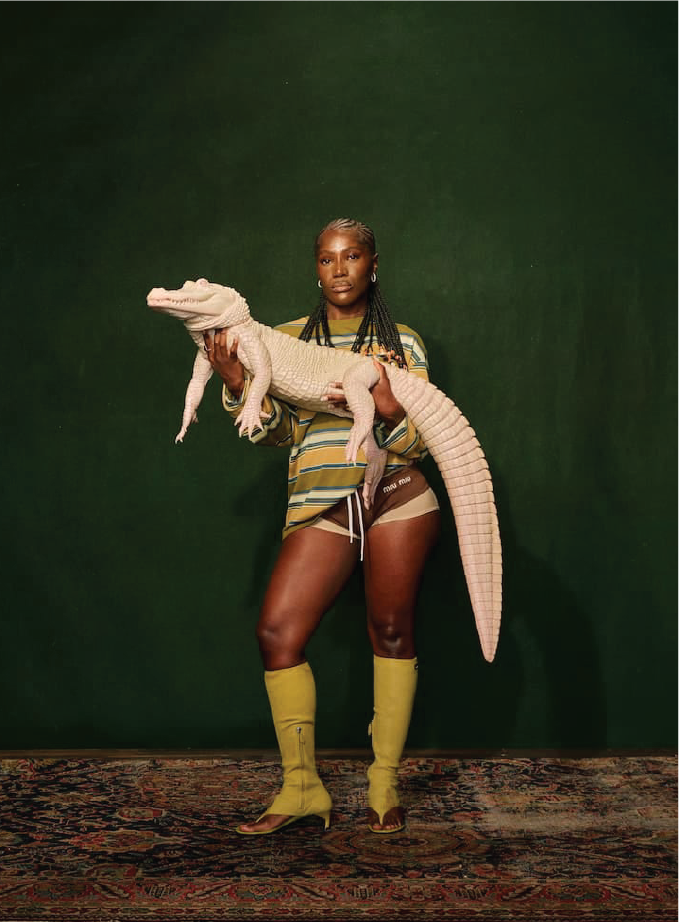
Our beloved Coconut landed an incredible role, becoming the iconic star for Doechii’s 2024 grammy winning album, Alligator Bites Never Heal, for Best Rap Album of the year. The album made history when Doechii became only the third woman ever to win this award.
Doechii chose Coconut as her symbol of remarkable resilience. Alligators do not quit. Even after facing trials, they endure and overcome. This became the heart of the album. The “death roll” became a metaphor for life’s challenges, and the music represents fighting back against creative burnout and personal struggles. Coconut’s image perfectly captures this spirit, representing an animal that refuses to be prey and was born to thrive against all odds.