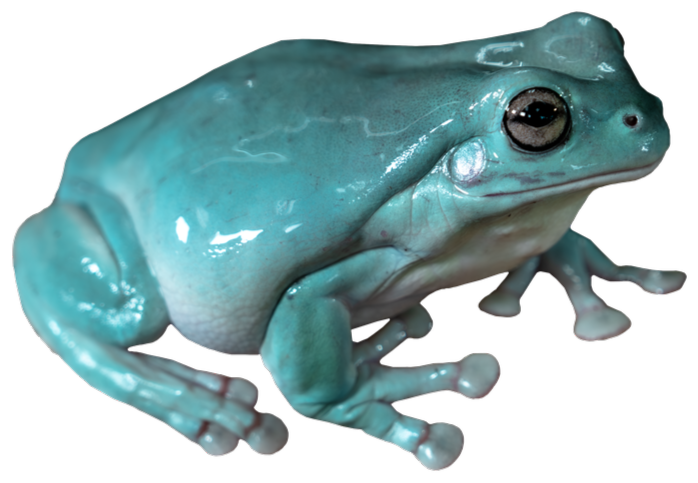
White's Tree Frog
- Class: Amphibia
- Order: Anura
- Family: Hylidae
- Scientific Name: Litoria Caerulea
- Class: Amphibia
- Order: Anura
- Family: Hylidae
- Scientific Name: Litoria Caerulea
GEOGRAPHY
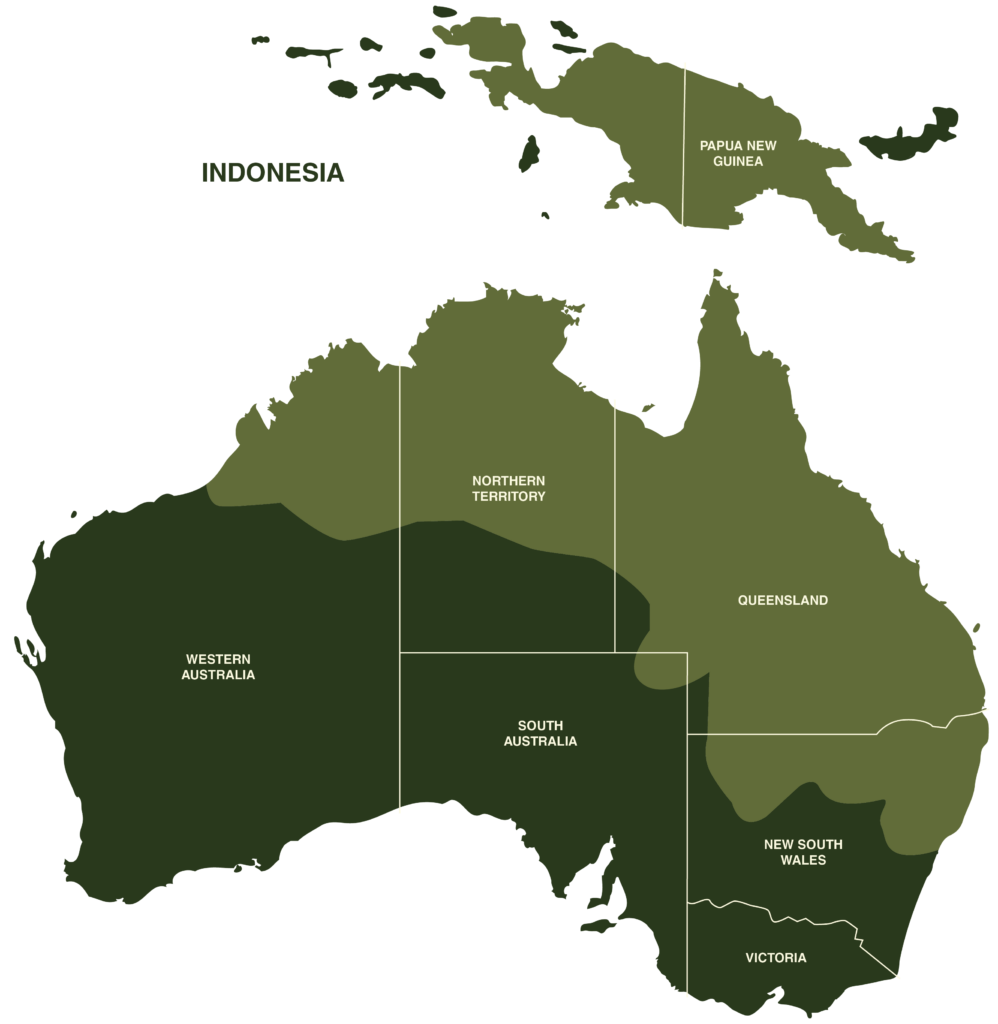
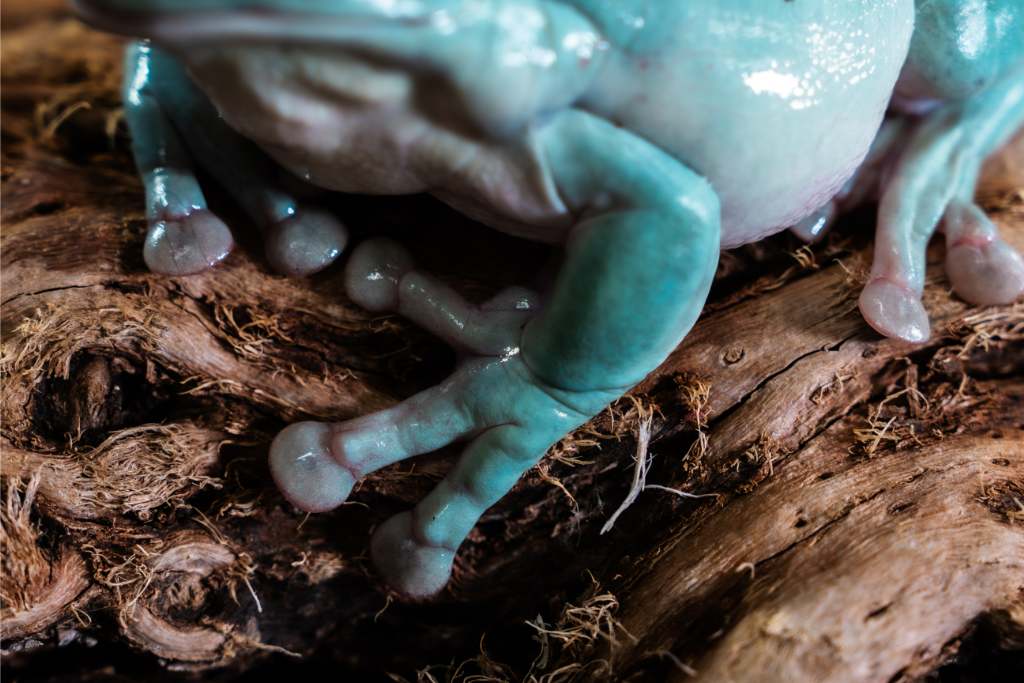
White’s Tree Frogs are native to northern and eastern Australia and southern New Guinea. They are highly adaptable, inhabiting seasonally dry and wet habitats, including rainforests, woodlands, grasslands, arid interior regions, and suburban areas. They are arboreal and do not typically live near water, relying instead on rain collecting on leaves, in cup-shaped plants, and in tree crevices for moisture. They are frequently found in human dwellings: on windowsills, in sinks, toilets, and water tanks, where they hunt insects attracted to lights. They have large, specialized toe pads for climbing smooth vertical surfaces, including glass. Their fingers are about one-third webbed, and their toes are nearly three-quarters webbed.
CHARACTERISTICS
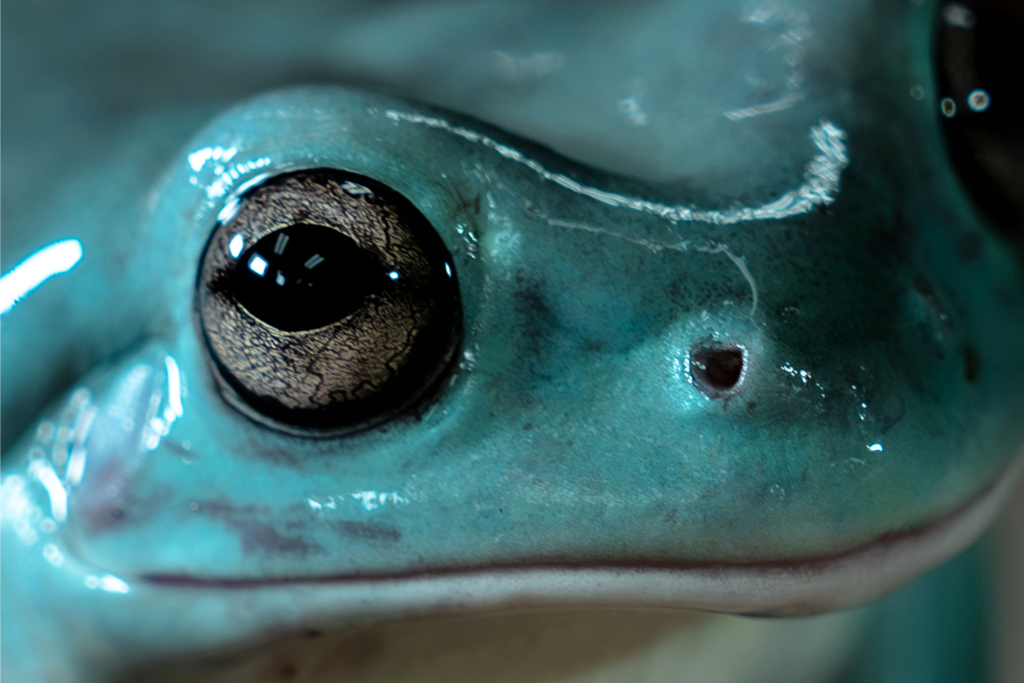
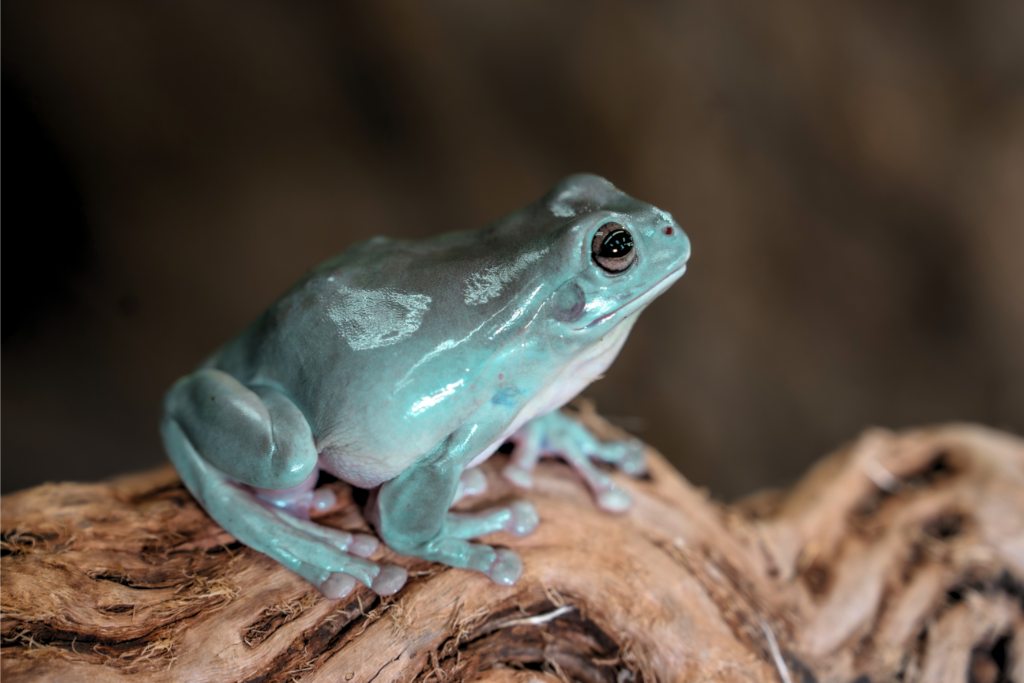
White’s Tree Frogs can live exceptionally long for a frog, averaging 15–20 years in captivity. They are famously docile and unafraid of humans, relying on their ability to hide in crevices for defense. Unlike most tree frogs, which have vertical pupils, White’s tree frogs have horizontal pupils; a distinctive trait of the Litoria genus. They have a fleshy fold above each eye that gives them a “sleepy” or “grumpy” expression, a key identifying feature.
They are nocturnal, sleeping in cool, dark, moist areas like tree holes, rock crevices, and emerging at night to hunt and call. Males produce a low, slow croak positioned in high trees and gutters, becoming more vocal after rain. Their distress call is not a typical croak but a loud, piercing scream that sounds surprisingly human-like, designed to startle predators.
White’s Tree Frogs are insectivorous generalists. They swallow using their eyeballs to push food down their throat; this is why frogs blink when they eat. They hold prey with prominent teeth on the front of their mouths, eating moths, cockroaches, locusts, spiders, and other insects. Larger individuals may occasionally consume smaller frogs and even small mammals. White’s tree frogs use a pouncing technique for larger prey: they leap onto it and push it into their mouth with their hands, and for smaller prey, they use their sticky tongues.
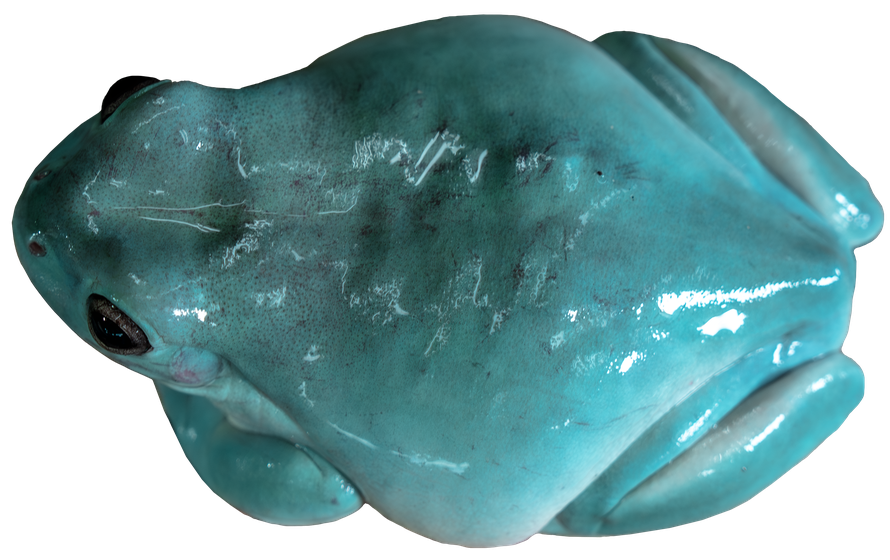
Their color ranges from bright emerald green to bluish-green, olive, or brownish-gray, with scattered white or gold spots. They can change color depending on temperature; darkening when cold and lightening when warm. Their belly is milky white with a rough texture. Their skin secretes a milky-white waxy substance called caerulein that prevents evaporation, allowing them to survive in drier conditions than most amphibians. During dry periods, they burrow and envelop themselves in a cocoon of shed skin and mucus to avoid desiccation.
White’s tree frogs seem to have homing abilities, returning to locations from which they were captured from considerable distances after being displaced. During mating season, males develop a black nuptial pad on their thumb to grip females during mating (amplexus), which can last for days. Females lay 150–300 eggs in a single clutch and hatching occurs 28–36 hours later. Their metamorphosis completes in 2–3 weeks under good conditions.
MEDICAL INNOVATION
Scientists have discovered that White’s tree frog skin secretions contain peptides (caerins) that can destroy the staph bacterium responsible for herpes simplex infections (cold sores) and may have applications in lowering blood pressure. Remarkably, some of these secretions can destroy HIV/AIDS pathogens without harming human T-cells. Their natural immunity to chytrid fungus; the disease devastating amphibian populations worldwide, has made them a focus of innovative research.
WHAT NOT
TO FEED
There is a well-documented cautionary tale in the amphibian hobby: a White’s tree frog died after being fed a firefly. Fireflies contain potent toxins called lucibufagins that are lethal to frogs and lizards. This incident serves as a warning to never feed wild-caught insects to pet frogs.